Empowered Living – ‘New shop’

Alongside the coaching, art therapy and support groups I am already offering, I would also like to share my brand new shop with you, called ‘Empowered Living’.

https://empowered-living-shop.fourthwall.com

When you are on a healing journey and are trying to feel more empowered after trauma or narcissistic abuse, it is important to have uplifting reminders in your environment that keep ‘hope’ alive, even when things feel really tough.

Every piece of apparel, accessory, and homeware in my shop is designed to honour your strength, your resilience, and your ongoing journey toward freedom and self-trust. These items aren’t just products — they’re gentle reminders of your courage, hope, and power to rebuild.

Some designs remind you to keep going no matter how hard things get and others remind you to have gratitude for the little things in your life that bring you joy- such as a pet, a friend or your love for art or music.

Many of the designs are powerful symbols of renewal, such as the phoenix rising or the lotus flower.

Others, such as the mandala symbolise wholeness & unity and in psychological terms symbolise the self.

Whatever stage you are at in your healing journey, I wish you strength, courage & hope to keep going, no matter how hard things can feel at times.

Maybe the products in my shop will encourage you to not give up and empower you to rebuild and find joy again.

There is nothing wrong with treating yourself to something meaningful or giving your friend something that will help them through a difficult time.

Thank for reading!
NEW online support group for daughters & sons of narcissistic mothers

If you struggle with symptoms of trauma, with feeling isolated on your healing journey and with feelings of shame or low self-worth, then this support group will help you! 

Growing up with a narcissistic mother can leave deep wounds — confusion, guilt, low self-worth, and complex grief. This safe online support group is here for adult children recovering from narcissistic maternal abuse, offering understanding, validation, and tools for healing.

💜 What you’ll find here:

  • A safe, judgment-free space to share your story
  • Connection with others who truly “get it”
  • Support for breaking cycles of guilt, shame, and gaslighting
  • Gentle strategies for boundaries, self-care, and inner healing

There will be two 90min online video calls per month with a maximum of 8 people. 

This will be a closed support group which fosters a safe, confidential and deeper level of intimacy and trust among members. 

This means that the same people only will be a part of this group, without any new people joining. 

Talking to others in support groups reduces anxiety, improves self-esteem, and helps members’ sense of well-being overall.

It will initially run for a total of 6 sessions starting in October (precise dates to be announced) over a period of 3 months. When we are close to the end of the 3 months, I will then reassess how to move forward with the support group.

If you are interested in joining this online support group, please email me at courageisallyouneed@gmail.com or leave a comment below with your name and email.  

I will be facilitating this online group  and very much look forward to welcoming you! 

Athina

‘Meet your authentic self’- 4 week online art therapy group

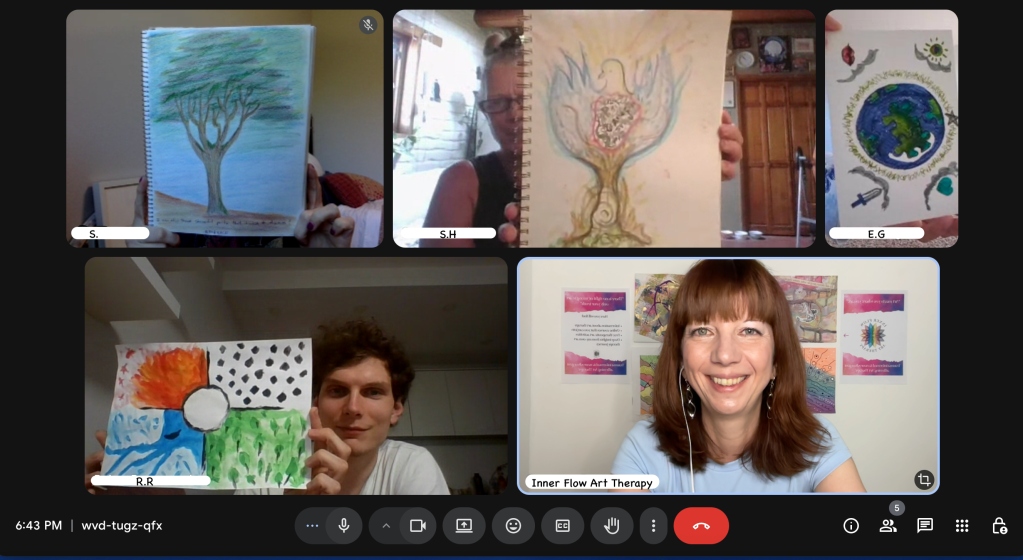
A group of courageous souls came together in my first online art therapy group ‘Meet your authentic self’ — exploring creativity, connection, and self-discovery through the gentle power of art therapy.

They created and reflected in ways that helped them peel back the layers of “shoulds” and “expectations,” making space for the truest parts of themselves to shine. They pushed through any uncertainty they were feeling and bravely shared their honest emotions and how they viewed themselves throughout this therapeutic experience and in general.

Group art therapy offers significant benefits, including improved mental health outcomes, enhanced social connections, and increased self-esteem. It provides a safe space for individuals to explore emotions, develop coping mechanisms, and build a sense of community. 

Benefits of Group Art Therapy:

  • Emotional Expression and Processing: Art therapy provides a non-verbal outlet for expressing and processing emotions, which can be particularly helpful for individuals who struggle with verbal communication or have experienced trauma. 
  • Social Connection and Support: Group settings foster a sense of community and belonging, reducing feelings of isolation and providing a supportive network for emotional healing. 
  • Increased Self-Esteem and Self-Awareness: Creative activities can lead to self-discovery, enhancing self-esteem and promoting a more positive self-image. 
  • Reduced Anxiety and Stress: Engaging in art therapy can be calming and relaxing, helping to reduce anxiety and stress levels. 
  • Development of Coping Mechanisms: Art therapy techniques can help individuals develop healthier coping mechanisms for managing difficult emotions and situations. 
  • Improved Communication and Interpersonal Skills: Collaborative art projects and group interactions can enhance communication and build stronger relationships among participants. 
  • Enhanced Creativity and Self-Expression: Art therapy encourages individuals to explore their creative potential and express themselves in new and meaningful ways. 

I’m so grateful for each participant’s openness and presence. Thank you for trusting me on this journey! Here’s to carrying these insights forward — and to continuing to meet yourselves with curiosity, compassion, and courage.

If you are interested in joining future online art therapy groups, or one to one art therapy sessions at a discounted price, please leave a comment below!

I will be announcing new dates for online art therapy groups starting in October 2025. If you would like to explore the benefits of one to one art therapy sessions, then I am offering these immediately at only 48euros per session.

You can of course join me from anywhere in the world and I am happy to accommodate your time zone as much as this is possible. I am currently in the CEST time zone.

Love Athina

‘Meet your authentic self’- Online Art Therapy workshop

Meet your authentic self 


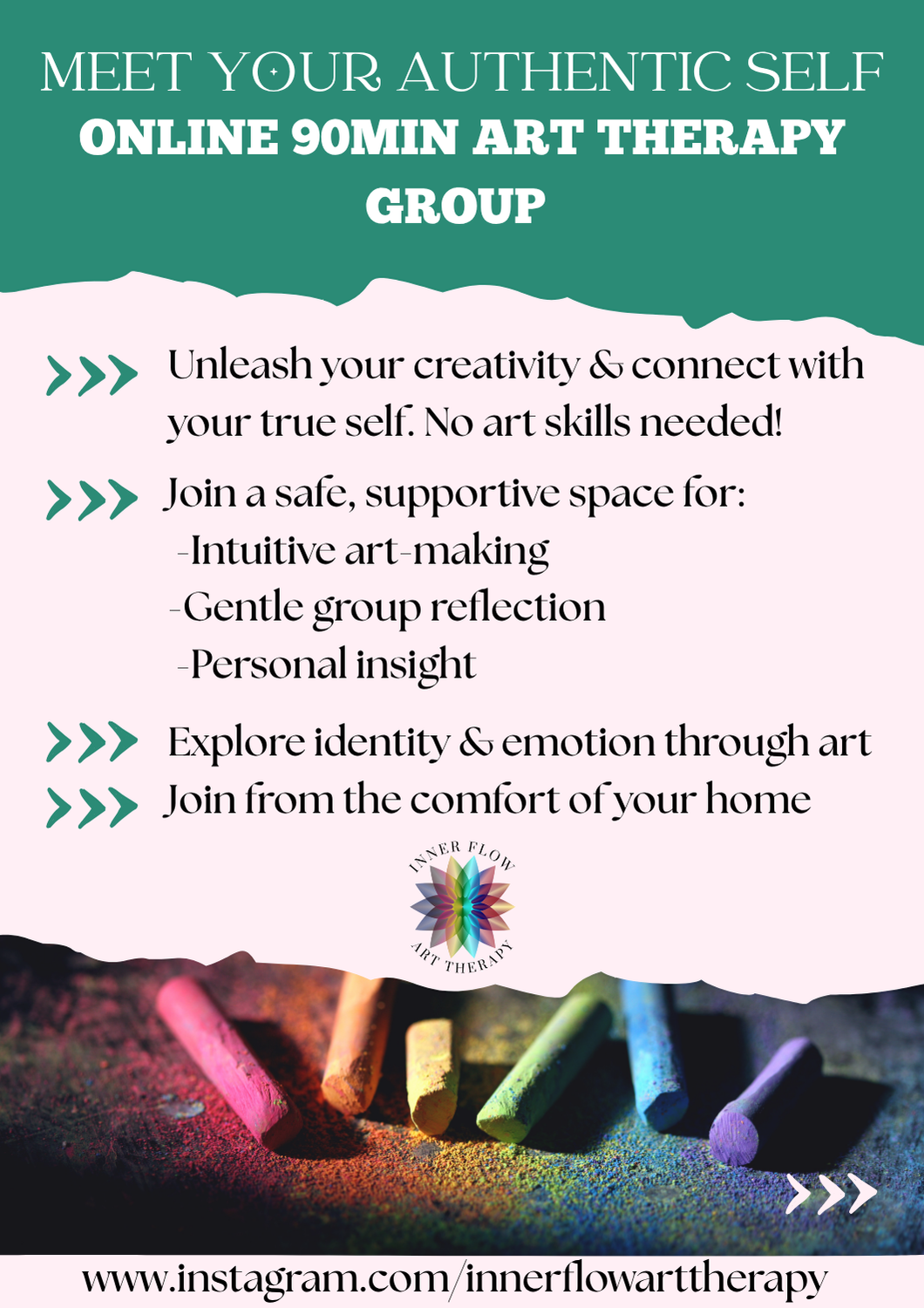
An online group art therapy experience to help you reconnect with the truest part of yourself.
If you are at a transitional time in your life, or are maybe just struggling with feeling a little disconnected with yourself, then this art therapy group will help you feel more in touch with yourself and the things that truly matter to you! Held online, so you can join from the comfort of your home and guided by me, a trainee art therapist.
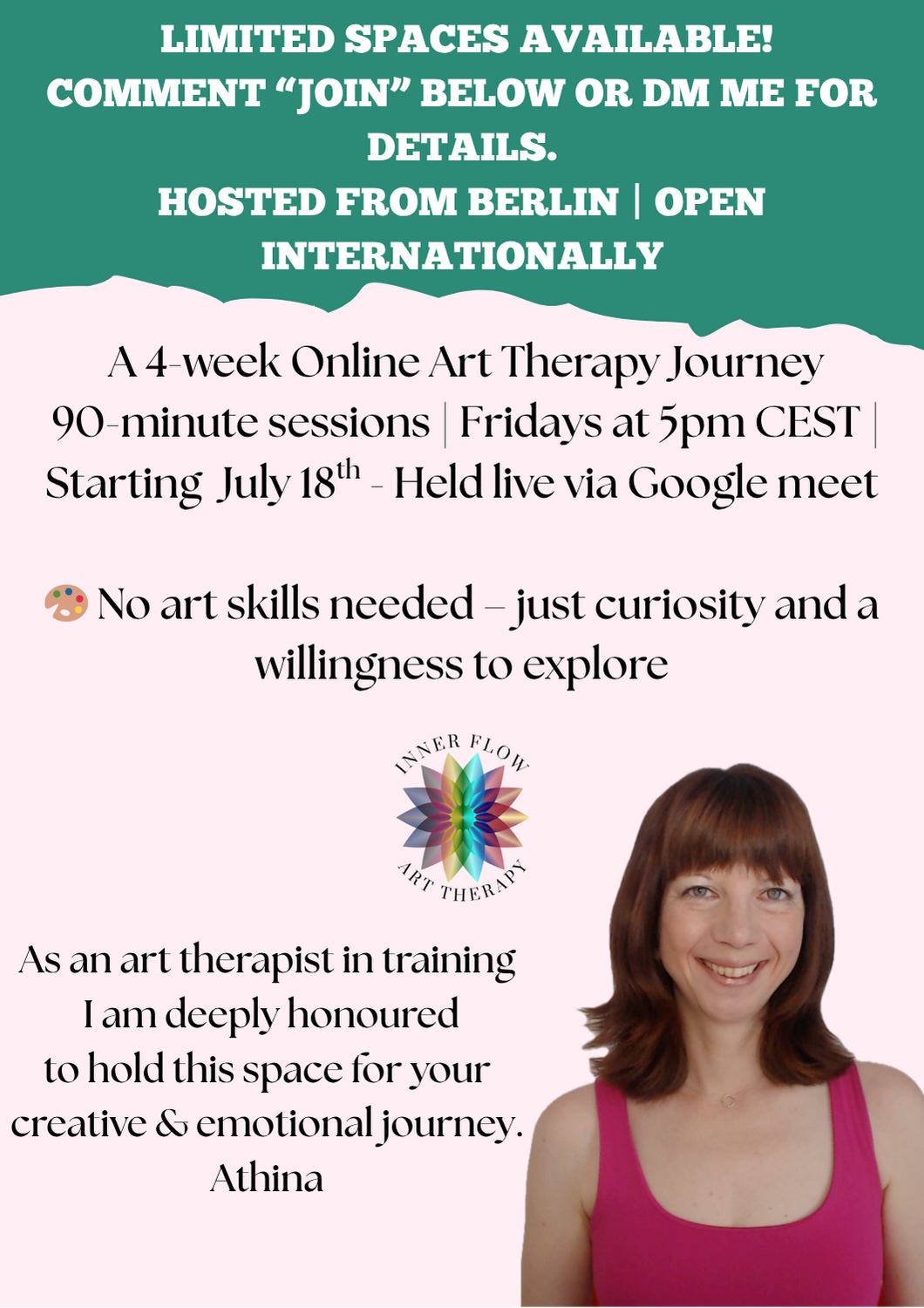
The cost is only 70€ for all 4 sessions. Reserve your spot now—limited spaces available. Please comment ‘join’ below by the 11th of July at the latest! All payments must be made via Paypal, Wise or Revolut.

No art skills needed—just a willingness to explore your inner world in a safe, supportive space.  Express, reflect, and feel seen—together.

I look forward to welcoming you!

Athina

Grieving a parent who is still alive

When a parent is emotionally immature, abusive, or neglectful, it can be incredibly painful and confusing for the adult child. These patterns often make it difficult—sometimes even impossible—to maintain a healthy or meaningful relationship with that parent. The adult child may find themselves caught between loyalty and self-preservation, longing for love or validation while also needing to protect their emotional wellbeing.

Over time, repeated invalidation, manipulation, or emotional absence can erode trust, leaving the adult child to grieve the parent they never truly had—not because the parent is gone, but because the relationship cannot meet the basic needs of safety, respect, or mutual care.

Setting boundaries or choosing distance in these cases is not a sign of failure or selfishness—it’s often an act of deep inner strength, rooted in a desire to heal, grow, and break cycles of emotional harm.

If you relate to the above, then my newest video below might be just the right thing for you!

Love Athina

Relational trauma survivors-What is their biggest regret?

When you have grown up in a dysfunctional family home, with parents who weren’t able to meet you emotional needs and teach you healthy skills in relating to others, you will notice in adulthood that it takes you awhile to figure out how to heal.

In order to start healing you must first acknowledge that you actually had relational trauma. Some people unfortunately never become aware of this trauma and how it affects them and others find out very late in life.

The earlier you become aware, the better!

My new video talks about one of the biggest regrets I have heard my clients share with me about their healing journey.

Can you relate?

Watch the video to find out!

Love Athina

The difference between a toxic person and a narcissist

The word narcissist is unfortunately thrown around a little too much nowadays, so it’s important to explore the key differences between narcissistic individuals and toxic individuals.

All narcissists are toxic but not all toxic people are narcissistic. Just because someone has a toxic behaviour, it doesn’t mean that they have a personality disorder. Let’s not forget that someone who is a narcissist, has NPD, which means they meet the criteria as listed in the DSM. Also, seeing someone as toxic is a subjective experience. Something that you may consider toxic, someone else may not have a problem with.

Check out the latest video above for more detailed information.

Love Athina

Do you self-silence?

Self-silencing is much more common that people think.

Feeling too afraid to express your true thoughts, desires, and emotions often stems from childhood experiences in environments where self-expression didn’t feel safe. This behavior is frequently shaped by generational patterns passed down unconsciously, where parents, influenced by their own upbringing and unresolved trauma, lacked the tools to create a space for open and secure communication.

If you recognize that you have a tendency to self-silence, it’s essential to take proactive steps toward building healthier habits and learning to express yourself more openly and authentically.

Watch my video below, to gain more clarity on self-silencing.

Love Athina

Coping with a Narcissistic Mother-in-Law

Navigating the relationship with a mother-in-law can be challenging under normal circumstances, but when she exhibits narcissistic traits, it can feel like walking a tightrope. A narcissistic mother-in-law often demands to be the center of attention, thrives on control, and struggles to respect boundaries. She may use manipulation, guilt, or passive-aggressive comments to maintain her perceived dominance in the family dynamic.

Dealing with a narcissistic mother-in-law requires patience, clear boundaries, and a strong sense of self. While it can be tempting to appease her or avoid conflict altogether, addressing the behavior with kindness and firmness is key to maintaining a healthy relationship—not just with her, but also with your spouse. If of course the relationship becomes unbearable, then it is time to discuss things with your partner about how to set boundaries and make things more comfortable in the long run.

For a more detailed account of the 14 signs of a narcissistic mother in-law, please watch my new YouTube video below! Please like, share and subscribe if you appreciate my content!

Love Athina

The grief of not having a healthy family

When we grow up with dysfunctional parents, we have no comparison to what is supposed to be healthy. We just know what we know and we take these experiences with us into adulthood. We are moulded by these experiences and we carry the trauma with us when we try to function in relationships with others.

There may have been instances when we were teenagers, where we spent time in our friends’ family homes and we caught a glimpse of what ‘healthy’ looked like. Maybe there was a level of calmness that we didn’t see in our own family. Maybe there was mutual respect, support and validation of our friends’ emotions. Maybe our friends’ parents asked us lots of questions and showed genuine interest in us when our own parents never did. Maybe we felt ‘safe’ in our friends’ family home. Maybe this helped us survive our own childhood or maybe we genuinely never had this experience and were completely alone in our suffering.

Whatever your experience, know that you are not alone anymore. There are so many resources online to help you put the pieces of the puzzle together and help you understand why you may struggle so much in your current relationships. It is not your fault you are struggling and repeating the same dysfunctional patterns of behaviour you witnessed growing up.

Change can only happen when you commit to figuring out what needs to shift and what steps you need to take to heal and recover from your dysfunctional upbringing.

The video below, may help with this journey!

Much love, Athina