
Pet loss grief & CPTSD

On the 21st of August, I sadly had to euthanise my beloved 8 year old dachshund. It all happened within 24 hours and it came out of nowhere. She collapsed after vomiting and we rushed her to the emergency vet hospital. They stabilised her over night, they did an x-ray and ultrasound and the only thing they could see initially was a little liquid in her ovaries which means she may have had the early signs of an infection.

The next morning, they called us and told us she was doing better and even managed a tiny walk. They said they would do a routine spaying operation just to be on the safe side and then she would be home with us in the evening.

A few hours later, after waiting in suspense to hear back from the vet, we got a phone call to say that they needed permission to take more blood, as she was showing unfavourable neurological issues. Unfortunately, the blood test showed high inflammation in her little body, severe anemia and essentially her body was shutting down. Her blood was no longer clotting so they couldn’t operate anymore. She had also had an aneurysm and we were told that the kindest thing we could do was euthanise her. The vet suspected that her body was shutting down due to a tick borne disease which is hard to spot and progresses rapidly. Even though she had been on anti-tick medication, the vet said it is not reliable in preventing disease.

This was an incredible shock, especially after we thought she was coming home to us. Our gorgeous little Daola, was the light of our life, our best friend and our emotional support. For 8 wonderful years, she filled our life with such joy, comfort and unconditional love.
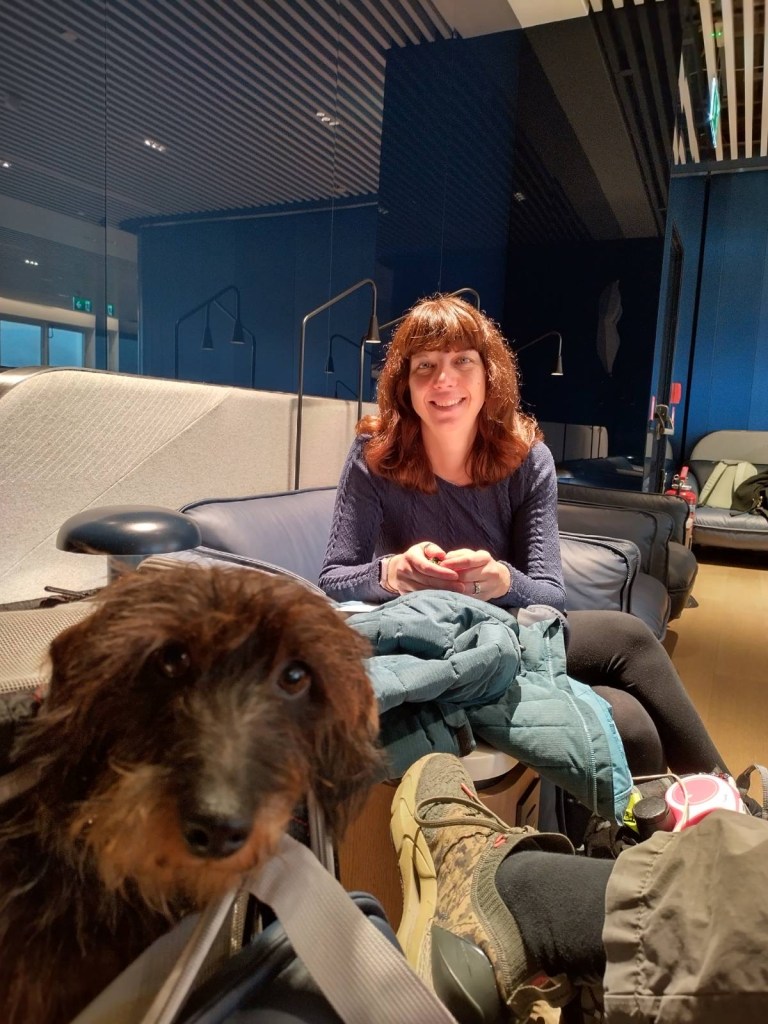
Losing a pet when you also live with CPTSD, is incredibly hard, especially because you already struggle so much with regulating your emotions, self-soothing and hyper vigilance. As someone who lives with this myself, I have had a solid couple of weeks of increased anxiety alongside my grief for my little girl.

It is important to understand that an unexpected death, whether this is a pet or a person, is very hard to navigate. The circumstances may even be traumatic, so when you already live with trauma, your body and mind need time to adjust.

The loss is profound, so the sadness and despair you may feel is completely normal under the circumstances. The stronger the bond and attachment you had to your pet, the stronger the grief and the longer it may take for the intensity of those feelings to subside.

It has been nearly 3 weeks since I lost my gorgeous dog and the grief is still intense. Life feels dull and being at home feels very empty. I am allowing myself to cry and think of her and I am resting as much as possible where I can. Grief can be exhausting, so it is important to practice good self-care.

Many emotions have been present through my grief journey such as guilt, anger, despair and many ‘What if’s’. What if I had gone to the vet earlier? What if I had noticed the signs sooner? All emotions are valid. We try to make sense of the shock and instead of feeling helpless, we try to fill our minds with thoughts that distract us from feeling the pain. This doesn’t work however. Our pet is gone and there is nothing we can do to bring them back. We must grieve that loss and the deep love we felt. The only way to grieve in a healthy way, is through acceptance that they are gone.

Grieving a parent who is still alive

When a parent is emotionally immature, abusive, or neglectful, it can be incredibly painful and confusing for the adult child. These patterns often make it difficult—sometimes even impossible—to maintain a healthy or meaningful relationship with that parent. The adult child may find themselves caught between loyalty and self-preservation, longing for love or validation while also needing to protect their emotional wellbeing.

Over time, repeated invalidation, manipulation, or emotional absence can erode trust, leaving the adult child to grieve the parent they never truly had—not because the parent is gone, but because the relationship cannot meet the basic needs of safety, respect, or mutual care.

Setting boundaries or choosing distance in these cases is not a sign of failure or selfishness—it’s often an act of deep inner strength, rooted in a desire to heal, grow, and break cycles of emotional harm.

If you relate to the above, then my newest video below might be just the right thing for you!

Love Athina

How do you tell a friend about your childhood trauma?

Talking about childhood trauma can feel overwhelming, especially when opening up to a friend for the first time. How do we explore sharing our story in a way that feels safe and empowering, while also setting boundaries and managing expectations? How do we prepare ourselves for possibly being let down and invalidated by the person we tell?

Talking about something so difficult will never come easy to us, because safety was compromised in our childhood. Sharing the full range of our emotions, wasn’t acceptable and we may have been punished or invalidated a lot. That is why this feels scary and trust doesn’t come easy to us.

The first step to consider, could be to assess our friendship so far with the person we want to tell. Test the waters, so to speak.

Do we feel safe in their presence and can we truly be ourselves with this person?

Does this person listen to us empathetically?

Will we feel relieved by telling a (safe) friend about our trauma?

What will we do if they don’t respond in a validating way? Have there been any instances in the past where they may have invalidated us?

These are all good questions we can ask ourselves.

A safe person or ‘friend’ is one that listens and validates our experience, by saying something like ‘I am sorry to hear you went through that’.

In the above video, I talk about this tricky topic in a little more detail, so please watch it or share it if you think it will help someone.

Love Athina

The difference between a toxic person and a narcissist

The word narcissist is unfortunately thrown around a little too much nowadays, so it’s important to explore the key differences between narcissistic individuals and toxic individuals.

All narcissists are toxic but not all toxic people are narcissistic. Just because someone has a toxic behaviour, it doesn’t mean that they have a personality disorder. Let’s not forget that someone who is a narcissist, has NPD, which means they meet the criteria as listed in the DSM. Also, seeing someone as toxic is a subjective experience. Something that you may consider toxic, someone else may not have a problem with.

Check out the latest video above for more detailed information.

Love Athina

Echoism – A result of narcissistic abuse

Have you heard of echoism? Echoism isn’t commonly talked about but is very real and a lot of individuals who have suffered narcissistic abuse in childhood actually live with it.

Echoism is very common with individuals who live with Avoidant Personality Disorder or who have many avoidant traits. Echoists find it extremely uncomfortable being the centre of attention.

Watch the video to find out more.

Love Athina

Do narcissists have a moral compass?

In this video, I talk about narcissists and whether they have a moral compass.

In some cases, people may argue that narcissists can actually feel guilt when they have done something wrong and they can also feel ashamed.

It is important to take into account that somebody with Narcissistic Personality Disorder (NPD) also has a unique character, history of trauma and a certain outlook on life. All these must be taken into account when considering whether they have a moral compass.

In my experience, I would say narcissists definitely choose to ignore the things that they have done wrong to others but are quick to inflict the moral high ground on others, if they don’t agree with what these others have done.

Watch the video to find out more on this topic!

Love Athina

What is traumatic aloneness?

Traumatic aloneness is something that I have experienced over and over again in my 41 years on this planet. It is a natural result of having grown up in a dysfunctional family where my parents didn’t meet my emotional needs.

”Psychodynamic theorist Gerald Adler attributed an early failure in nurturing to the experience of annihilation. He contended that the absence of a primary positive soothing caregiver creates an insatiable emptiness that impedes the development of a stable, healthy sense of self”. (quote source:https://www.avenuetherapies.com/blog/theres-lonely-theres-alone-and-then-theres-worse-traumatic-aloneness/

”Traumatic aloneness is a hole that was supposed to be filled when we were babies with the things we needed to feel loved and important. It is a hole that can now never be filled…To be healed it needs to be recognised, listened to and nurtured. Trauma therapy can go some way to repair it and ease the pain, but the hole although smaller, might always be there. However, we can learn to recognise it, soothe it, hold it and nurture it. We can learn to have connections and closeness with others”.

Watch my YouTube video to find out more:

Love Athina

6 Lies narcissistic parents tell their children

Narcissistic parents are incredibly destructive to a child’s emotional & mental wellbeing. The 6 lies I talk about in this video, are very common in most narcissistically abusive households.

If this is your background or if you suspect that your upbringing may have been dysfunctional, then this video is for you!

Love Athina

Did your narcissistic parent call you selfish?

Narcissistic mothers, especially the covert type, are experts at projection and will habitually project their own negative emotions onto their children.

Selfishness is one of them.

Many adult children of narcissistic parents will have experienced this in some capacity or their parent may have simply called them something else, such as ‘spoilt’ or ‘too sensitive’.

What is your experience?

Repetition compulsion-A result of childhood trauma

What is repetition compulsion and why do we do it?

Is it something we have control over?

Repetition compulsion happens as a result of childhood trauma.

Watch the video to find out more

Love Athina