What healthy parenting looks like versus narcissistic parenting

family-1517192_1920

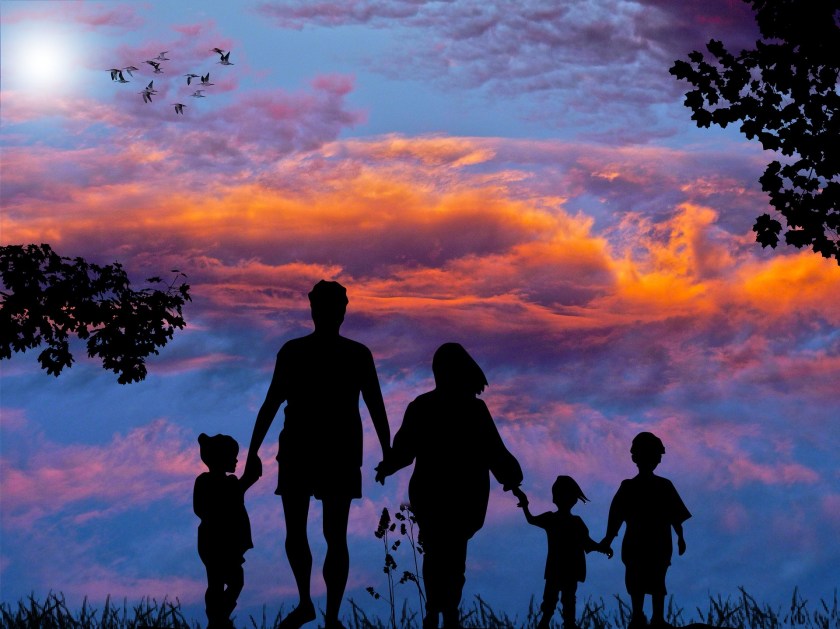
In healthy parenting, the following things are needed to bring up a healthy & emotionally stable child.

Love and affection.  “You support and accept the child, are physically affectionate, and spend quality one-on-one time together.”

Stress Management.  “You take steps to reduce stress for yourself and your child, practice relaxation techniques, and promote positive interpretations of events.”

Relationship skills.  “You maintain a healthy relationship with your spouse, significant other, or co-parent and model effective relationship skills with others.”

Autonomy and Independence.  “You treat your child with respect and encourage him or her to become self-sufficient and self-reliant.”

Education and learning.  “You promote and model learning and provide educational opportunities for your child.”

Life skills.  “You provide for your child, have a steady income, and plan for the future.”

Behavior management.  “You make extensive use of positive reinforcement and punish only when other methods of managing behavior have failed.”

Health.  “You model a healthy lifestyle and good habits, such as regular exercise and proper nutrition.

Religion.  “You support spiritual or religious development and participate in spiritual or religious activities.”

Safety.  “You take precautions to protect your child and maintain awareness of the child’s activities and friends.

As listed directly from:

https://www.leelanauchildrenscenter.org/98/articles-and-reading/10-skills-of-competent-parents

Narcissistic parents on the other hand do the following:
  • Their needs have priority over those of the children.
  • They view their children as an extension of their own personal wishes, so the child’s individuality is diminished. They don’t nurture their childrens’ own thoughts, emotions or goals.
  • Their ego needs are unquenchable.
  • Due to their own low self-worth they put their childrens’ accomplishments down, so they can always remain on top (as smarter, more capable etc)
  • They are completely unaware of the grief or discomfort their children are experiencing and are not aware of when they have been neglectful or abusive towards their children.
  • They do not feel empathy, and they will only pay interest in the child if the child is achieving or giving them an ego boost.
  • Shame is at the core of a narcissistically run family, so they will shame, ridicule, tease or criticise their children often. They will also use guilt-tripping, blaming, negative comparisons, emotional blackmail and so much more!
  • They create codependent children and expect them to always look after them and cater to their needs & wants.
  • The parents are possessed by their narcissistic ego, and nothing the child ever does will be good enough. The child tries and tries, but never quite manages to receive their narcissistic parents’ love and affection.
When the child gives the narcissistic parent(s) enough of an ego boost and meets their ego needs, the narcissistic parent(s) will reward their child with approval. This approval, however, is not genuine love.
Children of narcissists grow up feeling unloved, ashamed, unlovable and inferior.
Children of narcissists grow up thinking that there is something seriously wrong with them, (because their parent wasn’t able to love them in a healthy way).
Children learn that the focus isn’t on them (as it should be) but on their narcissistic parent(s). They learn to painfully accept this although don’t know that this isn’t normal.
Children learn to do whatever their narcissistic parents want, in hope that their needs for love, comfort and approval are one day met. This approval seeking behaviour follows them into adulthood where they continue to people please to gain approval.

If you found this blog post helpful, please feel free to comment, share or like!

© All blog posts and images are owned by me and Courage Coaching. Please don’t use without consent and only re-blog if you would like to use the information on here.

Love Athina ♥

Traits of an Empath!

Brilliant post about being an Empath!

Mark Lanesbury's avatarHealing Your Heart From Within

Reblogged from soulvisionhealing

Just an interesting list to ‘see’ what traits you may have. We all have the ability, and it can be more pronounced depending where you are at in your life!

—————————————————————-

Traits of an Empath

Empaths as a rule are often highly misunderstood people who have the amazing yet intense ability to be able to sense emotions from; family, friends, animals and even complete strangers both in-person and from a distance. Empaths can also sense energy from possessions (such as photographs or someone’s ring) nature and also the earth’s magnetic fields. This is how more often than not and not unlike an animal can sense something coming, so to can the empath on many different levels.
Just so you are aware being an Empath is not the same as having empathy. We are all born with empathy and have the ability to empathize with another; Empaths have…

View original post 3,022 more words

Complex PTSD & PTSD exhaustion

The exhaustion which comes as a result of suffering with the above conditions is constantly present. No matter how much you sleep or rest, you never seem to feel completely rejuvenated.

The following blog post by Roland Bal further explains this:

https://rolandbal.com/trauma-and-ptsd-exhaustion-fatigue-and-tiredness/

Love Athina ♥

© All blog posts and images are owned by me and Courage Coaching. Please don’t use without consent and only re-blog if you would like to use the information on here.

Taking on others’ emotions-Having weak boundaries

When you have grown up in a dysfunctional narcissistic home, taking on others’ emotions becomes the norm. Narcissistic parents teach their children to cater to their feelings & moods and the child learns to ignore their own emotions.

A great book which can help you understand whether you have weak emotional boundaries, is by Charles Whitfield: Boundaries and Relationships: Knowing, Protecting and Enjoying the Self. 

The following statements from his book, can help you identify whether you struggle with taking on others’ emotions and neglecting your own.

Answer with “never,” “seldom,” “occasionally,” “often,” or “usually.”

  • I feel as if my happiness depends on other people.
  • I would rather attend to others than attend to myself.
  • I spend my time and energy helping others so much that I neglect my own wants and needs.
  • I tend to take on the moods of people close to me.
  • I am overly sensitive to criticism.
  • I tend to get “caught up” in other people’s problems.
  • I feel responsible for other people’s feelings.

If you reply mostly with ”often” or ”usually”, then this is something you should consider getting support for. This means that you are extremely affected by the emotions & moods of those around you and aren’t able to focus on your own needs first.

If this is something you relate to and need support for, then please leave a comment below.

Thanks for reading

Love Athina ♥

© All blog posts and images are owned by me and Courage Coaching. Please don’t use without consent and only re-blog if you would like to use the information on here.

World Mental Health Day

FontCandy (4)

Mental illness has always been a part of my life. Whether it is through my own personal journey, through my family’s or watching friends struggle.

Although I haven’t been writing on here much, mental health will always remain a very important cause that I will always talk about. It is crucial for anybody struggling with mental illness to feel heard, to feel validated & to feel safe.

Empathy & understanding are necessary and we must all do our best to listen without judgement.

Life can sometimes throw us a curveball and none of us will ever know when this might happen.

Talk about mental health!

Be open & honest!

Be understanding!

Listen & give plenty of hugs to those struggling!

Sometimes that is enough to make someone’s day a little better!

Love Athina ♥

© All blog posts and images are owned by me and Courage Coaching. Please don’t use without consent and only re-blog if you would like to use the information on here.

1,500 subscribers on youtube!

thank-you

I always thought that my youtube channel would be for a small audience. I thought that it might get around 100 subscribers and that would be all. I was interested in sharing important information to help others and as well as having this blog, youtube has turned out to be more successful than I had anticipated! The success of it is in the fact that it is reaching so many people and that it is actually helping people suffering from narcissistic abuse feel validated & heard.

Although my blog posts and youtube videos are temporarily on hold, due to not finding the time or energy to create new ones, my appreciation for those of you who follow my work is very much present. My determination to help more people is also still there.

I am currently very busy, with my new puppy, with my work and with keeping everything else in my life in order.

Unfortunately, there isn’t much time left to write or create videos as often as I would like.

Living with CPTSD means that I am absolutely knackered most of the time and my new puppy is definetely adding to my exhaustion, although totally worth it!

This blog post is just to say a big thank you to all my subscribers & followers and to share a photo of my new miniature wirehaired daschund girl Daula.

20988548_10154591269261621_6739140846307953330_oIMG_2673IMG_2686

Love Athina ♥


Healing from abuse

The sad thing about healing from abuse is that many people who haven’t themselves been abused, can’t possibly understand the survivor’s journey.

Healing from abuse is unique to each individual who has experienced it. The survivor will be emotionally damaged and/or physically hurt and unfortunately this damage is sometimes irreversible. Abuse leaves behind scars unique to each survivor’s experience.

Although healing means that your mind and body are able to recover, this doesn’t mean that the person can return to being ‘normal’.

The aftermath of abuse is usually permanent.

There might be long-lasting Complex PTSD for those who suffered child abuse, human trafficking, kidnapping or other severe types of abuse.

For some individuals abuse might be all they have known. They don’t have a pre-trauma or pre-abuse identity. They might not know what it is truly like to feel safe.

To all survivors of abuse or trauma,it is very important to remember this:

FontCandy (3)

Love Athina ♥

© All blog posts and images are owned by me and Courage Coaching. Please don’t use without consent and only re-blog if you would like to use the information on here.


How To Spot Deception

Great post by Eric on spotting deception. This is especially true for those with Narcissistic Personality Disorder or Psychopathy.

Dr. Eric Perry's avatarDr. Eric Perry’s Blog

By Eric Perry, PhD-c

Audio version | Click here


“He who has eyes to see and ears to hear may convince himself that no mortal can keep a secret. If his lips are silent, he chatters with his fingertips; betrayal oozes out of him at every pore.” ~Sigmund Freud

In my profession it is important to know if someone is lying to me or more importantly to themselves. Whether it is a small lie or a malicious lie, everyone lies at some point. Research shows that on average, people lie 10 times per day. Many people lie to keep the peace or to inflate their ego. Others might lie because they are pathological liars or have a personality disorder.

Lying appears to be part of our genetic makeup. It develops early in children and peaks in adolescence when a person begins to establish their identity and independence. Lying declines as…

View original post 941 more words