Weaponized incompetence is a form of passive-aggressive behavior where an individual deliberately performs tasks poorly or pretends to be incapable of completing certain tasks. This manipulation tactic is often used to avoid responsibility, forcing others to take over. It doesn’t always come from a bad place because it can stem from a lack of confidence or self-esteem. They may genuinely believe that they’re unable to perform a certain action or task.
When it comes to narcissists however, the intent is much more malicious. It is much more calculated and intentional.
Feel free to watch my YouTube video below to find out more about it.
For one to one coaching, please email me at courageisallyouneed@gmail.com
If you hate being the center of attention and constantly worry about what people are saying about you, then you may have what is known as the spotlight effect, a term coined by social psychologists.
The spotlight effect is a cognitive bias and it refers to the tendency to overestimate how much other people notice about us.
If you have social anxiety, then you most likely also struggle with the spotlight effect.
The spotlight effect can be detrimental to living your life fully, as it holds you back from allowing yourself to be ‘seen’ by others.
Watch the video to find out more and please feel free to share your experiences in the comments.
For one to one coaching, please feel free to email me at: courageisallyouneed@gmail.com
Self-sabotage isn’t something we are necessarily aware of yet it can create havoc in our lives and it can stop us from reaching our full potential.
When we have grown up in an environment where there was constant chaos and drama and where our parents shamed us and criticised the majority of the time, it will feel more familiar to us to continue this dynamic in adulthood. We may lead equally chaotic lives with dysfunctional relationships and poor choices.
If we were constantly given the message that we weren’t smart enough, strong enough, attractive enough and in more general terms good enough, then this becomes our internalised voice and it pops up every time we try and take a step forward in our careers, relationships and day to day life.
Even if this internalised voice is negative and not true, it has been our mind’s companion for as far back as we remember. We took on this identity and it is harder to change it when it is all we have known.
If you can relate to this topic, then please watch the video to find out more.
I offer one to one coaching to those of you who struggle with this, so please feel free to get in touch by emailing me at: courageisallyouneed@gmail.com
There are many different types of narcissistic mothers and some show a combination of behaviours. You may notice one mother who is overbearing and controlling and another who is extremely self-centred and ignoring towards her child. Some mothers can actually flip between overbearing and ignoring.
In this video, I explore the narcissistic mother who ignores her children. Being ignored by a mother feels very painful to the child. These ignoring behaviours create deep emotional gaps in a child’s life that can go undetected for years.
Watch the video to find out more and feel free to check out more of my content on my Youtube channel.
Growing up with a narcissistic mother is very painful and isolating. If you are lucky enough to at least have an empathetic father, that alone can help you feel a little less alone. What happens however when your father is really loving and caring towards you but unfortunately fails at the part where he has to protect you from your mother’s abuse? When he isn’t strong enough to stand up to his wife’s demands, he also lets you down and enables your mother’s abuse.
It is especially tough when he tells you in private that he knows your mum is a difficult person but still doesn’t protect you from her hurtful actions. This still leaves you feeling hopeless as you don’t truly have your father on your side.
If this is you, then watch my most recent video below.
Have you heard of echoism? Echoism isn’t commonly talked about but is very real and a lot of individuals who have suffered narcissistic abuse in childhood actually live with it.
Echoism is very common with individuals who live with Avoidant Personality Disorder or who have many avoidant traits. Echoists find it extremely uncomfortable being the centre of attention.
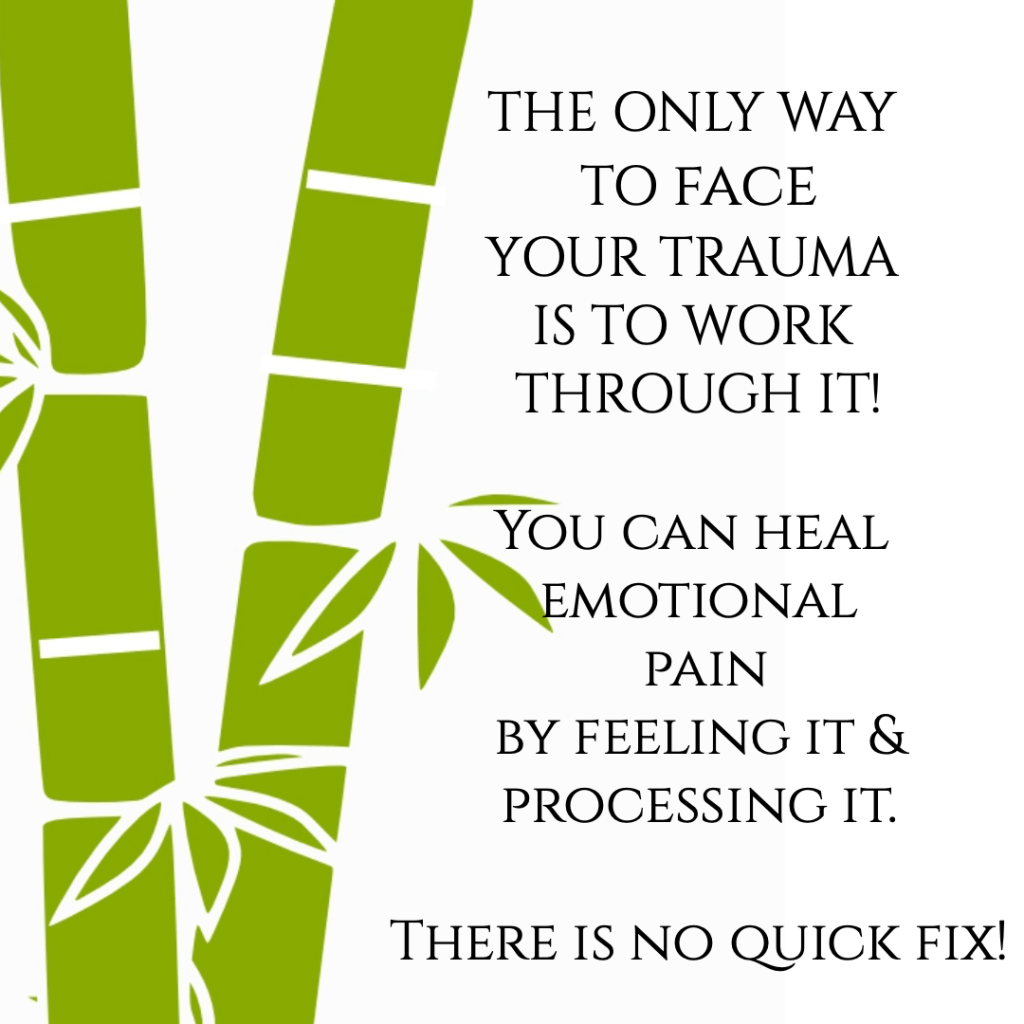
Facing your trauma in the initial stages of awareness, may feel incredibly uncomfortable and daunting. Even admitting to yourself that you suffered abuse or trauma in your childhood, can feel very scary and soul crushing at first.
If you do reach that point however, please know that you are doing the right thing no matter how uncomfortable.
The only way to heal emotional pain is by acknowledging it, feeling it and grieving it.
There may be people out there that make big promises of how to heal quickly and offer quick fixes for alleviating your suffering, but please know that these quick fixes never work. They may provide temporary relief but they don’t holistically address the deeper parts of your psyche that need nurturing.
I am telling you this because I have been there myself. I have tried short term treatments and they don’t work in the long run. My healing journey from childhood trauma started at the tender age of 16 and I am now 41. I am still working on my healing and will continue to do so.
To change dysfunctional behaviours such as people-pleasing, avoidance, dissociation, toxic shame and inner critic attacks we must put in consistent effort daily for months, even years.
Dysfunctional behaviours that we learnt in our childhood to survive the abuse, need a long time to ‘undo’!
The only way to improve your emotional wellbeing is by peeling away each painful layer gently, acknowledging it and pouring self-compassion and love into it.
Growing up in abuse means that you may have carried feelings of shame for the way you witnessed your parents acting or treating others.
Growing up in a dysfunctional family may mean that you witnessed your parents use, manipulate and control other people, just to get certain needs met. The people that these things were done to, were people that you genuinely liked and couldn’t believe had been treated in such a selfish and immoral way.
Growing up in a dysfunctional family, where one or both your parents had NPD, you will most likely have witnessed aggressive behaviour, socially inappropriate behaviour, victim playing, scapegoating, lying, manipulation and so much more. There will have been many times, where you felt ashamed that you were the son or daughter of such a parent. You would have literally felt like you were ‘bad’ or ‘toxic’ just by association. You would have felt like you had to constantly apologise for your parents’ awful behaviour. This was never your fault or ‘burden’ to carry however.
When dysfunction like this had always been your ‘normal’, you may have found yourself over-compensating somehow in adulthood. You may have noticed how much you are always trying to be kind, selfless and helpful to others. You may have noticed how much you people-please because you don’t want to be thought of as ‘bad’.
Your inner child took on your parents’ shame and this shame wasn’t yours to carry.
Your inner child may still need healing in regards to the abuse it witnessed and experienced.
Self-awareness is so important when trying to heal the trauma you experienced as a child.
You may not have awareness of certain behaviours you carry or even certain behaviours you still repeat because of what you were taught in your childhood.
To start healing, it is crucial to observe your emotions and pay attention to the intensity of your reactions in your body. What things trigger you and why? Why do some things upset you a lot? Why do you have low confidence in some areas but not in others? What things happened in your childhood that may remind you of the present?
Childhood trauma caused from abuse creates a lot of shame and emotional dysregulation.
If you want to start healing or figure out where things may be going wrong in your life, book an introductory call with me by emailing me at courageisallyouneed@gmail.com
In this video, I talk about narcissists and whether they have a moral compass.
In some cases, people may argue that narcissists can actually feel guilt when they have done something wrong and they can also feel ashamed.
It is important to take into account that somebody with Narcissistic Personality Disorder (NPD) also has a unique character, history of trauma and a certain outlook on life. All these must be taken into account when considering whether they have a moral compass.
In my experience, I would say narcissists definitely choose to ignore the things that they have done wrong to others but are quick to inflict the moral high ground on others, if they don’t agree with what these others have done.


 couragecoaching.net