Taking on others’ emotions-Having weak boundaries

When you have grown up in a dysfunctional narcissistic home, taking on others’ emotions becomes the norm. Narcissistic parents teach their children to cater to their feelings & moods and the child learns to ignore their own emotions.

A great book which can help you understand whether you have weak emotional boundaries, is by Charles Whitfield: Boundaries and Relationships: Knowing, Protecting and Enjoying the Self. 

The following statements from his book, can help you identify whether you struggle with taking on others’ emotions and neglecting your own.

Answer with “never,” “seldom,” “occasionally,” “often,” or “usually.”

  • I feel as if my happiness depends on other people.
  • I would rather attend to others than attend to myself.
  • I spend my time and energy helping others so much that I neglect my own wants and needs.
  • I tend to take on the moods of people close to me.
  • I am overly sensitive to criticism.
  • I tend to get “caught up” in other people’s problems.
  • I feel responsible for other people’s feelings.

If you reply mostly with ”often” or ”usually”, then this is something you should consider getting support for. This means that you are extremely affected by the emotions & moods of those around you and aren’t able to focus on your own needs first.

If this is something you relate to and need support for, then please leave a comment below.

Thanks for reading

Love Athina ♥

© All blog posts and images are owned by me and Courage Coaching. Please don’t use without consent and only re-blog if you would like to use the information on here.
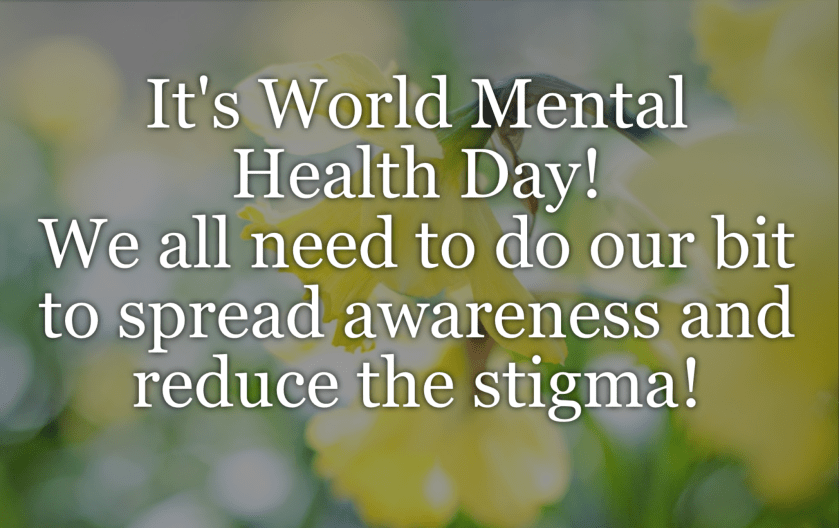
World Mental Health Day

FontCandy (4)

Mental illness has always been a part of my life. Whether it is through my own personal journey, through my family’s or watching friends struggle.

Although I haven’t been writing on here much, mental health will always remain a very important cause that I will always talk about. It is crucial for anybody struggling with mental illness to feel heard, to feel validated & to feel safe.

Empathy & understanding are necessary and we must all do our best to listen without judgement.

Life can sometimes throw us a curveball and none of us will ever know when this might happen.

Talk about mental health!

Be open & honest!

Be understanding!

Listen & give plenty of hugs to those struggling!

Sometimes that is enough to make someone’s day a little better!

Love Athina ♥

© All blog posts and images are owned by me and Courage Coaching. Please don’t use without consent and only re-blog if you would like to use the information on here.

1,500 subscribers on youtube!

thank-you

I always thought that my youtube channel would be for a small audience. I thought that it might get around 100 subscribers and that would be all. I was interested in sharing important information to help others and as well as having this blog, youtube has turned out to be more successful than I had anticipated! The success of it is in the fact that it is reaching so many people and that it is actually helping people suffering from narcissistic abuse feel validated & heard.

Although my blog posts and youtube videos are temporarily on hold, due to not finding the time or energy to create new ones, my appreciation for those of you who follow my work is very much present. My determination to help more people is also still there.

I am currently very busy, with my new puppy, with my work and with keeping everything else in my life in order.

Unfortunately, there isn’t much time left to write or create videos as often as I would like.

Living with CPTSD means that I am absolutely knackered most of the time and my new puppy is definetely adding to my exhaustion, although totally worth it!

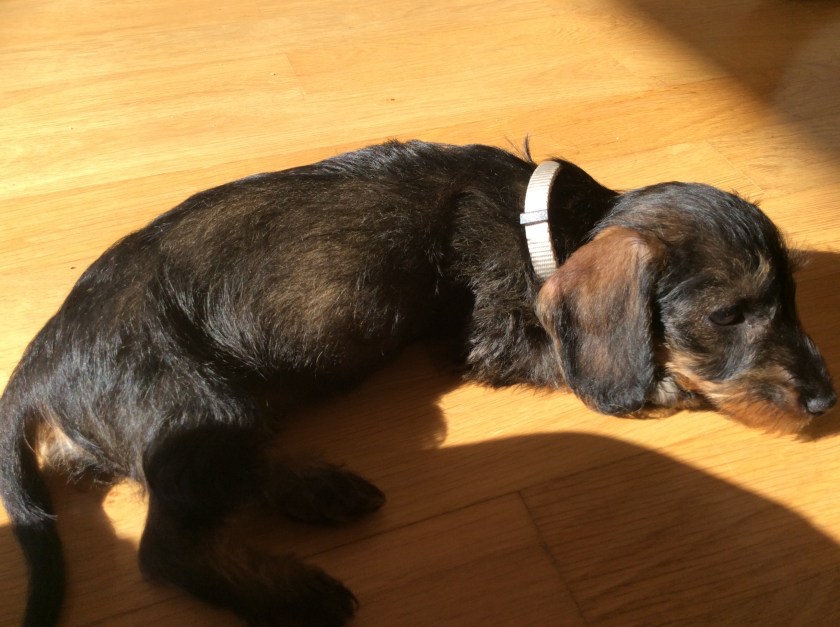
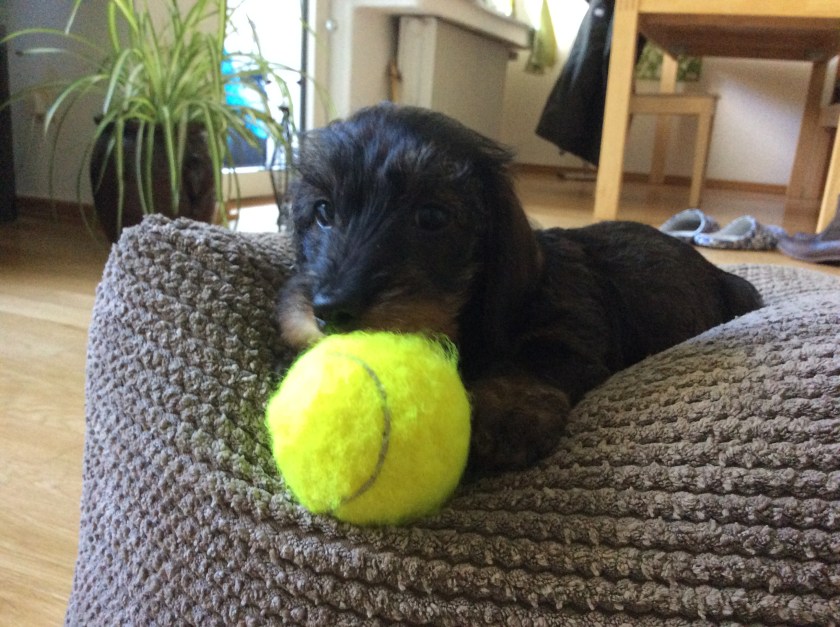
This blog post is just to say a big thank you to all my subscribers & followers and to share a photo of my new miniature wirehaired daschund girl Daula.

20988548_10154591269261621_6739140846307953330_oIMG_2673IMG_2686

Love Athina ♥


Healing from abuse

The sad thing about healing from abuse is that many people who haven’t themselves been abused, can’t possibly understand the survivor’s journey.

Healing from abuse is unique to each individual who has experienced it. The survivor will be emotionally damaged and/or physically hurt and unfortunately this damage is sometimes irreversible. Abuse leaves behind scars unique to each survivor’s experience.

Although healing means that your mind and body are able to recover, this doesn’t mean that the person can return to being ‘normal’.

The aftermath of abuse is usually permanent.

There might be long-lasting Complex PTSD for those who suffered child abuse, human trafficking, kidnapping or other severe types of abuse.

For some individuals abuse might be all they have known. They don’t have a pre-trauma or pre-abuse identity. They might not know what it is truly like to feel safe.

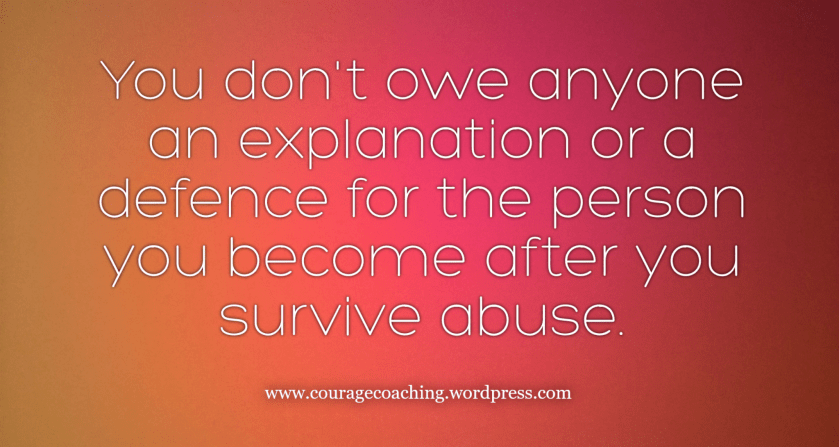
To all survivors of abuse or trauma,it is very important to remember this:

FontCandy (3)

Love Athina ♥

© All blog posts and images are owned by me and Courage Coaching. Please don’t use without consent and only re-blog if you would like to use the information on here.
 

How To Spot Deception

Great post by Eric on spotting deception. This is especially true for those with Narcissistic Personality Disorder or Psychopathy.

Dr. Eric Perry's avatarDr. Eric Perry’s Blog

By Eric Perry, PhD-c

Audio version | Click here


“He who has eyes to see and ears to hear may convince himself that no mortal can keep a secret. If his lips are silent, he chatters with his fingertips; betrayal oozes out of him at every pore.” ~Sigmund Freud

In my profession it is important to know if someone is lying to me or more importantly to themselves. Whether it is a small lie or a malicious lie, everyone lies at some point. Research shows that on average, people lie 10 times per day. Many people lie to keep the peace or to inflate their ego. Others might lie because they are pathological liars or have a personality disorder.

Lying appears to be part of our genetic makeup. It develops early in children and peaks in adolescence when a person begins to establish their identity and independence. Lying declines as…

View original post 941 more words

The narcissist’s vortex

swirly

Being in a relationship with a narcissist, whether that is a family member or partner, is like constantly being sucked into a vortex with no escape. Every time you think you are getting somewhere, you get sucked in deeper and deeper. Your confidence is constantly eroded, you start doubting your feelings and logic and the narcissist continues to do what he or she does best: Turning the tables on you everytime you have an argument.

They are masters at saying things like ” I never said that”, ”you are imagining things”, ”stop being so sensitive”, ” you hurt me way more than I hurt you” etc. …

Everything can & will always be used against you

Everything is always your fault

Everything is about how you hurt their feelings more than they hurt yours..

They are always one step ahead..

You will never win, you will never beat them..

The worst part is, that being in a relationship with a narcissist can become extremely addictive…

A trauma bond is created over time and the victim in this dysfunctional relationship clings onto the hope that the narcissist will become the positive person they remember from the beginning..The caring side that they were lured in with at the start, is what keeps them from walking away from the relationship..

If the relationship is with a narcissistic parent rather than a partner, then it is ever tougher for the adult child to break free..The trauma bond is even stronger, especially because a child’s love for their parents never dies and also because the brainwashing that goes on in the family home, is even more long-lasting and intense.

If you are in a relationship with someone whom you think is a narcissist and are starting to come around to this realisation, then please feel free to comment.

For support, please email me at courageisallyouneed@gmail.com

Love Athina ♥

© All blog posts and images are owned by me and Courage Coaching. Please don’t use without consent and only re-blog if you would like to use the information on here.
 

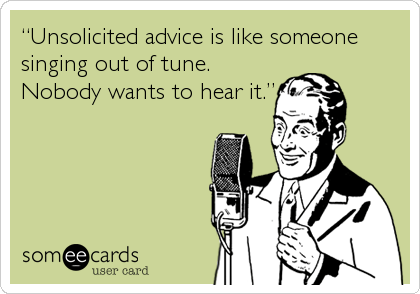
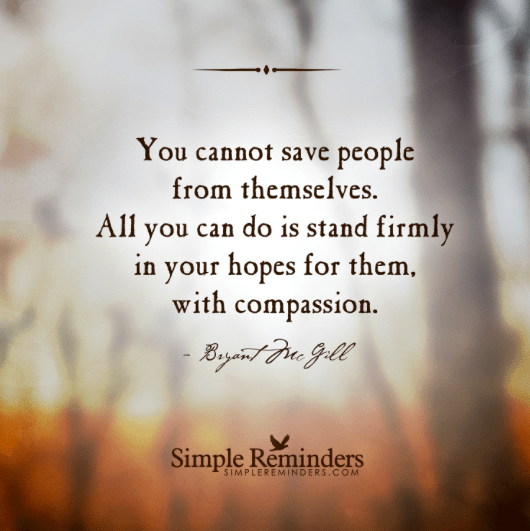
Giving unsolicited advice-Why do people do it?

When we ask for advice from someone that is very knowledgeable in certain areas or from someone whom we admire, this can be very useful both in the short term and long term.

On the other hand, unsolicited advice from close family or even from complete strangers can be an annoying and sometimes insulting behaviour.

MjAxMy1iN2ViMzMxYzczNzQ0ODQz

It could be done in a well meaning manner by some people but in most cases unsolicited advice is self-serving.

img_0541

The more well meaning reasons someone gives unsolicited advice are firstly because they are trying to be friendly, secondly they are just excited to share something that worked for them or thirdly they are just completely altruistic.

Some other motivations that might be harder to spot however are listed below:

Helplessness & wanting to solve your problems: If you are sharing some thoughts on how you are struggling in a certain situation, the listener may think that you need them to fix your problem rather than just validate what you are saying. They think that by giving you some sort of solution you will feel happier. This isn’t the case though in most situations.

The need to be needed:
Some people just have an intense need to be needed and to feel important. It’s as simple as that.

Narcissistic tendencies: People who may have a Narcissistic Personality, think that what they have to say is very important and they tend to be in the role of ‘teacher’ very often. They think that they are better than you and that their opinions are of high value, so they tend to offer advice all the time.

Dominance: This is similar to the behaviour of a Narcissist. Being dominant in a conversation is very important to some people. They want to be the most influential person and they have difficulty understanding why somebody might not want to hear what they have to say.

Being judgemental: If someone doesn’t like the way you are doing something, then they will give you advice so you can change it. This is when unsolicited advise becomes insulting.

So how do you respond to someone giving you unsolicited advice?

This can be rather tricky. If your reply is too detailed then this might encourage more unsolicited advice. If your reply is too agressive or defensive, then this may cause an argument or even damage your relationship with this person.

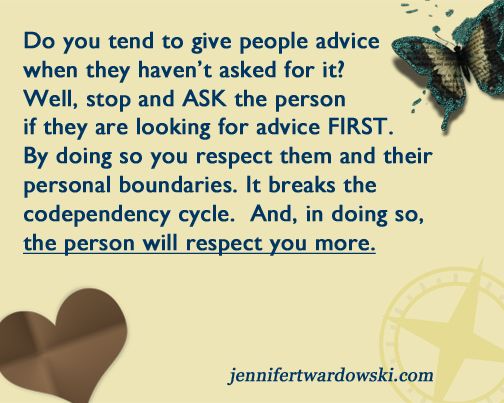
Simple, clear and short responses are the best. It is important to set clear boundaries and to be assertive when necessary.

”I will think about it”

”That’s an interesting point of view. I will consider if this is right for me”

”Thank you but I would rather do it this way” or ”I would rather stick to my plan”

”I am not looking for any advice right now”

”That doesn’t suit my values”

9b169ab7213cf06403d1034be7140be1--unsolicited-advice-relationships-love

What are your experiences with unsolicited advice?

If you liked this post then please feel free to share & comment.

Love Athina ♥

© All blog posts and images are owned by me and Courage Coaching. Please don’t use without consent and only re-blog if you would like to use the information on here.


Why is going ‘no contact’ so hard?

It’s been an extremely busy few days for me recently, which means my blog posts and youtube videos have had to take a back seat.

Work has been a priority, with little time for writing and reflecting.

I have also had an influx of emails from people needing immediate support dealing with narcissistic individuals. It always deeply saddens me to hear all the grief so many are currently experiencing and sometimes I wish I could just take all their pain away.

The ‘No contact’ question has been popping up a lot, so in this video I stress the importance of acceptance. Acceptance in this case, of the fact that a narcissist isn’t able to love or empathize and isn’t going to change and treat you better.

Once you manage to reach a place of acceptance through grief and talking with a professional, it is then easier to make the decision to go ‘no contact’.

Thanks for watching and reading

Love Athina ♥♥

© All blog posts and images are owned by me and Courage Coaching. Please don’t use without consent and only re-blog if you would like to use the information on here.

Avoidant Personality-Video II

In yesterday’s video, I decided to talk about Avoidant Personality in a little more detail, as my first video became very popular in a short amount of time and many viewers reached out to me with questions .

In this video I discuss some examples of what avoidance may look like, not only in full blown Avoidant Personality Disorder but also with people who just have a lot of the avoidant traits. I also talk about what specifically causes avoidant traits and what the consequences are.

Thanks for watching ❤

Love Athina ♥

© All blog posts and images are owned by me and Courage Coaching. Please don’t use without consent and only re-blog if you would like to use the information on here.