
Narcissists can give you fleas

What does it mean when narcissists give you the fleas?

Fleas comes from the adage “He that lieth down with dogs shall rise up with fleas”, which has been attributed to Benjamin Franklin.  According to Wikipedia, the quote has an almost universally agreed meaning of “You should be cautious of the company you keep. Associating with those of low reputation may not only lower your own but also lead you astray by the faulty assumptions, premises and data of the unscrupulous”

When a victim has the fleas, it means that they have picked up behaviours of the narcissist. This is mainly because they have been exposed to the narcissist’s behaviours for a prolonged period of time and have ended up feeling helpless and hopeless.

The victim will look for ways to escape and sometimes will resort to behaviours which are not characteristic but serve as a way to demonstrate their anger and alleviate the powerlessness they have been feeling.

The good thing is, that victims that use narcissistic behaviours against their abusers, quickly back down and feel ashamed and remorseful. This shows that they don’t need to be afraid of turning into a narcissist themselves.

Some examples of getting fleas can be when a victim shows passive aggressive behaviours when feeling cornered or triggered by someone close to them.

They could also at times become aggressive towards a narcissistic partner or parent.

Lastly, they may even shout at their parent or partner and even end up calling them names.

These are just maladaptive behaviours that can be changed by being self-reflective and by asking a therapist for support. Victims of narcissistic abuse live with C-PTSD so they will not always be able to cope in a healthy way. They just need the right guidance to makes changes by turning unhealthy coping mechanisms into healthy ones.

Thanks for reading!

Love Athina ♥

© All blog posts and images are owned by me and Courage Coaching. Please don’t use without consent and only re-blog if you would like to use the information on here.
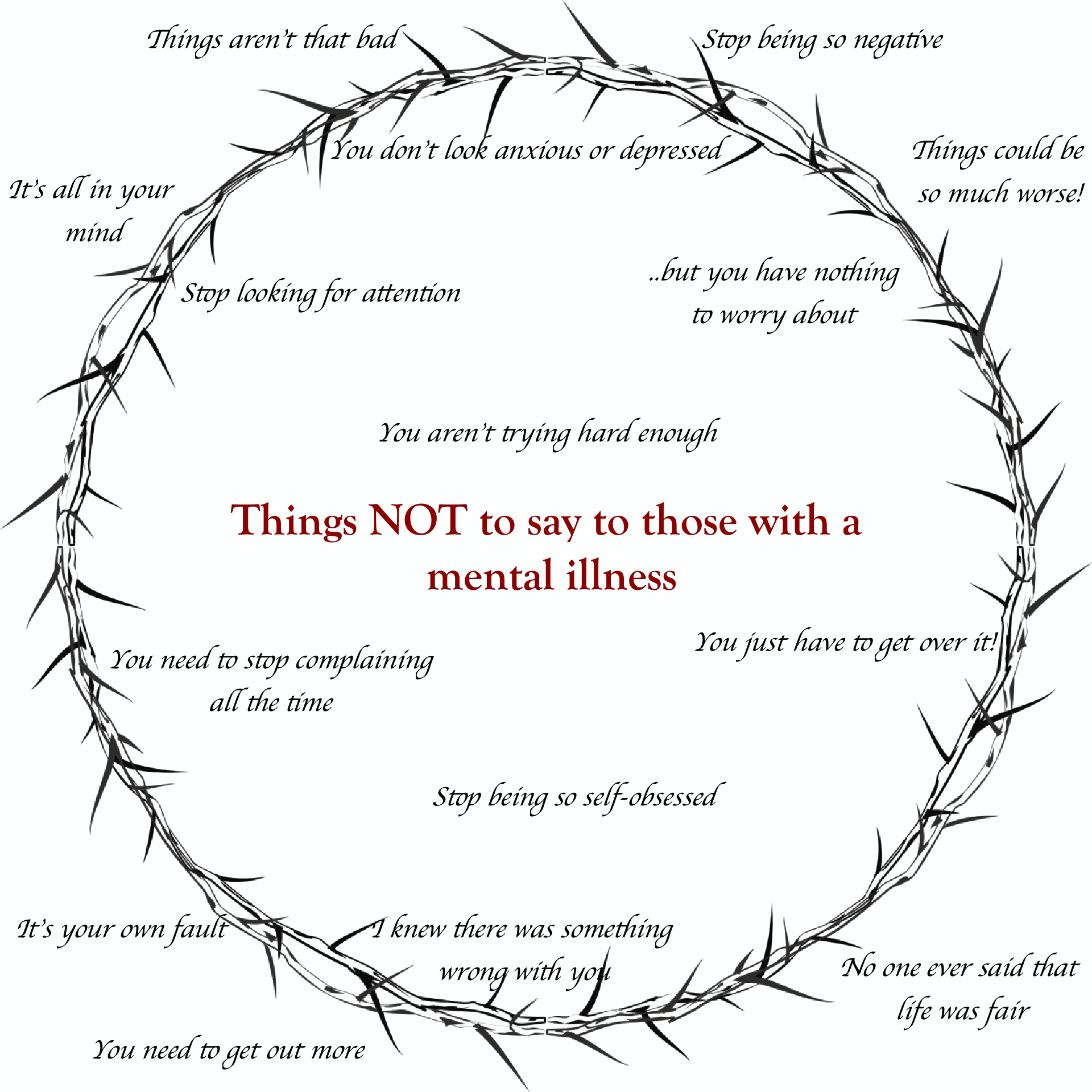
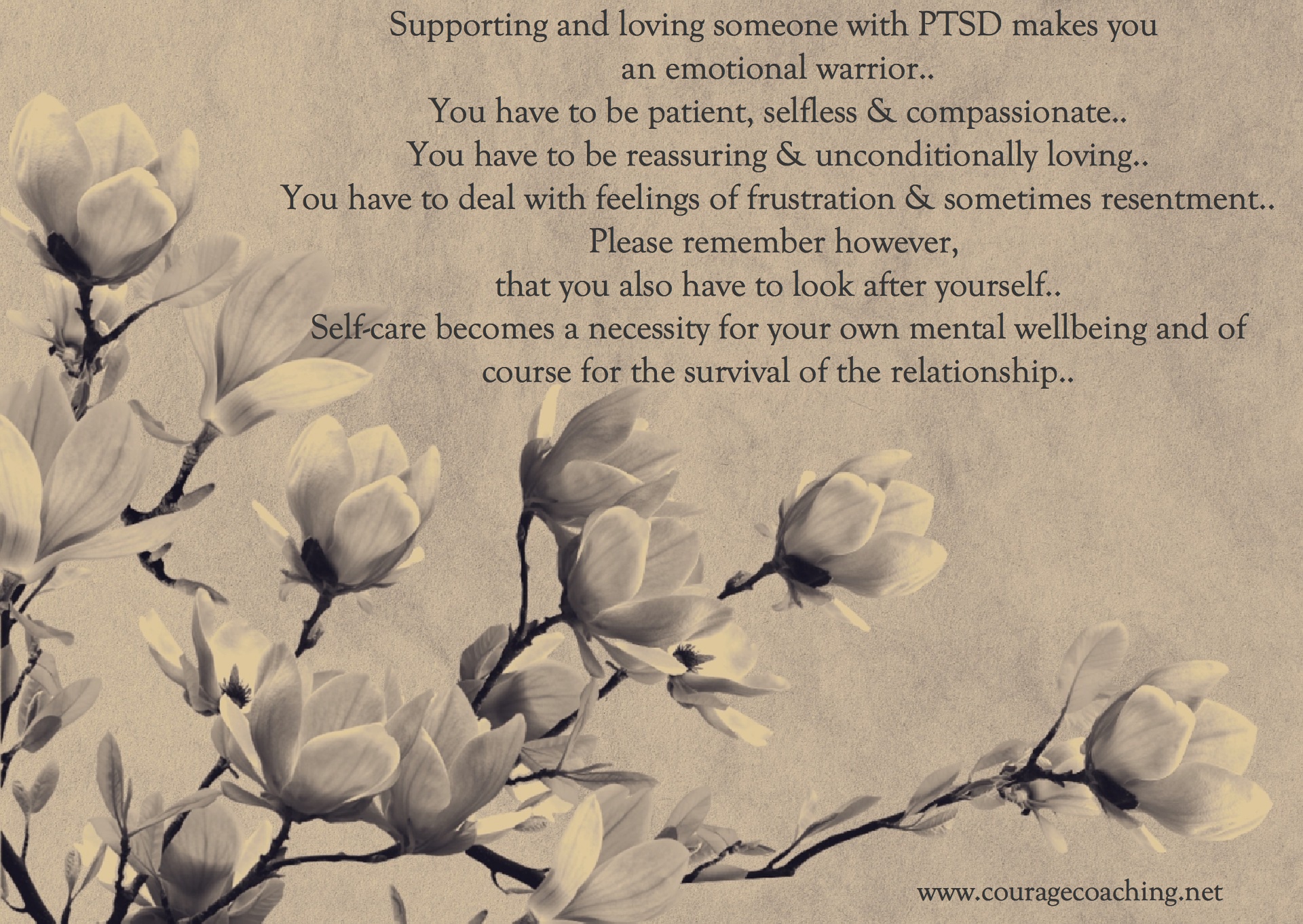
 

Things not to say to those with a mental illness

crown-of-thorns-2773399_Fotor
  Love Athina ♥ © All blog posts and images are owned by me and Courage Coaching. Please don’t use without consent and only re-blog if you would like to use the information on here.
Loving someone with PTSD

Ever since I made my youtube video ‘How does PTSD affect intimate relationships’, I have had so many of you contact me with questions about how to cope and support your partners. The reality is that it takes a very strong person to love someone who lives with PTSD, as they also live with it indirectly.

Loving someone with PTSD can easily takes its’ toll on the relationship and on the partner doing all the supporting. It can affect intimacy, communication & the expression of emotion.

The person with PTSD may not be able to work full time or may not be able to work at all.

It is of course very different for each individual relationship, as the severity of the PTSD is unique to each individual.

The most important thing to remember is that both partners have to practice self-care..

The one doing the supporting can also end up suffering from depressive episodes or anxiety..They may also generally feel mentally exhausted..

Breaks are very important and the partner of someone with PTSD, may at times need to take a mental holiday away from their partner..This is completely OK and almost necessary for the survival of the relationship.

background-1425783_1920_Fotor

Thanks so much for reading and please share this post if you think it may help someone!

Love Athina ♥♥

© All blog posts and images are owned by me and Courage Coaching. Please don’t use without consent and only re-blog if you would like to use the information on here.

Rules a partner has to follow in a relationship with a narcissist


It is important to see these rules, as if the narcissist was saying them directly to their partner. This will enable the victim (soon to be survivor) to relate in a more intense way and to get help to leave the narcissist.

Love Athina ♥


The sad truth about why narcissists form relationships

angry-640314_1920

Those with Narcissistic Personality Disorder sadly lack empathy and don’t feel remorse. They are cold, calculating, manipulative and emotionally shallow.

Narcissists don’t form relationships with others like healthy people do. They don’t seek out partners to love and share their life with in an equal, loving and respectful way. They see people as objects that they use to satisfy their needs.

These needs are usually attention, an ego stroke, improved social status, shelter, money, sex or a combination of these. These needs sadly do not include love.

Narcissists attach themselves to their victims and slowly bleed them dry, either financially or emotionally or both. They are known as being “parasitic” in nature, as they literally leech off their victims to get their needs met.

When Narcissists first meet their victims, they trick them into believing that they are their soul mate. They present themselves as the perfect potential partner and they create an intensely emotional experience for the victim. They will pretend to be supportive, loving, romantic etc. so their victim falls for them fast. Once they have lured their victim in successfully, the mask slips and their true colours start to show.

By this stage, the victim has already invested himself/herself completely in the relationship. The victim hopes that the narcissist will return to being the loving and kind person that they were at the beginning of the relationship. This exact thought is what makes them stay in the relationship despite any abuse they may be experiencing.

It’s really hard to believe, and it’s even harder to accept, but narcissists are not able to love anyone in a healthy way or create healthy bonds.

Narcissists also thrive on the emotional pain they cause their victims, especially when they hurt them on purpose. They feel important when they abandon their victim suddenly and see how much suffering they cause. The more suffering they see in their victim, the more important they feel.

Narcissists cause their victims extreme psychological damage and they are left feeling depressed and traumatised. Recovery is a slow process for survivors of narcissistic abuse but luckily it is possible to recover and find healthy love in the future.

Thanks for reading!

If you think this post will help others, then please share it!

Love Athina ♥♥♥

© All blog posts and images are owned by me and Courage Coaching. Please don’t use without consent and only re-blog if you would like to use the information on here.
Working with children who have been abused

Working with children is something that I have very much enjoyed doing on and off for 9 years.

After graduating from University 14 years ago, I spent part of my time running my jewellery business and the other part of my time was spent working as a nanny with children aged 3-11 years of age.

Being a part-time nanny, allowed me to have enough time to work on my jewellery whilst also earning a little extra money to keep things stable financially.

At present, I find myself in slightly different circumstances.

Although I will not be pursuing anymore nanny jobs, I am considering coaching a young teenager in the next few days.

In a few hours, I am meeting her and her mum for an initial consultation, to see if she would feel comfortable enough opening up to me.

Here in the UK, when you work with vulnerable individuals, such as children, special needs adults or the elderly, you need to make sure you get a DBS done.

The Disclosure and Barring Service (DBS), is able to provide information about an individual as to whether or not he or she has a criminal conviction or has been charged with a criminal conviction which has expired. This provides the employer, which in my case is the mother of this girl, with peace of mind.

I haven’t actually applied for this yet as I will ask the mother how she feels about this.

Although I have never had a conviction in my life, it is still important to do things properly.

Coaching a young girl, who has just been through an abusive situation at home with her stepmom, is vulnerable territory.

Things have to be dealt with very carefully and I will have to refer her to a psychotherapist, if I see that her symptoms are serious. As a coach, I can only guide her with compassion and validation of her feelings but I can’t offer much more. Her mother has said that her daughter hasn’t found any of the counsellors at school helpful and that child services are happy that she will be talking to me, due to my background and focus of my business.

If I can help this young girl, I will be extremely grateful.

When I was that age, I had no idea that I was actually suffering from abuse. I thought my life was normal, even though I had no confidence and felt empty and unloved.

All children deserve a chance to be supported and have their feelings acknowledged. All children deserve to feel safe, loved and to feel happy.

Thanks for reading

Love Athina ♥

© All blog posts and images are owned by me and Courage Coaching. Please don’t use without consent and only re-blog if you would like to use the information on here.

New beginnings & change

tree-2718836_1920

Before I talk about today’s topic, I just wanted to remind you that I have released my first PDF course which is aimed at helping you become more assertive and stop your people-pleasing habits.

To view the contents of this course, please click the link below:

Assertiveness course introduction

There are 5 places left for the discounted price I am offering so if you are interested then get in touch now by leaving a comment below.

In today’s post I wanted to talk about the challenge of new beginnings..

As much as they can be exciting and refreshing, new beginnings can sometimes be very tough. The fear of the unknown can be very daunting.

When things don’t go as we planned, how do we deal with the fallout?

No matter how perfectly we may have planned everything and thought everything through, the uncontrollable will always be there..

What if we moved to a new location and then our dream job ended up being a nightmare?

What if our new partner cheated on us?

What if we changed careers only to realise that it isn’t what we thought it would be?

How do we cope with life’s unexpected challenges?

After the initial disappointment or grief, how do we keep moving forward?

What if we get very scared and anxiety starts creeping in to our daily lives?

Owning our fears gives us control over our worries rather than our worries and fears controlling us.

Asking ourselves ‘What am I scared of?” can be very helpful. Writing down our fears can also help us clarify things a bit more.

Trying to change our negative thoughts into more positive ones, can make a huge difference in the way we feel. CBT works wonders for this!

If we think to ourselves that ‘every cloud has a silver lining’, then we can give ourselves a temporary boost of hope.

Having supportive friends or family around us can also greatly help..

Sometimes though we can feel more down than we had anticipated and sometimes we may feel so unmotivated that all we want to do is stay in bed and hide all day! That is also okay, as long as it doesn’t become a habit!

The following quote is one of my favourites regarding change:

“When we make a change, it’s so easy to interpret our unsettledness as unhappiness, and our unhappiness as a result of having made the wrong decision. Our mental health and emotional states fluctuate madly when we make big changes in our lives, and some days we could tight-rope across Manhattan, and other days we are too weary to clean our teeth. This is normal. This is natural. This is change.” — Jeanette Winterson

When we look back on the tough times in our life, do we ever find that they taught us something useful?

I have had 2 of these moments..The 2 toughest times in my life, helped me make huge changes in my life for the better and for those times I will be forever grateful!

As Freud once said:

“One day, in retrospect, the years of struggle will strike you as the most beautiful.” — Sigmund Freud

Thanks for reading

Love Athina ♥♥

© All blog posts and images are owned by me and Courage Coaching. Please don’t use without consent and only re-blog if you would like to use the information on here.
 

New assertiveness PDF course-How to communicate effectively & stop being a people-pleaser

My new assertiveness PDF course is finally ready to buy.

Being assertive isn’t something that comes naturally to all of us, especially for those of us who grew up in dysfunctional homes. As I myself, also struggled with this due to my background, assertiveness training helped me immensely. For this reason, I wanted to create a course that would help others as much as my assertiveness training helped me!

Being assertive as a child with narcissistic parents meant that we would get punished or have love and affection withdrawn from us. Protecting ourselves didn’t usually go down well with such disordered individuals.

As adults, we continued having trouble being assertive as we may have felt frightened of peoples’ reactions or we may have at times felt guilty that we were letting people down.

Assertiveness however is important in many ways, especially as it encourages respectful & honest communication and promotes equality in relationships.

Here is a sneak peak of the course cover and its’ contents.

assertiveness front cover

In this assertiveness course, I will include the following things:

  • What assertiveness is and what it isn’t.
  • When & how to be assertive
  • The 4 different ways of communicating
  • What rights we have in our interactions with others
  • The differences between aggressiveness & assertiveness
  • How it feels to be assertive
  • Examples of assertive communication
  • Handing criticism assertively
  • Handling anger assertively
  • Expressing criticism assertively
  • What changes when we become assertive
  • The inner critic and how it affects us
  • Emotional Flashbacks
  • Practicing assertiveness with some exercises

If you are interested in this PDF course,

then please click here: —–>>>>>     ASSERTIVENESS PDF COURSE

The PDF is 30 pages long, so it has enough material to help you become an expert at assertiveness.

This course is ideal if you are an introvert or an avoidant! It is a great first step before you actually attend an assertiveness training class!

Thanks so much for your attention and I am very much looking forward to sharing my knowledge with you!

Love Athina ♥♥

© All blog posts and images are owned by me and Courage Coaching. Please don’t use without consent and only re-blog if you would like to use the information on here.

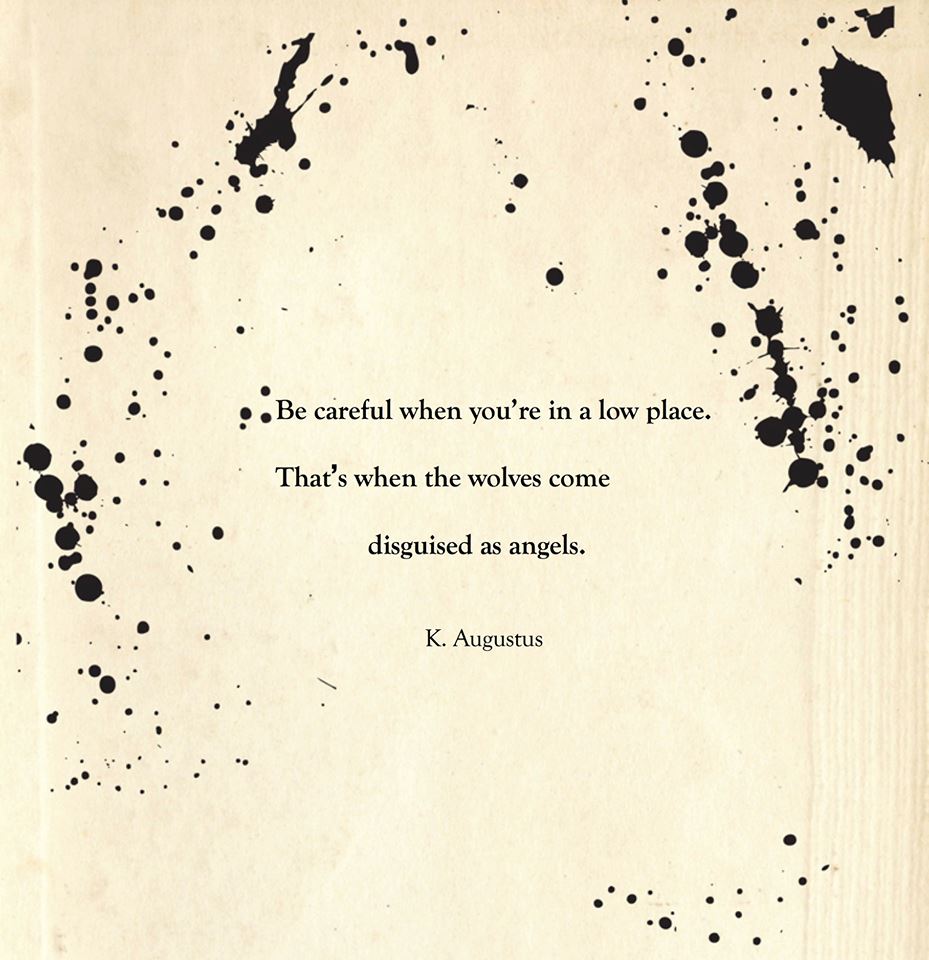
Vulnerability & the dangers of predators

33073121_1538935199604808_8797525179052851200_n

There are countless times in my own personal life, where my own vulnerability got me into trouble.

At times where all I wanted was genuine comfort & love, I met people who took advantage of my vulnerable state of mind. Those people in particular had narcissistic traits and I only realised this of course when it was a little too late!

If you are in the middle of grieving, or fresh out of a bad relationship, be sure to tread carefully.

If you grew up in a dysfunctional home and now live with Complex PTSD, then you will always be vulnerable to the wrong person. Unless you have had a chance to work through your childhood trauma and come out of therapy healthier, choosing the wrong people to associate with, will be familiar but dangerous.

The trauma bond is what makes survivors of abuse more susceptible to predators in sheep’s clothing. Especially when it comes to romantic interests or intimate encounters.

A lot of survivors of abuse will settle for sex when in reality they really want love and a sense of acceptance.

Narcissists are experts at hiding their true colours at the beginning. They are also attracted to empaths & sensitive people like magnets.

If you have had an experience like this that has affected you, then please feel free to share it in the comments below.

Feel free to re-blog this post, if you think it will help others.

Thank you

Love Athina ♥

© All blog posts and images are owned by me and Courage Coaching. Please don’t use without consent and only re-blog if you would like to use the information on here.