How To Spot Deception

Great post by Eric on spotting deception. This is especially true for those with Narcissistic Personality Disorder or Psychopathy.

Dr. Eric Perry's avatarDr. Eric Perry’s Blog

By Eric Perry, PhD-c

Audio version | Click here


“He who has eyes to see and ears to hear may convince himself that no mortal can keep a secret. If his lips are silent, he chatters with his fingertips; betrayal oozes out of him at every pore.” ~Sigmund Freud

In my profession it is important to know if someone is lying to me or more importantly to themselves. Whether it is a small lie or a malicious lie, everyone lies at some point. Research shows that on average, people lie 10 times per day. Many people lie to keep the peace or to inflate their ego. Others might lie because they are pathological liars or have a personality disorder.

Lying appears to be part of our genetic makeup. It develops early in children and peaks in adolescence when a person begins to establish their identity and independence. Lying declines as…

View original post 941 more words

Guilt & people pleasing

woman-2696408_1920

Second-guessing myself always lingers in the background, when I don’t allow myself to PEOPLE PLEASE..

Feeling guilty for not people-pleasing is something that I just have to make friends with, although sometimes it just feels harder than others.

Being authentic & true to myself is so much more important but breaking old habits is tough, especially when I am not always aware. Sometimes I just seem to realise too late and end up having to deal with whatever it is I said yes to.

Whenever I have lingering guilt after saying ”I am not comfortable with that” or just simply saying ”No”, I try and ask myself why I am feeling this way. It always boils down to not feeling good enough, not being liked & feeling like ‘I am bad’ rather than the healthier ‘I have done something bad’.

I know now, that I was moulded into a people-pleaser by my parents, when I was a young child . Narcissistic parents are very good at using their children as sources of supply, whether that is for adoration, love, doing chores for them, being their emotional crunch or getting them to do all sorts of uncomfortable or age inappropriate things.

I am fully aware that even now, in my thirties, it is a lot easier and less scarier for me to make excuses about why I don’t want to do something rather than to simply say ‘I don’t want to do it’…

As a child, if I simply said NO, I would usually get into trouble and my parents would withdraw their love and attention towards me, until I complied..I learned the hard way that standing up for myself would almost always lead to punishment..

Now as an adult, I still feel crushed whenever I sense that someone isn’t happy with my response. The guilt can sometimes linger for days and this is a really crappy frame of mind to be in, as it isn’t productive or useful. However, part of being able to stop people pleasing, is to accept that you just have to sit with your feelings of guilt, as in the end you are doing what is best for you and not others.

What is your experience with feelings of guilt when choosing not to people-please?

Love Athina ♥♥

© All blog posts and images are owned by me and Courage Coaching. Please don’t use without consent and only re-blog if you would like to use the information on here.

The narcissist’s vortex

swirly

Being in a relationship with a narcissist, whether that is a family member or partner, is like constantly being sucked into a vortex with no escape. Every time you think you are getting somewhere, you get sucked in deeper and deeper. Your confidence is constantly eroded, you start doubting your feelings and logic and the narcissist continues to do what he or she does best: Turning the tables on you everytime you have an argument.

They are masters at saying things like ” I never said that”, ”you are imagining things”, ”stop being so sensitive”, ” you hurt me way more than I hurt you” etc. …

Everything can & will always be used against you

Everything is always your fault

Everything is about how you hurt their feelings more than they hurt yours..

They are always one step ahead..

You will never win, you will never beat them..

The worst part is, that being in a relationship with a narcissist can become extremely addictive…

A trauma bond is created over time and the victim in this dysfunctional relationship clings onto the hope that the narcissist will become the positive person they remember from the beginning..The caring side that they were lured in with at the start, is what keeps them from walking away from the relationship..

If the relationship is with a narcissistic parent rather than a partner, then it is ever tougher for the adult child to break free..The trauma bond is even stronger, especially because a child’s love for their parents never dies and also because the brainwashing that goes on in the family home, is even more long-lasting and intense.

If you are in a relationship with someone whom you think is a narcissist and are starting to come around to this realisation, then please feel free to comment.

For support, please email me at courageisallyouneed@gmail.com

Love Athina ♥

© All blog posts and images are owned by me and Courage Coaching. Please don’t use without consent and only re-blog if you would like to use the information on here.


HSP-The Highly Sensitive Person

dandelion-761759_1920


People who are highly sensitive are born that way; it is not something that is learned.

The scientific term for high sensitivity is “sensory-processing sensitivity” (SPS).

Highly sensitive people have the following traits:

  • They feel more deeply.
  • They’re more emotionally reactive.
  • They’re probably used to hearing “Why are you so sensitive?”
  • Highly sensitive people are introverts but 30% of HSP’s are extroverts.
  • They’re more prone to anxiety or depression
  • That annoying sound is probably significantly more annoying to a highly sensitive person
  • They cry more easily and are deeply empathetic to other people’s emotions.
  • Highly sensitive people have reactions to criticism that are more intense than less sensitive people
  • They’re crushed by bad decisions
  • They take longer to reach decisions
  • They are highly conscientious
  • They tend to be highly intuitive & can tell when someone they care about is upset
  • They are incredibly observant
  • They can be easily overwhelmed by bright lights, too much noise, big crowds, strong smells or uncomfortable clothing.

Do you think you might be a highly sensitive person?

If yes, then the following website may be of use to you!

http://hsperson.com/

Love Athina ♥♥

© All blog posts and images are owned by me and Courage Coaching. Please don’t use without consent and only re-blog if you would like to use the information on here.


Self-growth

How do we develop ourselves into better human beings?

What steps can we take to become wiser, more self-aware and more humble?

Self-growth is a topic that I think about a lot and when I am interacting with others in my environment, I feel saddened by the fact that so many people don’t seem to acknowledge their weaknesses, don’t find time to make improvements in their life and just seem to be on a path of complaining & under-valuing their lives.

FontCandy

Although I acknowledge that in my own journey there are many things that I may not be able to completely change, due to circumstance or mental illness, I definetely aspire to bettering myself on a daily basis.

One of the biggest motivations for most people to make changes for the better, comes from a feeling that something isn’t quite right in their lives. They are either too stressed, too angry or just simply feeling depressed. They may start noticing certain destructive patterns repeating in their life and feel completely stuck in trying to make changes.

This is where coaching can be really useful and for the more complex mental health issues, therapy can also be an invaluable source for self-growth.

Although many people think that they have things under control, it is those same people that actually live chaotic lives and just don’t seem to prioritise their own self-development. They aren’t able to be introspective and they remain in the same state of mind most of their lives. They end up reaching the age of 60 and are still acting in ways that are either unhelpful, harmful to others or self-sabotaging.

So what is the first step to self-growth?

What is the one, most important thing that can motivate us to start making lasting changes?

  1. We must acknowledge our weaknesses- It is helpful to write a list as honestly as possible about the things we really struggle with and want to work on. It is good to spend as much time on this as possible, looking at all areas in our life: relationships, work, spiritual, physical health, mental health etc..It might also be helpful to ask close family or friends for feedback about this. Which areas do they think we struggle in. It might not be easy to hear about our struggles at first, especially if we are not aware of them. In the long-term however, it could be very beneficial to us.


  • It is important to set 1 goal at a time in the area we would like to improve in.


  • We need to realise that change happens when we break out of bad habits and form new healthier ones. Again this needs to be broken down into smaller goals, by breaking out of 1 bad habit at a time and forming 1 new healthy habit.


  • We have to accept full responsibility for all areas in our life. This means that we have to fully accept that we are the only ones who can make changes. We can blame others until we go blue in the face but at the end of the day, it is our job to improve our lives. Accepting responsibility of course, doesn’t mean that we completely ignore certain disabilites we may have or certain traumatic events that we may have experienced. It means that we fully own our journey and embrace the unpleasant things we aren’t able to change by grieving them whilst also trying to have gratitude for the things that we are fortunate to have and are able to do.


  • Enrich our world with learning and doing courses in self-development


  • Growth comes when we face certain challenges. We have to push ourselves to move out of our comfort zone. Sometimes the things that scare us the most hide the biggest opportunities for self-growth. It is important to face these fears and see how far we can get.


What is your experience with self-growth? Have you looked inside yourself to see if something needs to change?

Feel free to comment or share this blog post.

Love Athina ♥

© All blog posts and images are owned by me and Courage Coaching. Please don’t use without consent and only re-blog if you would like to use the information on here.


Giving unsolicited advice-Why do people do it?

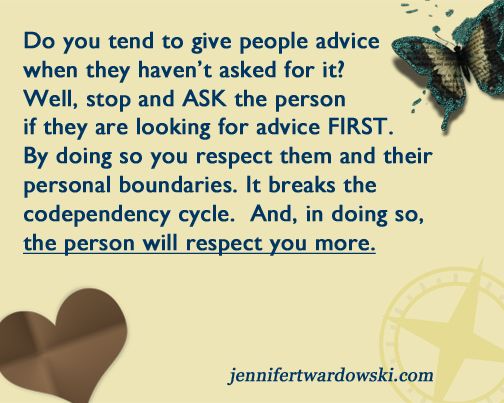
When we ask for advice from someone that is very knowledgeable in certain areas or from someone whom we admire, this can be very useful both in the short term and long term.

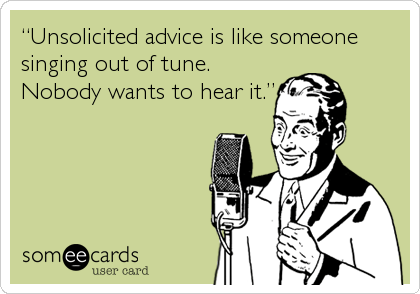
On the other hand, unsolicited advice from close family or even from complete strangers can be an annoying and sometimes insulting behaviour.
MjAxMy1iN2ViMzMxYzczNzQ0ODQz

It could be done in a well meaning manner by some people but in most cases unsolicited advice is self-serving.
img_0541

The more well meaning reasons someone gives unsolicited advice are firstly because they are trying to be friendly, secondly they are just excited to share something that worked for them or thirdly they are just completely altruistic.

Some other motivations that might be harder to spot however are listed below:

Helplessness & wanting to solve your problems: If you are sharing some thoughts on how you are struggling in a certain situation, the listener may think that you need them to fix your problem rather than just validate what you are saying. They think that by giving you some sort of solution you will feel happier. This isn’t the case though in most situations.

The need to be needed:
Some people just have an intense need to be needed and to feel important. It’s as simple as that.

Narcissistic tendencies: People who may have a Narcissistic Personality, think that what they have to say is very important and they tend to be in the role of ‘teacher’ very often. They think that they are better than you and that their opinions are of high value, so they tend to offer advice all the time.

Dominance: This is similar to the behaviour of a Narcissist. Being dominant in a conversation is very important to some people. They want to be the most influential person and they have difficulty understanding why somebody might not want to hear what they have to say.

Being judgemental: If someone doesn’t like the way you are doing something, then they will give you advice so you can change it. This is when unsolicited advise becomes insulting.

So how do you respond to someone giving you unsolicited advice?

This can be rather tricky. If your reply is too detailed then this might encourage more unsolicited advice. If your reply is too agressive or defensive, then this may cause an argument or even damage your relationship with this person.

Simple, clear and short responses are the best. It is important to set clear boundaries and to be assertive when necessary.

”I will think about it”

”That’s an interesting point of view. I will consider if this is right for me”

”Thank you but I would rather do it this way” or ”I would rather stick to my plan”

”I am not looking for any advice right now”

”That doesn’t suit my values”
9b169ab7213cf06403d1034be7140be1--unsolicited-advice-relationships-love

What are your experiences with unsolicited advice?

If you liked this post then please feel free to share & comment.

Love Athina ♥

© All blog posts and images are owned by me and Courage Coaching. Please don’t use without consent and only re-blog if you would like to use the information on here.



Covert narcissism-The hidden narcissist

Today’s post and youtube video is about the more hidden type of narcissism known as covert narcissism.

I know how destructive this type of narcissism can be from personal experience and I believe that more people need to be aware that covert narcissists sometimes hide behind a mask of generosity, fake empathy and self-sacrifice.

They walk among us more often than anyone realises and they can be doctors, healthcare workers and psychologists.

Covert means: not openly acknowledged or displayed, concealed or hidden

If you find the video or this post useful please feel free to comment, like & share it with anyone who might benefit.

Love Athina ♥

© All blog posts and images are owned by me and Courage Coaching. Please don’t use without consent and only re-blog if you would like to use the information on here.


Grief

FontCandy (20)

Grief is a huge part of life and yet a very painful one. We all experience it and for some people grief can be an even bigger part of their lives than for others.

Grief can be about so many things, not just the death of a person.

Every new beginning means that there was also an ending and every ending can leave a trail of grief. Grief can be experienced at the end of a relationship, the end of a job, leaving the town you grew up in, saying goodbye to friends or family, saying goodbye to a beloved pet or business or even saying goodbye to life as a single person.

What are your experiences with grief?

Love Athina ♥

© All blog posts and images are owned by me and Courage Coaching. Please don’t use without consent and only re-blog if you would like to use the information on here.