Pet loss grief & CPTSD

On the 21st of August, I sadly had to euthanise my beloved 8 year old dachshund. It all happened within 24 hours and it came out of nowhere. She collapsed after vomiting and we rushed her to the emergency vet hospital. They stabilised her over night, they did an x-ray and ultrasound and the only thing they could see initially was a little liquid in her ovaries which means she may have had the early signs of an infection.

The next morning, they called us and told us she was doing better and even managed a tiny walk. They said they would do a routine spaying operation just to be on the safe side and then she would be home with us in the evening.

A few hours later, after waiting in suspense to hear back from the vet, we got a phone call to say that they needed permission to take more blood, as she was showing unfavourable neurological issues. Unfortunately, the blood test showed high inflammation in her little body, severe anemia and essentially her body was shutting down. Her blood was no longer clotting so they couldn’t operate anymore. She had also had an aneurysm and we were told that the kindest thing we could do was euthanise her. The vet suspected that her body was shutting down due to a tick borne disease which is hard to spot and progresses rapidly. Even though she had been on anti-tick medication, the vet said it is not reliable in preventing disease.

This was an incredible shock, especially after we thought she was coming home to us. Our gorgeous little Daola, was the light of our life, our best friend and our emotional support. For 8 wonderful years, she filled our life with such joy, comfort and unconditional love.
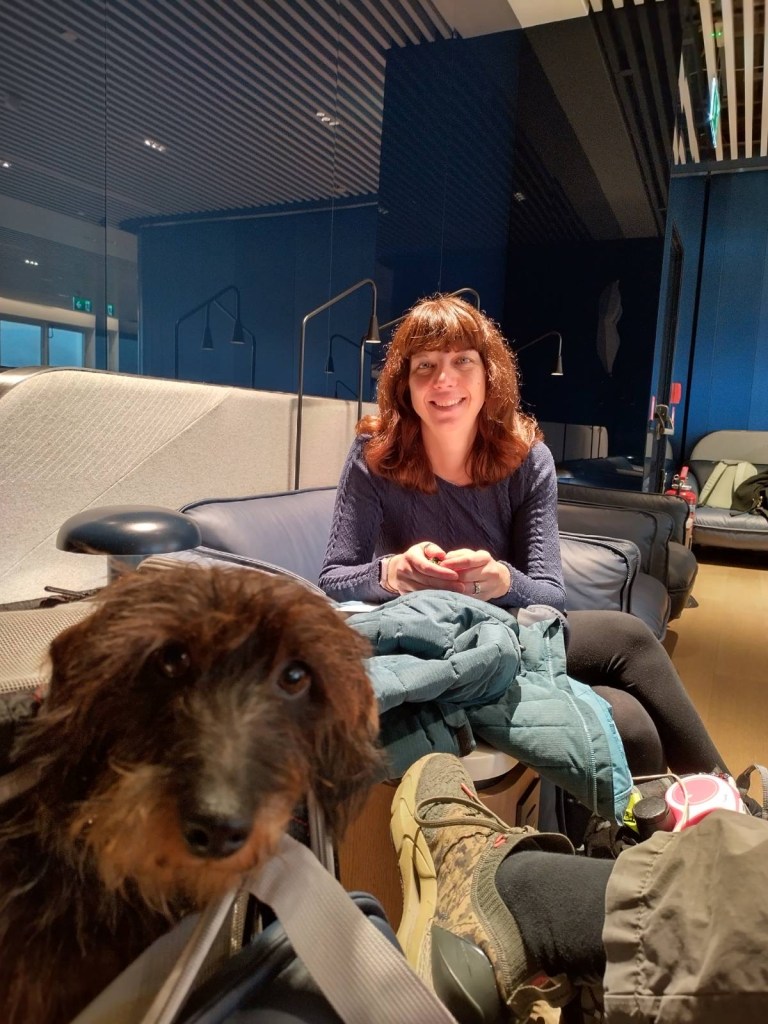
Losing a pet when you also live with CPTSD, is incredibly hard, especially because you already struggle so much with regulating your emotions, self-soothing and hyper vigilance. As someone who lives with this myself, I have had a solid couple of weeks of increased anxiety alongside my grief for my little girl.

It is important to understand that an unexpected death, whether this is a pet or a person, is very hard to navigate. The circumstances may even be traumatic, so when you already live with trauma, your body and mind need time to adjust.

The loss is profound, so the sadness and despair you may feel is completely normal under the circumstances. The stronger the bond and attachment you had to your pet, the stronger the grief and the longer it may take for the intensity of those feelings to subside.

It has been nearly 3 weeks since I lost my gorgeous dog and the grief is still intense. Life feels dull and being at home feels very empty. I am allowing myself to cry and think of her and I am resting as much as possible where I can. Grief can be exhausting, so it is important to practice good self-care.

Many emotions have been present through my grief journey such as guilt, anger, despair and many ‘What if’s’. What if I had gone to the vet earlier? What if I had noticed the signs sooner? All emotions are valid. We try to make sense of the shock and instead of feeling helpless, we try to fill our minds with thoughts that distract us from feeling the pain. This doesn’t work however. Our pet is gone and there is nothing we can do to bring them back. We must grieve that loss and the deep love we felt. The only way to grieve in a healthy way, is through acceptance that they are gone.

Grieving a parent who is still alive

When a parent is emotionally immature, abusive, or neglectful, it can be incredibly painful and confusing for the adult child. These patterns often make it difficult—sometimes even impossible—to maintain a healthy or meaningful relationship with that parent. The adult child may find themselves caught between loyalty and self-preservation, longing for love or validation while also needing to protect their emotional wellbeing.

Over time, repeated invalidation, manipulation, or emotional absence can erode trust, leaving the adult child to grieve the parent they never truly had—not because the parent is gone, but because the relationship cannot meet the basic needs of safety, respect, or mutual care.

Setting boundaries or choosing distance in these cases is not a sign of failure or selfishness—it’s often an act of deep inner strength, rooted in a desire to heal, grow, and break cycles of emotional harm.

If you relate to the above, then my newest video below might be just the right thing for you!

Love Athina

Cognitive Bypassing & trauma

Cognitive Bypassing is the practice of avoiding feelings by detouring into cognitive ideas or beliefs. It means that we tend to overthink in order to avoid uncomfortable emotions such as grief, fear or anger.

There is nothing wrong with using cognitive strategies as part of your emotional well-being. However, when every negative emotion must be analysed, changed or explained cognitively, this is counterproductive. Compulsively adding cognition to emotion means that you don’t ever allow your traumas to fully heal. The uncomfortable truth is that there is a component of painful emotions that simply must be felt, as hard as that may be to hear.

Healing trauma has more to do with embracing the feeling in the body than holding on to the thoughts of the mind. Somatic healing is crucial in recovery from trauma when you live with CPTSD. Allowing yourself to grieve the losses of your childhood is also a huge part of the healing process. Throwing CBT techniques at clients who suffer with trauma just isn’t enough!

Different therapies that enable us to somatically process trauma are very important in healing childhood trauma. Art therapy, dance therapy, drama therapy, play therapy as well as somatic healing, EMDR, sensorimotor therapy and accelerated experiential dynamic psychotherapy are all very important.

Most of us who have experienced trauma, find ways to constantly avoid our emotions by overthinking but also by comfort eating, doing drugs or drinking alcohol, being compulsive, dissociating and so much more.

How many of us actually just sit with our uncomfortable emotions and allow ourselves to self soothe, allow ourselves to have a good cry and share what we are actually feeling? Do we actually allow ourselves to feel our sadness or fear and just give it the space to be present without analysing it? This isn’t easy for many of us. As much as it isn’t easy, we have to find ways to make room for it and really feel whatever comes up.

How does it feel when your narcissistic mother dies?

When this day finally arrives, the grief process is complicated and is full of contradicting emotions.

Losing a dysfunctional mother can be freeing but can also be devastating.

Watch the video to find out more

Covert narcissism-The hidden narcissist

Today’s post and youtube video is about the more hidden type of narcissism known as covert narcissism.

I know how destructive this type of narcissism can be from personal experience and I believe that more people need to be aware that covert narcissists sometimes hide behind a mask of generosity, fake empathy and self-sacrifice.

They walk among us more often than anyone realises and they can be doctors, healthcare workers and psychologists.

Covert means: not openly acknowledged or displayed, concealed or hidden

If you find the video or this post useful please feel free to comment, like & share it with anyone who might benefit.

Love Athina ♥

© All blog posts and images are owned by me and Courage Coaching. Please don’t use without consent and only re-blog if you would like to use the information on here.


Grief

FontCandy (20)

Grief is a huge part of life and yet a very painful one. We all experience it and for some people grief can be an even bigger part of their lives than for others.

Grief can be about so many things, not just the death of a person.

Every new beginning means that there was also an ending and every ending can leave a trail of grief. Grief can be experienced at the end of a relationship, the end of a job, leaving the town you grew up in, saying goodbye to friends or family, saying goodbye to a beloved pet or business or even saying goodbye to life as a single person.

What are your experiences with grief?

Love Athina ♥

© All blog posts and images are owned by me and Courage Coaching. Please don’t use without consent and only re-blog if you would like to use the information on here.

The loss of what should have been

When you don’t get certain basic needs met in your childhood, there will come a time in your future where you will eventually become awakened to these unmet needs. Although this isn’t the same for everyone, there is usually one feeling which is most prevalent for most: ”The feeling of being ripped off”

This feeling of being ripped off, because you didn’t have a healthy family or because you no longer have a family to turn to, starts a very real and painful journey of mourning.

A lot of people who grew up with abusive parents, or in one parent families, or in families where their parents were chronically ill, learned to ‘live on autopilot’. They either had to push down their feelings to keep the peace, be a confidant or carer to the sick parent or learned that they had to solely rely on themselves. Even when they were scared and had no one to turn to as children, they had to keep going. As early adulthood approached, they may have found many ways to cope with this underlying feeling of sadness or anger, by drinking too much, working too much and generally trying to find ways to numb out any uncomfortable feelings that would creep up.

When an adult child is first awakened to the reality of what really was and what now is, they somehow know that things will never feel the same again. It might be that a certain event in their adult life uncovered feelings that had been buried deep inside them and suddenly the strength that they thought would always keep the safe, slowly starts to crumble. New anxieties, fears & losses start to unfold and the world suddenly starts to feel like a scary & unsafe place.

At this early stage of realisation, when adult children come to terms with the fact that they needed so much more than what they were given emotionally, the grief can feel overwhelming. Grief for adult children is a complex emotion because so much of the loss has been built up over time and they have long learned to adapt to the constant loss of an ideal childhood. Looking into the future feels bleak and they feel as if things are only going to get worse rather than better.

Through my own journey of grief, I learned that it isn’t a straightforward process and that it doesn’t have a certain time limit. When the grief was so overwhelming at times that I couldn’t imagine a better future, I reminded myself that it was necessary for me to truly feel the sadness. When your heart feels broken you have to let it heal and healing requires compassion & patience with yourself.

Pete Walker is a truly Inspirational Psychologist and survivor of childhood abuse. His words below really resonate:

 “…the broken heart that has been healed through grieving is stronger and more loving than the one that has never been injured.  Every heartbreak of my life, including the brokenheartedness of my childhood, has left me a stronger, wiser and more loving person than the one I was before I grieved”

The last thing that is worth mentioning, is that a lot of people don’t start their journey of recovery & grief from childhood trauma, unless it is emotionally safe for them to do so. It might be that they are in a supportive relationship and a stable environment and this enables them to ‘let go’ and just be vulnerable. It might be that they have found a therapist which they feel comfortable enough to be themselves.

Recovery from the losses of one’s childhood is necessary in order to restore balance & new found hope in the future.

FontCandy (29)

What is your experience?

Love Athina ♥

© All blog posts and images are owned by me and Courage Coaching. Please don’t use without consent and only re-blog if you would like to use the information on here

Narcissistic abuse-Trauma bonding with a parent

giphygf

As many of you already know, my journey to qualifying as a Life Coach, was based on my own recovery from my narcissistically abusive parents.

For those of you who don’t follow my more personal blog, I wanted to just give you a little insight into my own struggles.

In the last few days, I have been struggling with contact again from my father, after 1 year and a half of not speaking.

I sent him a letter, so he could stop harrassing me by phone.

I never exclusively told him I wanted no contact, but after a very traumatic time following his attempted suicide, (as a way of stopping his wife from leaving him) he gave me the silent treatment for a year, so I just went along with it.

I was not willing to respond to him and was already in a grieving process, even though there was no closure of any sort.

When he finally decided to start hoovering me back in with his phonecalls and sudden caring, I continued to ignore his calls. This communication from him went on for 8 months. I finally got fed up with the constant calls that I decided to send him a letter to end our relationship. I briefly explained my reasons and gave him the chance to reply.

I received his reply and it hit me really hard! More than I expected it to.

I realised that I still had a tiny glimmer of hope that he might change his behaviour and this was a huge setback for me. I also realised how incredibly strong the trauma bonding is between us, even more so than with my mother.

As a means of coping with my recent distress and the final letter to him, which I am in the process of writing at the moment, I created the below video!

It outlines what I have been going through and what many other survivors of abuse face all the time.

Please feel free to share it, if you think it may help others.

Just visit my Youtube page and embed it into your page.

Thanks for reading

Love Athina ♥

© All blog posts and images are owned by me and Courage Coaching. Please don’t use without consent and only re-blog if you would like to use the information on here.

Trauma is a loss, so it must be grieved

Trauma happens to all of us..We all go through life with a few small traumas. Most of the time, small traumas or small losses don’t leave emotional scars. We just keep going and adjust to whatever life throws at us.

If on the other hand, the trauma or loss we suffer is profound, then this means that we will be more deeply affected by it and will need longer to overcome it or learn to live with the affects.

In this video, I touch on the importance of grief and the 3 main stages of grief you go through when dealing with a major loss or trauma.

Love ♥ Athina

© All blog posts and images are owned by me and Courage Coaching. Please don’t use without consent and only re-blog if you would like to use the information on here.

Grief

Although grief is a huge part of life, it is something that none of us want to experience.

woman-1246587_1920

We can grieve over the loss of a loved one or beloved pet.

We can grieve over the loss of a job or home.

We can grieve whenever a new change happens in our lives, such as the loss of personal freedom when we have children or the loss of certain abilities when we become physically or mentally ill.

Sometimes the reasons we grieve are very subtle.

In general though, the journey through grief is a long one and it is important to give oneself time to grieve and to endure the overwhelming emotions that often accompany grief. Everyone moves at his or her own pace and along this path there will be circumstances which hinder one’s progress and circumstances which assist one’s progress. It may even take a lifetime to reach the desired goals of acceptance and inner peace.

If you are someone who grew up in an abusive & invalidating home, you will experience a more complicated type of grief. You will go through a grieving process which can take several years and will sometimes never completely go away. To not have had a nurturing & safe childhood means that you never experienced yourself as feeling nurtured & unconditionally loved. You will never, ever know what it is like to have healthy parents because this only happens once in your lifetime.You might only get glimpses of healthy families from friends that are lucky enough to have this and this will deeply hurt in its’ own way. If you were fostered, you might have finally managed to experience unconditional love later in your childhood but this still doesn’t completely undo the damage you have already experienced.

There are many ways to deal with grief. Ways that most of us have experienced to be healthy, such as allowing ourselves to cry and deeply feel our emotions of despair & unfairness.Crying doesn’t make us weak, it can actually strengthen us emotionally and physically. Crying stimulates production of endorphins which are the “feel good” hormones in our body.

Other ways are to turn to friends for support, write a journal or blog online. Exercise is also a great antidote to grief, no matter how hard it feels to actually do any.

The thing about grief that is important to remember is that it can feel mentally and physically exhausting. Practicing self-care during periods of grief is crucially important.

Rest & healthy eating are paramount during times of grief and reducing things like alcohol & drugs is also very important, as although you might feel like numbing yourself, this will only prolong the process of grieving.

If you are spiritual or have another faith, then this will also help you when you are feeling at your lowest.

It is also very important to try and avoid other stressful situations, especially at the early stages of grief.

sadness-717439_1920


What are your experiences with grief?

If you are currently grieving, then please feel free to use this page as an outlet for your painful emotions at the moment and for support.

Comments are always welcome..

Much love,

Athina ♥

© All blog posts and images are owned by me and Courage Coaching. Please don’t use without consent and only re-blog if you would like to use the information on here.