
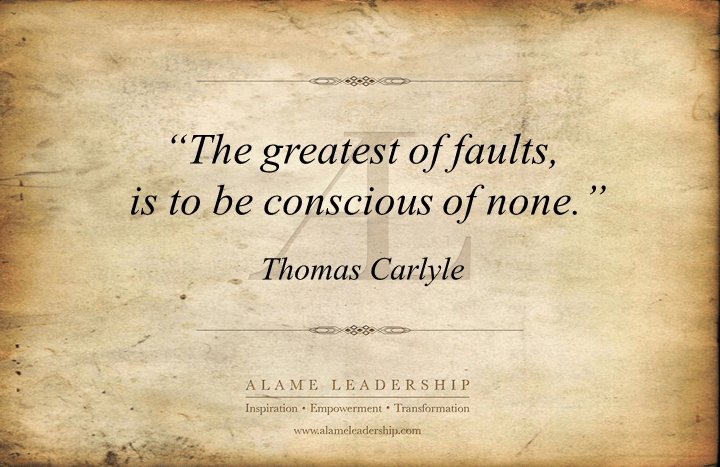
The importance of self-reflection & self-awareness

69125-quotes-about-self-reflection

This quote speaks to me in so many ways..

Through coaching, I aim to guide people find their answers through enabling them to self-reflect on where they are at currently and where they want to be. Self-reflection is very important in the process of change, as is persistence (which I talked about in this previous blog post- The importance of persistence).

The driving force behind change, is when an individual is able to look at their current life and notice that there is something negative popping up for them. If we feel negative or sad about something, then this can be the one thing that pushes us to make lasting change. If we don’t have self-awareness however, we remain stuck in a sad or negative existence and just keep repeating the same mistakes or habits over and over again.

As a survivor of complex trauma, I luckily became self-aware from a young age. I noticed I was struggling more than other children at school and had really low confidence. I found it very difficult to focus on school work the older I got and when I hit 15 I was already very depressed.I used art & poetry as a way to self-soothe and manage my emotional pain and luckily sought therapy when I was 17.

Over the years, with extensive therapy, I learned to tap into my emotional self-awareness even more. I continued to question my choices and behaviours and realised that actually it wasn’t my fault I was so sensitive and depressed but actually that my parents were both narcissistic, specifically with NPD. I was diagnosed at 29 as having Complex Post Traumatic stress and was told by my therapist that I was incredibly resilient and able to self-reflect a lot more than most of her clients. I left the session that day happy to be someone with self-awareness and wouldn’t change this for the world!

Self-awareness is incredibly hard for people with NPD, as well as the ability to feel empathy for others. When a healthy individual hurts others and causes them distress, they usually genuinely apologise and try to make a change for the better. For people that are aware of their actions, of their flaws, are sensitive to their body sensations, sensitive to their health and are also able to make sensible choices, change comes more easily.

What are your thoughts? How destructive have you found people that lack self-awareness?What difficulties have you had? Are their times when it took you a few failed attempts to finally have an epiphany about an unhelpful behaviour you may have had?

Thanks for reading

Much love Athina ♥

© All blog posts and images are owned by me and Courage Coaching. Please don’t use without consent and only re-blog if you would like to use the information on here.
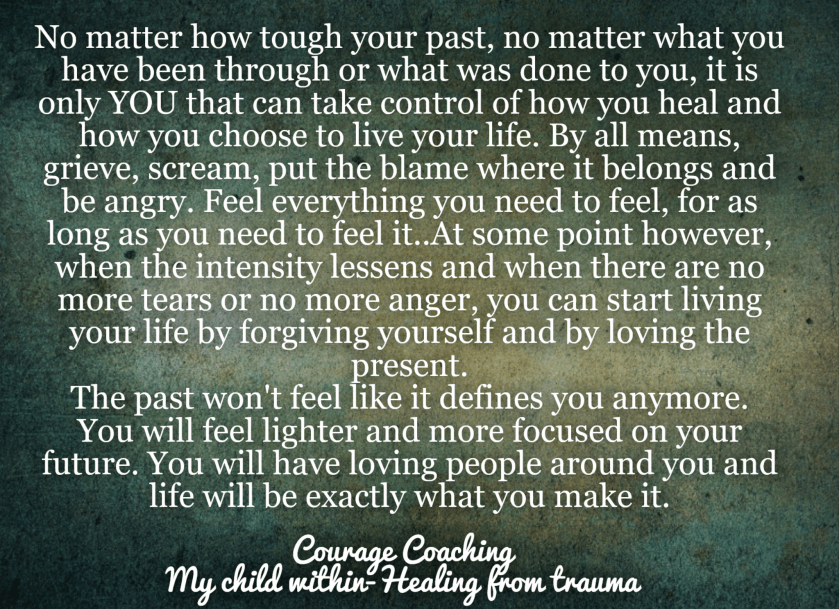
 

Take control of your own healing

FontCandy (38)

Every healing journey is unique to each person. No journey should be judged, minimised or discounted.

Whether it is childhood abuse, emotional, sexual or physical abuse, domestic abuse, grief, a single trauma or multiple traumas, nobody has the right to criticize someone else’s journey.

If you have compassion and maybe share what helped you, it doesn’t necessarily mean it will help others in the same way. Having compassion and empathy is so crucial. Listening, without trying to fix is also important.

After you reach a certain point in your healing, you will notice that things get easier. The intensity of certain emotions lessen and your sense of self-protection and boundaries are solid. If you suffer from a mental illness, it doesn’t necessarily mean it will go away. You eventually just learn to accept that it is a part of you and that you can handle it in a self-compassionate way.

What is your experience with healing?

Do you believe you will reach a point in your recovery where things eventually feel better?

Are you persistent in practicing self-care and healing with appropriate professional support?

Don’t forget that healing is a very up and down process. It isn’t always straightforward. Sometimes just as you are starting to feel better, something else comes along which needs processing. It might feel that you are back to square one again but this really isn’t the case.

Changes happen in very small ways sometimes and it depends on whether you have regular support.

Always be kind to yourself and others going through a process of healing ♥

Love Athina ♥

© All blog posts and images are owned by me and Courage Coaching. Please don’t use without consent and only re-blog if you would like to use the information on here.


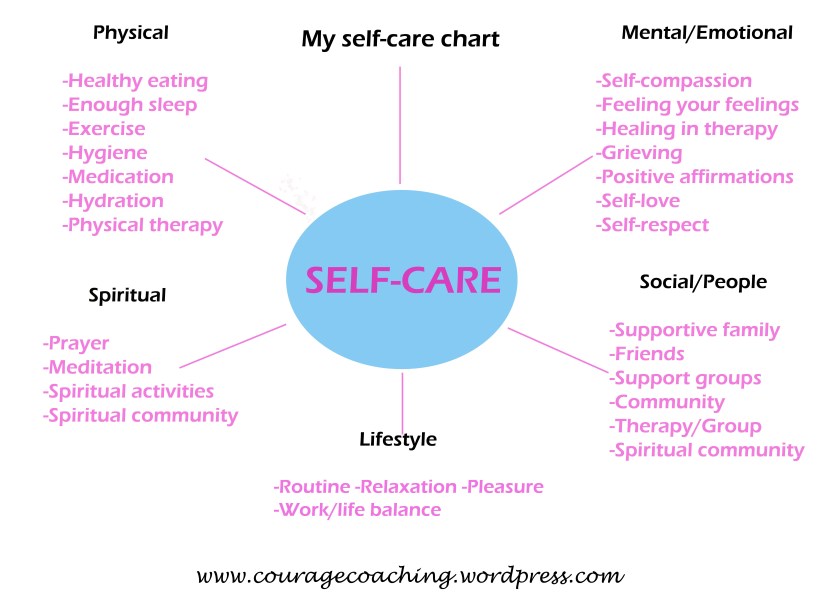
Self-care chart

my self-care chart - courage coaching

When you are struggling from a mental illness, self-care can sometimes take a back seat.

You forget or are unable to eat properly. You have trouble sleeping which then results in not having the motivation and energy to do much at all. You can become more isolated when trying to cope and can even forget to ask for support.

This little chart above gives you a little insight into the important things to consider.

The 2 most important areas in my opinion are physical and mental self-care but a balance amongst all 5 of these areas is crucial, as they are interlinked.

If you feel that there are any areas of self-care that you are particularly struggling with, then please let me know in the comments below. I would be happy to help you come up with an easy action plan, that might enable you to move forward.

Love Athina ♥

Unhelpful thinking styles/Cognitive distortions

This link below gives you a useful list of all the unhelpful thinking styles that we might use in our daily lives.For those of you who suffer from depression or anxiety, keeping an eye on your thinking style is really important. Try and challenge those negative thoughts by replacing them with more positive or helpful alternative thoughts. With practice, this should help you feel better.

http://media.psychology.tools/worksheets/english_us/unhelpful_thinking_styles_en-us.pdf

Love Athina ♥