Cognitive Bypassing is the practice of avoiding feelings by detouring into cognitive ideas or beliefs. It means that we tend to overthink in order to avoid uncomfortable emotions such as grief, fear or anger.
There is nothing wrong with using cognitive strategies as part of your emotional well-being. However, when every negative emotion must be analysed, changed or explained cognitively, this is counterproductive. Compulsively adding cognition to emotion means that you don’t ever allow your traumas to fully heal. The uncomfortable truth is that there is a component of painful emotions that simply must be felt, as hard as that may be to hear.
Healing trauma has more to do with embracing the feeling in the body than holding on to the thoughts of the mind. Somatic healing is crucial in recovery from trauma when you live with CPTSD. Allowing yourself to grieve the losses of your childhood is also a huge part of the healing process. Throwing CBT techniques at clients who suffer with trauma just isn’t enough!
Different therapies that enable us to somatically process trauma are very important in healing childhood trauma. Art therapy, dance therapy, drama therapy, play therapy as well as somatic healing, EMDR, sensorimotor therapy and accelerated experiential dynamic psychotherapy are all very important.
Most of us who have experienced trauma, find ways to constantly avoid our emotions by overthinking but also by comfort eating, doing drugs or drinking alcohol, being compulsive, dissociating and so much more.
How many of us actually just sit with our uncomfortable emotions and allow ourselves to self soothe, allow ourselves to have a good cry and share what we are actually feeling? Do we actually allow ourselves to feel our sadness or fear and just give it the space to be present without analysing it? This isn’t easy for many of us. As much as it isn’t easy, we have to find ways to make room for it and really feel whatever comes up.
Facing your trauma in the initial stages of awareness, may feel incredibly uncomfortable and daunting. Even admitting to yourself that you suffered abuse or trauma in your childhood, can feel very scary and soul crushing at first.
If you do reach that point however, please know that you are doing the right thing no matter how uncomfortable.
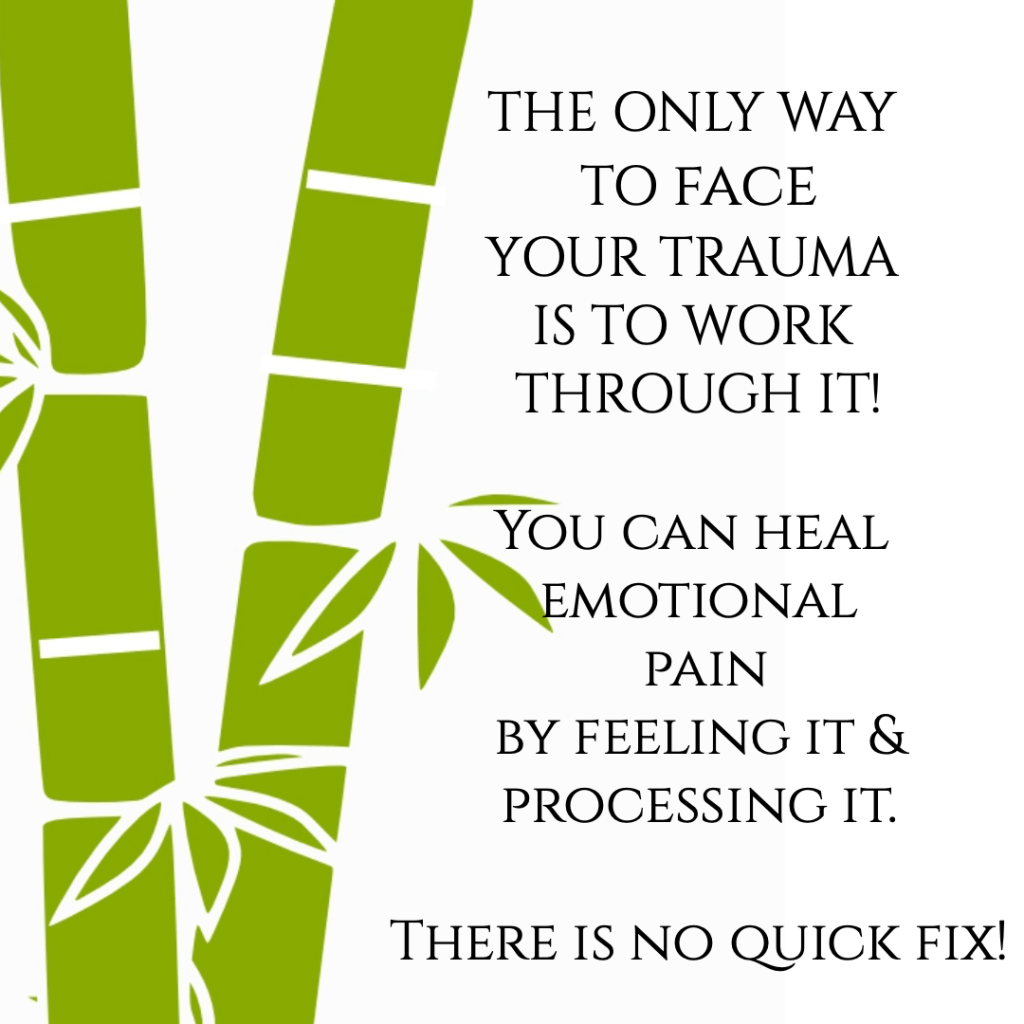
The only way to heal emotional pain is by acknowledging it, feeling it and grieving it.
There may be people out there that make big promises of how to heal quickly and offer quick fixes for alleviating your suffering, but please know that these quick fixes never work. They may provide temporary relief but they don’t holistically address the deeper parts of your psyche that need nurturing.
I am telling you this because I have been there myself. I have tried short term treatments and they don’t work in the long run. My healing journey from childhood trauma started at the tender age of 16 and I am now 41. I am still working on my healing and will continue to do so.
To change dysfunctional behaviours such as people-pleasing, avoidance, dissociation, toxic shame and inner critic attacks we must put in consistent effort daily for months, even years.
Dysfunctional behaviours that we learnt in our childhood to survive the abuse, need a long time to ‘undo’!
The only way to improve your emotional wellbeing is by peeling away each painful layer gently, acknowledging it and pouring self-compassion and love into it.
2023 is finally upon us and it is common for some of us to have plans for a fresh start in one or two areas of our life. This could be to tackle our health, our mental health, a change of job, or to end a relationship that no longer serves us. It could also be a new beginning in terms of getting married, moving home or starting a family. It all depends on how fortunate we are, what part of the world we live in, how blessed we are to have safety, family, a job or even the freedom to live as we wish.
Survival in this world is tough when we don’t have the means, the support system, the education, a good start in life, good health and loving people around us. Leaving our comfort zone can be very scary when we don’t have some of these needs met.
War is still driving so many families to seek refuge in unfamiliar territory and for those who choose to stay, they are faced with daily uncertainty, fear and loss. Why is one human life more important than another? It is such a cruel world we live in yet many of us still want to bring children into it to satisfy our personal needs of being parents.
In my lifetime so far, I have encountered so much abuse, neglect and nastiness from people that it has been truly disheartening to believe in the good of humans. There is so much inequality, unfairness and immorality. Humans keep making the same mistakes, hurting each other, themselves and other beings. There is generational trauma with no end in sight.
How do you cope in a world with such emotional complexity when you are a highly sensitive person (HSP) or empath?
As one myself, I truly find solace in the little things and my daily routines. I avoid watching the news, aspire to filling my day with uplifting rituals and by cocooning myself and my family within our own little bubble, I feel completely at peace, safe and content. By practicing gratitude for the things I am blessed with, I find joy in being alive. By supporting and helping others, I feel a sense of reward. When I encounter people who are strong, compassionate and generous, despite the fact that they may have had it tough in their lives, I feel hopeful.
Humans can also be wonderful, caring & brilliant souls that inspire others and bring positivity into the world. I would rather surround myself with these types of humans and have a smaller social circle rather than subject myself to energy vampires or narcissists. There will always be good and bad and a mixture of both. Not everyone is our ‘cup of tea’ and not everyone will contribute to our life in a way that is fulfilling.
How do you cope in this world as a HSP or empath?
How do you deal with the rollercoaster of emotions that hit you when you are overstimulated by the injustice and wrongs in your environment?
What is your experience?
If you relate to this post, then feel free to share your experience in the comments below.
A little over 3 months ago, I finally made the decision to embark on a sugar free lifestyle. This has ultimately been life changing for me and required buckets of discipline and persistently resisting temptation.
In this post, I will talk about why I made this decision and what changes I have noticed, especially after a lifetime of constantly eating too much sugar.
The following video was hugely inspiring to me but my dear friend ‘Ketodawg’ was the main reason I embarked on this life-changing journey.
I will talk a little more about ‘Ketodawg’ in my next post but for now, please watch this video before reading any further.
Many of you, just like me, have probably enjoyed eating pasta, bread and starchy foods for as long as you remember. Many of you have a sweet tooth and can’t imagine life without sugar or processed food.
In my case, my childhood was filled with sugar. Both my parents had a sweet tooth and they allowed me to eat and drink sugary things as young as 2 or 3 years of age. I preferred drinking chocolate milk instead of regular milk and loved sugary cereals for breakfast. We always had packs of biscuits in the house and I learned to bake cakes before I learned to cook food.
In many households, this was and still is the norm.
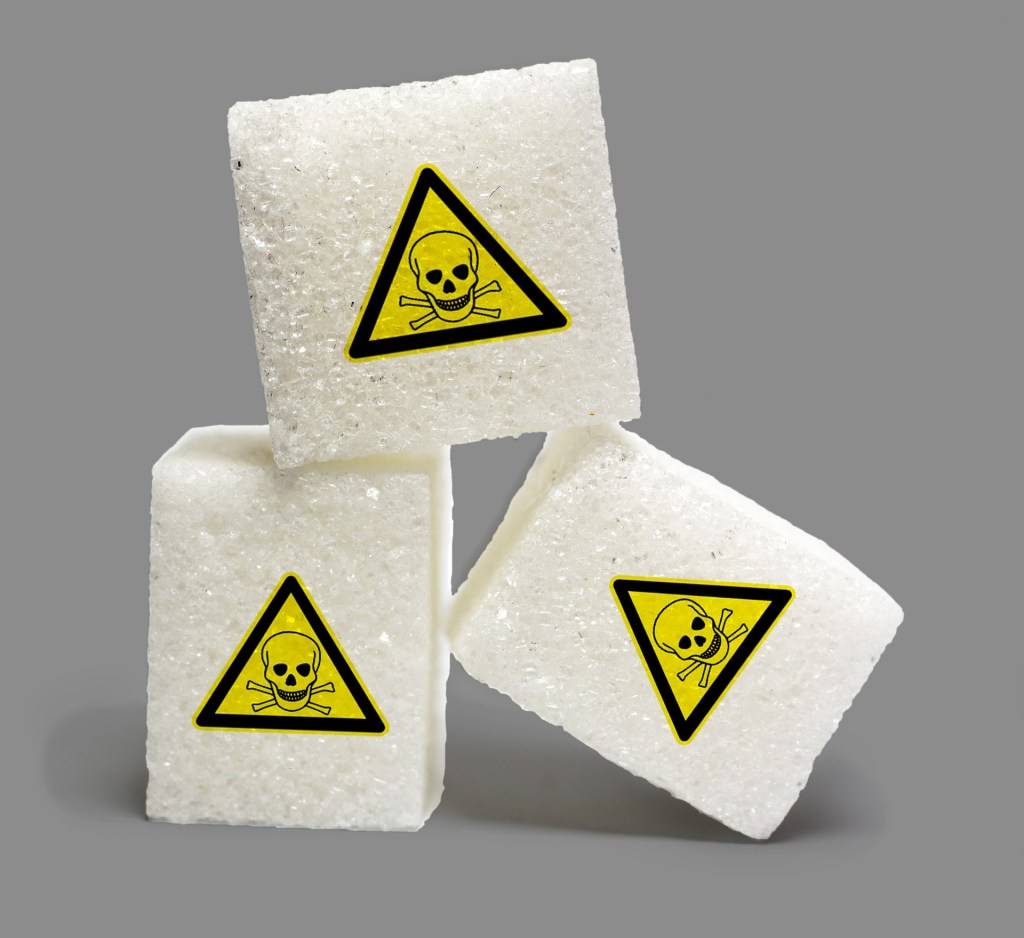
Did you know that more than 5 grams of sugar in your bloodstream, can already be harmful to our bodies? Our bodies are not made to carry more than this amount in any given moment.
If I take a moment to consider what my daily intake of sugar and carbs was for most of my life, I would say it exceeded 200grams a day. I am pretty sure I was already insulin resistant, which would have eventually lead to type 2 DIABETES.
I loved comfort food, so would regularly cook high carb foods such as pasta, rice and potatoes and I enjoyed bakery items, cakes and biscuits daily. I managed to reduce the sugar in my tea from 2 teaspoons to half a teaspoon, but that was still not good enough, as I was drinking 6-8 cups of green tea per day. At my absolute worst, I weighed 72 kilos. I was completely addicted to sugar, had always been an emotional eater and essentially learnt bad eating habits from a young age.
My father developed type 2 diabetes from an unhealthy, overindulgent diet and this is sadly what killed him in the end, at age 70.
For nearly 3 months now, I have been following the Keto Diet which means reduced carbs, no sugar and lots of healthy fats and leafy greens. This reduction in carbs puts your body into a metabolic state called ketosis. When this happens, your body becomes incredibly efficient at burning fat for energy. It also turns fat into ketones in the liver, which can supply energy for the brain.
The first week I started Keto, I was having intense cravings for all the foods I couldn’t eat. I was reluctant to throw out all of the yummy biscuits that I had brought back from a trip to Greece. I was also convinced that I wouldn’t be able to give up pasta, which was my go-to food most of the time, especially when I was really busy with work.
In the first 10 days of my Keto diet, I experienced Keto flu symptoms just as I had predicted from the research I had done. I reduced my intake of carbohydrates and sugars to a maximum of 25grams per day, which in turn made me feel lightheaded, fatigued, irritable, low and achey. To compensate, I was drinking plenty of fluids so I could feel better. A keto diet can cause you to rapidly shed water stores, increasing the risk of dehydration.
After this initial 10 day period, my cravings for sugary foods had gone and I was getting used to my new lifestyle.
My body had already started burning ketones from fat instead of glucose. This was evident in the fact that I had started losing weight.
The most amazing thing I started noticing was that I was no longer having these afternoon energy crashes, where I felt like I was going to fall asleep. I also felt like I had better mental clarity, less of a ‘foggy head’ and my energy levels overall were hugely improved.
I lost a total of 10 kilos, which I am extremely proud of and I feel much more confident in my body than I used to.
Last but not least, I have generally felt more stable in myself. As I have lived with the effects of CPTSD all my life, I have definitely noticed that I am much calmer and more positive now. This has been extremely important to me, as I never wanted to be on medication for my symptoms.
My friends and loved ones have also noticed that I am much better in myself and have even commented on my skin, saying that I have a healthier glow.
Overall, I would highly recommend cutting out sugar and processed foods.
Since these lead to chronic inflammation in the body, which eventually cause Type 2 Diabetes , Cancer, Alzheimers and ill mental and physical health, it is a no brainer for anyone that is looking to be healthier.
If you suffer from anxiety, depression, PTSD or CPTSD I would highly recommend changing your diet, before resorting to medication. A good diet and regular exercise does make a huge difference. I have seen the results myself.
What is your experience?
Do you pay attention to what you eat and listen to your body?
Have you noticed any changes at all when cutting out sugar and processed food?
Emotional intelligence refers to the ability to identify and manage one’s own emotions, as well as the emotions of others.
Emotional intelligence is the one part of the human psyche that we can develop and improve by learning and practising new skills.
People with higher emotional intelligence find it easier to form and maintain interpersonal relationships and to ‘fit in’ to group situations.
People with higher emotional intelligence are also better at understanding their own psychological state, which can include managing stress effectively and being less likely to suffer from depression.
My newest video on my youtube channel, talks about emotional intelligence in more detail.
Before I talk about today’s topic, I just wanted to remind you that I have released my first PDF course which is aimed at helping you become more assertive and stop your people-pleasing habits.
To view the contents of this course, please click the link below:
There are 5 places left for the discounted price I am offering so if you are interested then get in touch now by leaving a comment below.
In today’s post I wanted to talk about the challenge of new beginnings..
As much as they can be exciting and refreshing, new beginnings can sometimes be very tough. The fear of the unknown can be very daunting.
When things don’t go as we planned, how do we deal with the fallout?
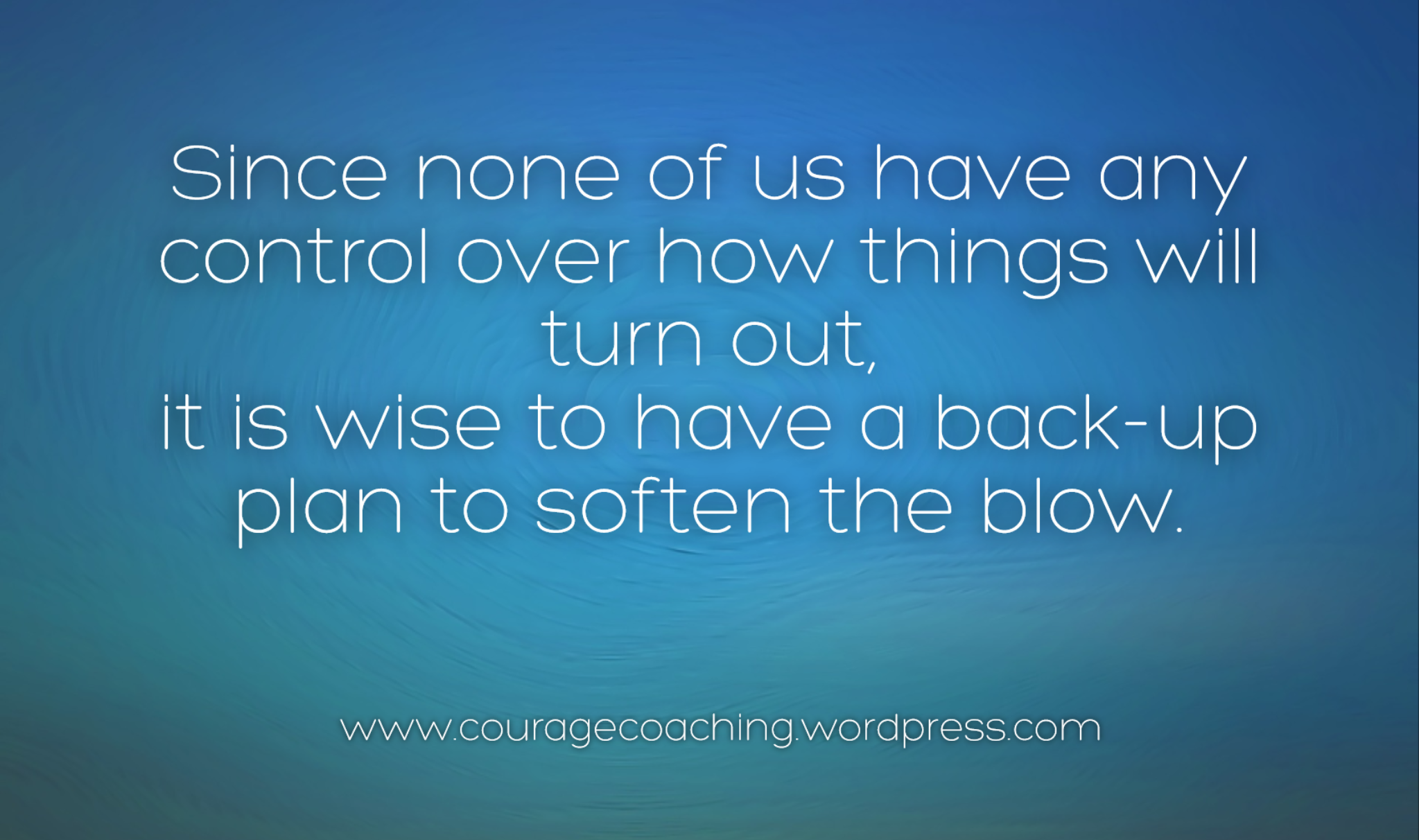
No matter how perfectly we may have planned everything and thought everything through, the uncontrollable will always be there..
What if we moved to a new location and then our dream job ended up being a nightmare?
What if our new partner cheated on us?
What if we changed careers only to realise that it isn’t what we thought it would be?
How do we cope with life’s unexpected challenges?
After the initial disappointment or grief, how do we keep moving forward?
What if we get very scared and anxiety starts creeping in to our daily lives?
Owning our fears gives us control over our worries rather than our worries and fears controlling us.
Asking ourselves ‘What am I scared of?” can be very helpful. Writing down our fears can also help us clarify things a bit more.
Trying to change our negative thoughts into more positive ones, can make a huge difference in the way we feel. CBT works wonders for this!
If we think to ourselves that ‘every cloud has a silver lining’, then we can give ourselves a temporary boost of hope.
Having supportive friends or family around us can also greatly help..
Sometimes though we can feel more down than we had anticipated and sometimes we may feel so unmotivated that all we want to do is stay in bed and hide all day! That is also okay, as long as it doesn’t become a habit!
The following quote is one of my favourites regarding change:
“When we make a change, it’s so easy to interpret our unsettledness as unhappiness, and our unhappiness as a result of having made the wrong decision. Our mental health and emotional states fluctuate madly when we make big changes in our lives, and some days we could tight-rope across Manhattan, and other days we are too weary to clean our teeth. This is normal. This is natural. This is change.” — Jeanette Winterson
When we look back on the tough times in our life, do we ever find that they taught us something useful?
I have had 2 of these moments..The 2 toughest times in my life, helped me make huge changes in my life for the better and for those times I will be forever grateful!
As Freud once said:
“One day, in retrospect, the years of struggle will strike you as the most beautiful.” — Sigmund Freud
How do we develop ourselves into better human beings?
What steps can we take to become wiser, more self-aware and more humble?
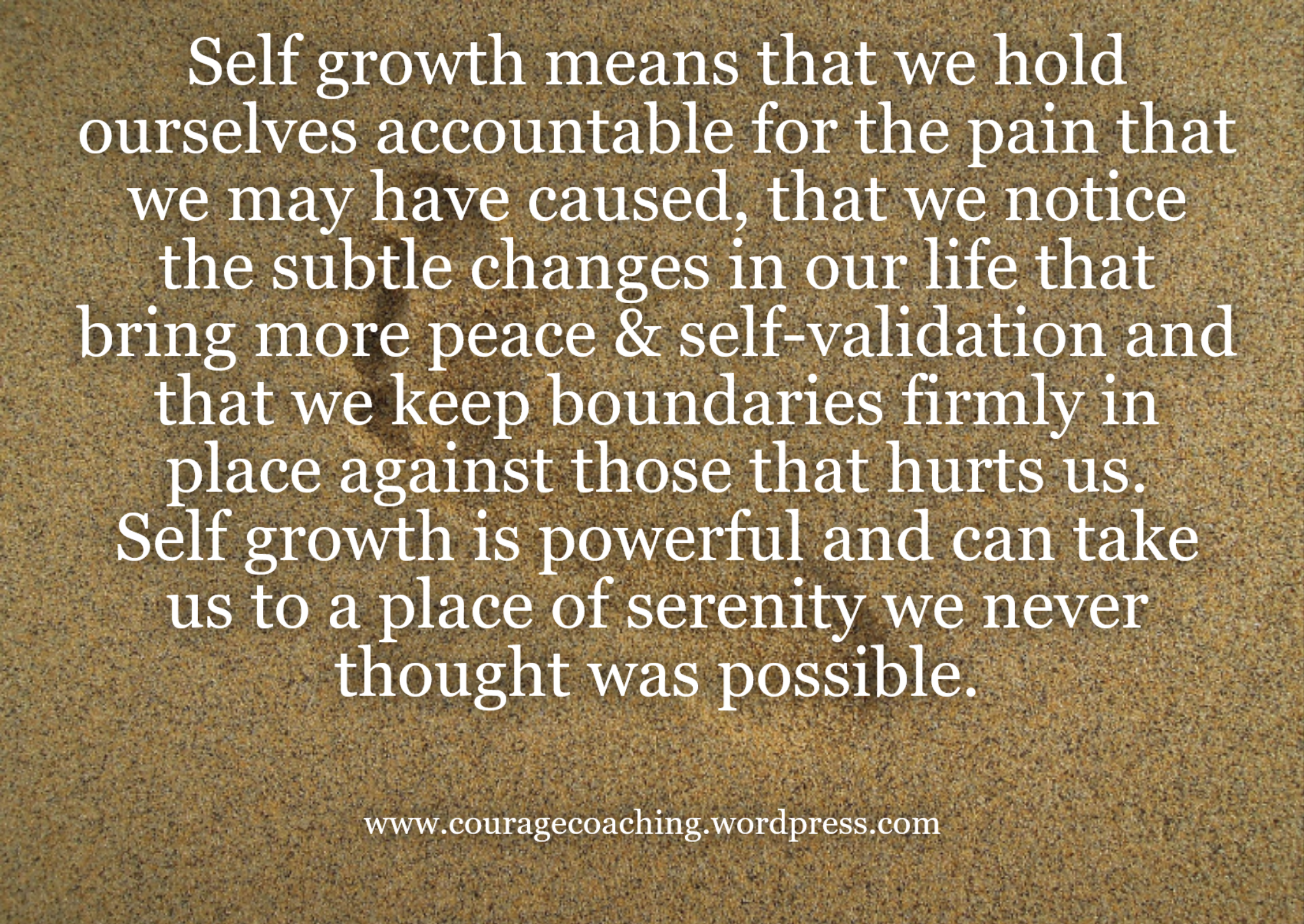
Self-growth is a topic that I think about a lot and when I am interacting with others in my environment, I feel saddened by the fact that so many people don’t seem to acknowledge their weaknesses, don’t find time to make improvements in their life and just seem to be on a path of complaining & under-valuing their lives.
Although I acknowledge that in my own journey there are many things that I may not be able to completely change, due to circumstance or mental illness, I definetely aspire to bettering myself on a daily basis.
One of the biggest motivations for most people to make changes for the better, comes from a feeling that something isn’t quite right in their lives. They are either too stressed, too angry or just simply feeling depressed. They may start noticing certain destructive patterns repeating in their life and feel completely stuck in trying to make changes.
This is where coaching can be really useful and for the more complex mental health issues, therapy can also be an invaluable source for self-growth.
Although many people think that they have things under control, it is those same people that actually live chaotic lives and just don’t seem to prioritise their own self-development. They aren’t able to be introspective and they remain in the same state of mind most of their lives. They end up reaching the age of 60 and are still acting in ways that are either unhelpful, harmful to others or self-sabotaging.
So what is the first step to self-growth?
What is the one, most important thing that can motivate us to start making lasting changes?
We must acknowledge our weaknesses- It is helpful to write a list as honestly as possible about the things we really struggle with and want to work on. It is good to spend as much time on this as possible, looking at all areas in our life: relationships, work, spiritual, physical health, mental health etc..It might also be helpful to ask close family or friends for feedback about this. Which areas do they think we struggle in. It might not be easy to hear about our struggles at first, especially if we are not aware of them. In the long-term however, it could be very beneficial to us.
It is important to set 1 goal at a time in the area we would like to improve in.
We need to realise that change happens when we break out of bad habits and form new healthier ones. Again this needs to be broken down into smaller goals, by breaking out of 1 bad habit at a time and forming 1 new healthy habit.
We have to accept full responsibility for all areas in our life. This means that we have to fully accept that we are the only ones who can make changes. We can blame others until we go blue in the face but at the end of the day, it is our job to improve our lives. Accepting responsibility of course, doesn’t mean that we completely ignore certain disabilites we may have or certain traumatic events that we may have experienced. It means that we fully own our journey and embrace the unpleasant things we aren’t able to change by grieving them whilst also trying to have gratitude for the things that we are fortunate to have and are able to do.
Enrich our world with learning and doing courses in self-development
Growth comes when we face certain challenges. We have to push ourselves to move out of our comfort zone. Sometimes the things that scare us the most hide the biggest opportunities for self-growth. It is important to face these fears and see how far we can get.
What is your experience with self-growth? Have you looked inside yourself to see if something needs to change?
When we ask for advice from someone that is very knowledgeable in certain areas or from someone whom we admire, this can be very useful both in the short term and long term.
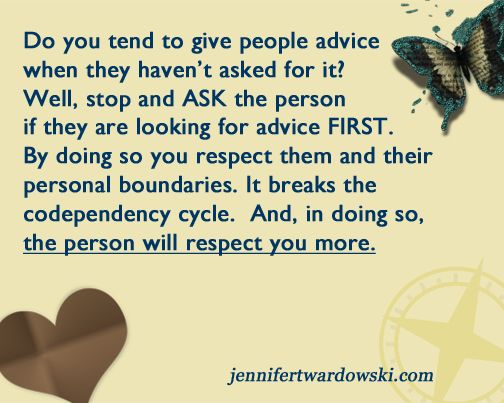
On the other hand, unsolicited advice from close family or even from complete strangers can be an annoying and sometimes insulting behaviour.
It could be done in a well meaning manner by some people but in most cases unsolicited advice is self-serving.
The more well meaning reasons someone gives unsolicited advice are firstly because they are trying to be friendly, secondly they are just excited to share something that worked for them or thirdly they are just completely altruistic.
Some other motivations that might be harder to spot however are listed below:
Helplessness & wanting to solve your problems: If you are sharing some thoughts on how you are struggling in a certain situation, the listener may think that you need them to fix your problem rather than just validate what you are saying. They think that by giving you some sort of solution you will feel happier. This isn’t the case though in most situations.
The need to be needed: Some people just have an intense need to be needed and to feel important. It’s as simple as that.
Narcissistic tendencies: People who may have a Narcissistic Personality, think that what they have to say is very important and they tend to be in the role of ‘teacher’ very often. They think that they are better than you and that their opinions are of high value, so they tend to offer advice all the time.
Dominance: This is similar to the behaviour of a Narcissist. Being dominant in a conversation is very important to some people. They want to be the most influential person and they have difficulty understanding why somebody might not want to hear what they have to say.
Being judgemental: If someone doesn’t like the way you are doing something, then they will give you advice so you can change it. This is when unsolicited advise becomes insulting.
So how do you respond to someone giving you unsolicited advice?
This can be rather tricky. If your reply is too detailed then this might encourage more unsolicited advice. If your reply is too agressive or defensive, then this may cause an argument or even damage your relationship with this person.
Simple, clear and short responses are the best. It is important to set clear boundaries and to be assertive when necessary.
”I will think about it”
”That’s an interesting point of view. I will consider if this is right for me”
”Thank you but I would rather do it this way” or ”I would rather stick to my plan”
”I am not looking for any advice right now”
”That doesn’t suit my values”
What are your experiences with unsolicited advice?
If you liked this post then please feel free to share & comment.
After a wonderful 10 days off work, celebrating my birthday with friends and exploring new places with my husband, I am feeling grateful and refreshed.
Today’s topic is especially important to me, as someone I care about deeply is currently suffering with this type of depression.
Although high functioning depression is a milder form of depression, it is equally as important as other types of depression.
When it comes to depression, many of us envision a person caught in the depths of despair and hopelessness, who wants nothing more than to stay in bed and avoid people and work completely. We envision someone who has lost all interest in the things they love, who may be feeling suicidal and is barely holding it together.
Although the above isn’t inaccurate, it doesn’t portray life as a high functioning depressive.
When someone suffers with mild or high functioning depression, the typical joy and laughter they once felt, is usually replaced by an absence of emotion and a very deep feeling of emptiness.
This is known as anhedonia and it is the loss of interest in previously rewarding or enjoyable activities.
To the outside world they seem like they are coping fine. They are still able to go to work every day and communicate effectively. They are still able to reach goals and get out of bed in the morning.
The most unfortunate part of those with this milder form of depression is that when they talk about their feelings to loved ones and even doctors, they aren’t taken seriously enough.
Unless someone is literally unable to function, they seem to be dismissed as not having anything to worry about. This isn’t good!
When life circumstances change, those experiencing mild depression may be at greater risk for moderate to severe depression if treatment isn’t sought early enough.
This is also discussed in my youtube video, so feel free to share if you think it may help someone you know.



 couragecoaching.net