Happy Monday fellow bloggers. This is quite a late post, so I hope it reaches some of you.
I have just done another video on YouTube, where I talk about the 3 main stages of recovery that someone goes through, in particular concerning the recovery from childhood narcissistic abuse. I also talk a little bit about the acceptance stage of recovery, which I personally found the toughest in my own recovery.
Acceptance that you parents weren’t able to love you unconditionally, is a painful, rejecting reality. It is easier to spend most of your adult life being in denial of this, as it is such an incomprehensible reality to accept.
Once you are able to reach this stage of acceptance however, you feel like a huge burden has been lifted off you.
I wish all of you who struggle with this sort of realisation, to be able to finally reach this stage one day.
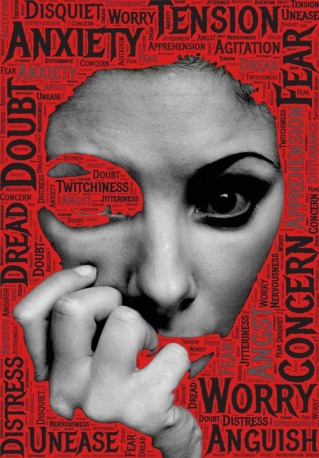
Anxiety can affect our body in so many ways that sometimes it is very hard to differentiate between anxiety or something much more serious.Some symptoms are exactly the same as symptoms caused by more serious health problems, so how do we tell the difference?
It is usually helpful to get check ups with a doctor to rule out anything more serious but most of the time, a doctor can tell you if what you are experiencing is caused by anxiety.
The below symptoms were directly sourced from: www.anxietycentre.comThis website is the most helpful and detailed website out there regarding anxiety, that I have recommended to clients, those suffering from an anxiety disorder & also therapists.
This would be useful, to anybody out there who suffers with Generalised Anxiety, OCD, phobias, panic disorder, PTSD, CPTSD & Social Anxiety.
This website, helped me identify a lot of my own anxiety symptoms several years ago, when I was in a constant state of hyperarousal and anxiety. Shortly after this period, I was diagnosed with Complex PTSD, which finally gave me more insight into my condition.
The symptoms list on this website, were very validating for me at a time that I literally felt like I was going crazy with anxiety.
I personally have experienced the following symptoms, in addition to the most well-known symptoms that most people know about.
Eye problems, vision symptoms
Eyes sensitive to light
Tingling & numbness in arms
Frequent urination
Bad taste in the mouth and anxiety
A tinny, metallic, or ammonia, or unusual smell or taste
Depersonalization
Derealization
Brain fog
Tremors
Which of these symptoms have you experienced from your anxiety disorder?
Below is a detailed list of all the symptoms associated with an anxiety disorder. Did you ever think there were this many?
Body Anxiety Symptoms:
Back pain, stiffness, tension, pressure, soreness, spasms, immobility in the back or back muscles
Blanching (looking pale, loss of color in the face or skin)
Blushing, turning red, flushed face, flushed skin, blushing, red face or skin
Body aches, parts of or your entire body feels sore and achy, feels like your body and muscles are bruised
Body jolts
Body zaps
Body shakes
Body trembling, shaking, anxiety symptoms
Body tremors
Body temperature increase or decrease, change in body temperature
Brain zaps
Burning skin, itchy, crawly, prickly or other skin sensations, skin sensitivity, numbness on the skin
Burning skin sensation on the face, neck, ears, scalp, or shoulders
Buzzing sensation in the feet, toes, hands, fingers, arms, legs
Chest pain anxiety symptoms
Chest pains anxiety symptoms
Chest tightness feeling
Choking
Choking feeling in throat
Chronic Fatigue, exhaustion, super tired, worn out
Chronic pain and anxiety
Clumsiness, feeling clumsy, co-ordination problems with the limbs or body
Cold chills, feeling cold all the time
Cold flashes, flash
Cold hands and feet
Craving sugar, sweets, chocolate, usual craving for sugar and sweets
Crazy thoughts
Difficulty speaking, moving mouth, talking, co-ordination problems with the mouth or tongue
This is the 2nd of 2 informational videos about EMDR. In this video I explain a little more about finding an EMDR therapist and what to look for, what to expect during & after a session and I also give you an idea of what happens in each of the 8 phases of EMDR Therapy.
As someone who has used EMDR, I can highly recommend it for the treatment of PTSD & CPTSD.
As a survivor of narcissistic abuse, and in honour of some of my followers who are also survivors of abuse, I want to do a short but very important post today about the unfortunate shaming & silencing that happens to survivors.
It is absolutely horrendous to deny someone of their right to freely talk about their abuse and to deny them the ability to heal.Every time a survivor talks about the abuse to someone who validates them and acknowledges their pain, there is a small layer of healing taking place.
On the other hand, every time a survivor shares their story and isn’t believed, is shamed for not forgiving their abuser or is told to not go public about their abuse, it is destructive & extremely painful. It shows that the person shaming the survivor lacks empathy & understanding for the pain & trauma they have been through. It is re-traumatising and makes the survivor feel isolated & abused once again.
For those of you out there, who don’t know much about child abuse because you have been fortunate enough to grow up with healthy, loving parents please understand this:
Survivors require acknowledgement of their pain & suffering
Survivors require kindness & empathy
Survivors need to hear ‘I am so sorry for what you have been through’
Survivors need to be shown healthy lovely, healthy boundaries because they never learned these in their childhood..
Survivors DON’T want to be told to forgive their abusers
Survivors DON’T want to be told to stop talking about what happened to them just because you are uncomfortable with it.
Survivors DON’T want to be told to ‘Get over it because it was a long time ago’
Survivors DON’T need any more abuse, silencing or shaming.
Happy Monday to all of you! It’s the 1st of August today and time seems to have flown by so quickly!
Today’s post is about another topic very close to my heart, due to my own healing journey from codependency to healthy love. It most definetely wasn’t easy to get to where I am. It required perseverance, determination and a little bit of hope.
To heal from dysfunctional relationships & codependency, there are 5 steps that are important to take.Having a therapist who specialises in healing from codepedency, is important in guiding you.
The first step is becoming AWARE that your choices or actions are dysfunctional.
The second step to changing dysfunction is understanding the source of the dysfunction, so where did it come from?
The 3rd step is grieving the loss of a healthy childhood. An abusive childhood usually leads to poor choices in relationships & life in general. Without a stable & nurturing childhood you never learn healthy love, healthy boundaries & your emotional regulation is damaged.
The 4th step is understanding the complexity of changing self-defeating behaviours & changing certain defense mechanisms, that protected you in your childhood but no longer serve you in adulthood. It takes time, patience and self-compassion.
The 5th step is actually trying out new relationships when you have made progress in your healing. You have to make a few more mistakes and discuss these with a therapist by your side, so you can see where you went wrong and how to improve this next time.
When I first found out I was codependent back in 2008, it was like the blindfold was taken off my eyes for the first time. Before learning this, I had a suspicion that something wasn’t right in my relationships but I had no idea how to change this.
I felt like I was in an emotional maze and had no idea which way to go. Everytime I thought I was making better choices in regards to who I was in a relationship with, the more unbearable the heartbreak became.I desperately wanted to be loved but wasn’t able to figure out this painful puzzle! At some point I was so exhausted from the traumatic end of each relationship & the subsequent self abandonment, that I decided to move countries! I wanted a new start…I hoped that I might meet my future husband if I moved away but I never in a million years thought I actually would..Sometimes you need a little bit of luck too!
When I moved back home to Greece after 11 years of living in the UK, I was met with more drama, a flare up of my CPTSD and a father who abandoned me over and over again. I was back in therapy again with a new therapist and was finally diagnosed with CPTSD. I was told both my parents were ’emotionally handicapped’ but that therapist never told me my parents were narcissistic. Maybe she decided at the time that it wasn’t relevant to me.
Despite this she looked after me very well. Each step I took into uncertainty, she held my hand.
I was also entered into a group psychotherapy group and it was extremely beneficial. I was in a group with 5 other people that also had similar backgrounds and it was very healing.
Support is crucial in healing. Without all this I would never have made progress.
The video above is a simple explanation (I hope) of the general dynamics of a codependent & narcissist in a relationship. Maybe you will see yourself in this and get curious. If you do, then please connect with me and I would be happy to have a chat with you.
Please feel free to re-blog this post so it reaches more people! Thank you 🙂
This is the 2nd blog entry I am doing on love addiction, as I know how much of a struggle it is for many of you. I created 2 Youtube videos that cover the most important areas.
Pleae note that there are 2 types of 12 step programmes for love addiction.
One is called Love Addicts Anonymous (LAA) and the other is called ‘Sex & Love Addicts Anonymous’ (SLAA).
 couragecoaching.net