
Dealing with a narcissist in a safe way is very important for your well-being, especially if you aren’t able to avoid them and go ‘no contact.
Tag: Emotional abuse
10 tips – How to choose a healthy partner after an emotionally abusive relationship
Dealing with criticism
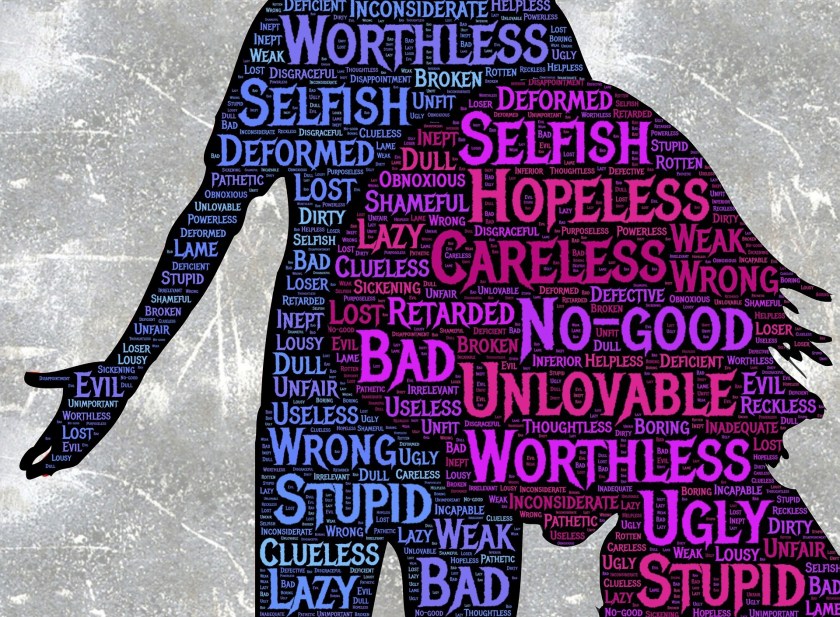
When someone criticizes us, it tends to touch a nerve and can sometimes leave us feeling very vulnerable, very angry and sometimes both!
This may be because there is absolutely no truth in the criticism and we feel it is completely unfair or actually because there is some truth in the criticism and we are just not ready to deal with it.
Being criticized is also especially difficult when the person criticizing us is someone we hold in high regard. It could be our boss at work or a new partner.
The thing that most people don’t realise is that criticism on it’s own isn’t what makes us upset. The meaning we attach to criticism is what affects us. As I mentioned in one of my previous blog posts, being a people-pleaser means that we give others too much power over our emotions and how we feel about ourselves. If others’ approval is extremely important, then we give them consent to always make us feel bad about ourselves.
In order to stay away from seeking approval, we have to learn to practice self-acceptance and only rate our actions or traits but not ourselves. We are responsible for our reaction to someone’s criticism and it is up to us to change how we respond.
If we already have low self-esteem, then criticism will be especially hurtful and it could take us days to recover from it.
Are you someone who struggles from others’ criticism? Do you find that you always get overly upset when someone criticizes you or overly agree? Do you avoid contact with that person after the criticism occurs? I would love to hear your experiences.
If you are a childhood abuse survivor, I am especially interested in your experiences. When you have internalised your parents’ negative and unhealthy criticisms, this will then follow you around and will be brought to the surface everytime someone criticizes you. This is actually quite a painful, traumatic reaction because a present criticism can send you into an emotional flashback of your parents’ abuse. This is something I am particularly experienced in through my own recovery from abuse but also through talking to others who still struggle with this internal self-critic.
Love Athina ♥
© All blog posts and images are owned by me and Courage Coaching. Please don’t use without consent and only re-blog if you would like to use the information on here.
Take control of your own healing
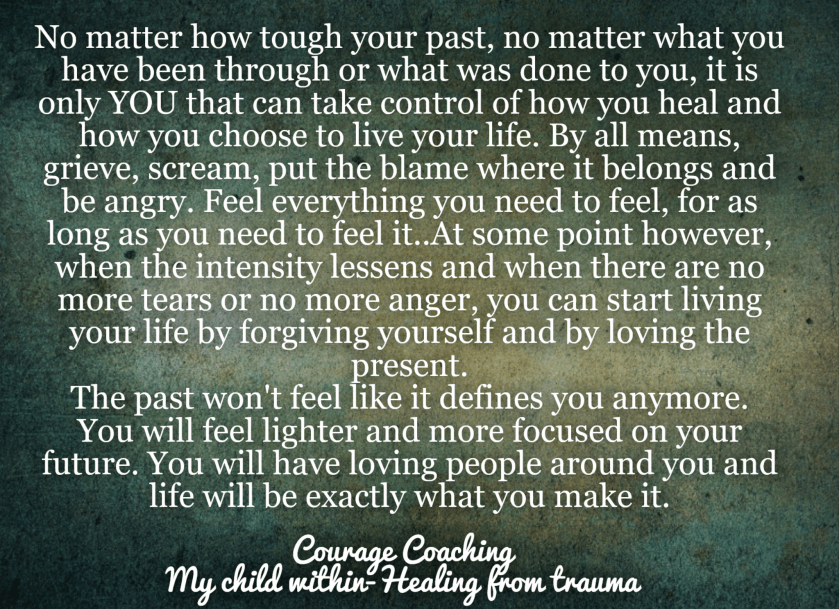
Every healing journey is unique to each person. No journey should be judged, minimised or discounted.
Whether it is childhood abuse, emotional, sexual or physical abuse, domestic abuse, grief, a single trauma or multiple traumas, nobody has the right to criticize someone else’s journey.
If you have compassion and maybe share what helped you, it doesn’t necessarily mean it will help others in the same way. Having compassion and empathy is so crucial. Listening, without trying to fix is also important.
After you reach a certain point in your healing, you will notice that things get easier. The intensity of certain emotions lessen and your sense of self-protection and boundaries are solid. If you suffer from a mental illness, it doesn’t necessarily mean it will go away. You eventually just learn to accept that it is a part of you and that you can handle it in a self-compassionate way.
What is your experience with healing?
Do you believe you will reach a point in your recovery where things eventually feel better?
Are you persistent in practicing self-care and healing with appropriate professional support?
Don’t forget that healing is a very up and down process. It isn’t always straightforward. Sometimes just as you are starting to feel better, something else comes along which needs processing. It might feel that you are back to square one again but this really isn’t the case.
Changes happen in very small ways sometimes and it depends on whether you have regular support.
Always be kind to yourself and others going through a process of healing ♥
Love Athina ♥
© All blog posts and images are owned by me and Courage Coaching. Please don’t use without consent and only re-blog if you would like to use the information on here.
Self-care chart
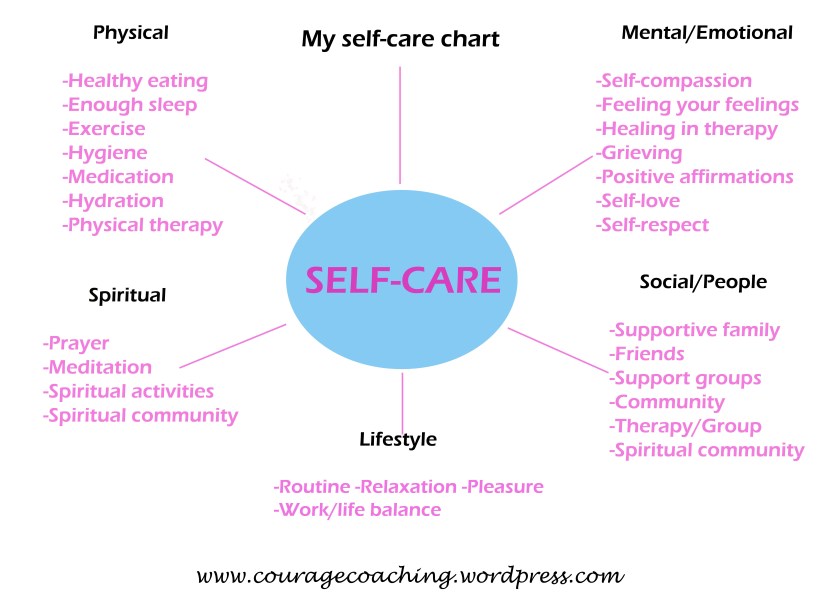
When you are struggling from a mental illness, self-care can sometimes take a back seat.
You forget or are unable to eat properly. You have trouble sleeping which then results in not having the motivation and energy to do much at all. You can become more isolated when trying to cope and can even forget to ask for support.
This little chart above gives you a little insight into the important things to consider.
The 2 most important areas in my opinion are physical and mental self-care but a balance amongst all 5 of these areas is crucial, as they are interlinked.
If you feel that there are any areas of self-care that you are particularly struggling with, then please let me know in the comments below. I would be happy to help you come up with an easy action plan, that might enable you to move forward.
Love Athina ♥
Fear of negative emotions & being a People pleaser
If you are afraid of experiencing other peoples’ negative responses or emotions, then you will do everything you can to avoid this.This fear will make it hard for you to say NO to someone and you end up doing things you really don’t want to do.You feel compelled to always do as they say and become completely submissive to their needs. This is the core of being a people pleaser.
These fears usually stem from childhood abuse, where you had an overbearing, manipulative parent or parents. If your parents would punish you severely if you didn’t do what they wanted, then you will have been conditioned to be obedient at all times.
Some really important characteristics of being a people pleaser is when you have low self-esteem, are addicted to others’ approval and are always dependent on them for your self-worth and validation. This happens especially when you might have had a narcissistic/psychopathic parent that criticised you negatively all the time and made you feel excessively guilty and shameful when you didn’t do as they said. With extremely self-centered parents, everything is always about their needs and your needs take a back seat. Every time you want to take a step forward and be more independent in your thinking & behaviour, they will always find a way to pull you back and make you feel dependent on them and their way of thinking.(codependent).It is a very strong type of conditioning that happens in abusive homes and as a young child you aren’t able to escape this environment.
Something that is very common when you are people pleaser is always rationalising peoples’ abusive behaviour to the point of always forgiving it. You always make excuses for others’ bad behaviour and say things like ‘Yes my father beat me but at least he provided a roof over my head’ or ‘I know my mother is very manipulative but deep down she has a good heart’.This has a lot to do with ‘toxic bonding’ or stockholm syndrome’, where you are extremely attached to your abuser in a very emotionally damaging way. You aren’t able to accept the reality of how bad something actually is, because it is extremely painful.
Another couple of traits that make someone a people pleaser and also make them more susceptible to emotional abuse is the fact that they may be emotionally immature and have very weak boundaries. They don’t know what is theirs and what is others’. If they grew up in a home with a parent that would constantly go through their things as a teenager, always invade their space whilst at the same time parentifying them and giving them things to do that weren’t their responsibiliy, this has a detrimental effect on how they view others and how they view themselves. They grow up thinking that it is ok for someone to use them, to take advantage of their lack of assertiveness and self-respect.
A very important part of dealing with manipulative or pushy people is developing self- assertiveness. This is something very useful for people that are constantly submissive to others in an unhealthy way. Assertiveness can be taught and this is something I offer in Coaching.
If you think you might need assertiveness training, then please let me know.
Best Wishes
Athina
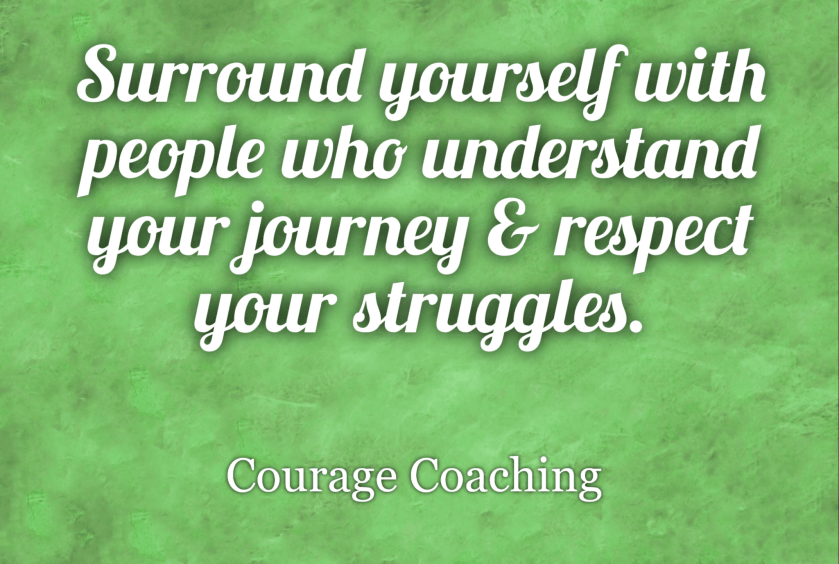
Surround yourself with supportive people
When you suffer from a mental illness it is very difficult to feel hopeful when you are really struggling.Every day can be a battle and those negative thoughts can be very hard to silence. Sometimes feelings can overcome you at the most inappropriate times and others may think you are overreacting or being a drama queen. Paying close attention to the people in your life can determine how much your overall mood is affected. If you are an empath or highly sensitive person, you suck in other peoples’ emotions like a sponge. For this reason, you need to have the right kind of people around you or limit your time with those who aren’t enriching to your life.
Think about how the people in your life make you feel 80% of the time? Are they supportive & uplifting? Are they encouraging and empathetic? Do they understand your struggles and offer to help?
This is very important when you have a low tolerance for stressful situations due to a history of toxic child abuse. When complex trauma is part of your life, you need to feed your brain with the things you were starved of as a child. You should provide yourself with unconditional love, acceptance, validation and comfort. It is also important to have friends and family that can also provide these things for you. It might feel unnatural at first and almost feel silly to tell yourself that you are worthy and lovable every day, however this is what your brain needs. It needs a new healthy habit!
Recent studies have shown that victims of childhood abuse and combat veterans actually experience physical changes to the hippocampus, a part of the brain involved in learning and memory, as well as in the handling of stress. The hippocampus also works closely with the medial prefrontal cortex, an area of the brain that regulates our emotional response to fear and stress. PTSD sufferers often have impairments in one or both of these brain regions. Studies of children have found that these impairments can lead to problems with learning and academic achievement.
We know that psychotherapy can really help survivors of severe trauma and also we know that EMDR is very helpful for reducing nightmares, flashbacks & overwhelming emotions.What you do for yourself however is equally important as you are the person that feels, thinks and reacts to your surroundings 24/7! It has been proven that with a mixture of validating affirmations, manageable goal setting, therapy and loving relationships, people can improve the quality of their life dramatically, especially in regards to their overall outlook.
Tips on forming a healthy relationship after you’ve experienced an emotionally abusive one
It can be quite worrying to think about a new relationship especially if the previous one was emotionally scarring for you. Emotional abuse in an intimate relationship can erode you self-esteem, your trust and your ability to believe in the possibility of healthy love. I have been there in the past and know really well how difficult this can be to overcome.
Here I have listed a few things that helped me move forward in my own life. I am now happily married after many failed emotionally abusive relationships. Maybe the following tips might help you too.There is always hope!
WHY – IDENTIFY ‘WHY’ YOU WERE DRAWN TO AN EMOTIONALLY ABUSIVE PARTNER IN THE PAST, SO YOU CAN AVOID FALLING FOR ONE IN THE FUTURE (Low confidence, vulnerable time of your life, history of trauma)
FORGIVE YOURSELF – BE SELF-COMPASSIONATE AND DON’T CRITICIZE YOURSELF FOR HAVING CHOSEN AN ABUSIVE PARTNER.
SELF REFLECTION – GET IN TOUCH WITH HOW YOU TREAT YOURSELF FIRST (what is your self-belief system like? Do you respect yourself? )
BELIEF – BELIEVE IT IS POSSIBLE TO BE ABLE TO LOVE & BE LOVED IN A HEALTHY WAY.
RED FLAGS – MAKE A LIST OF ABUSIVE RED FLAGS TO WATCH OUT FOR IN FUTURE PARTNERS
SUPPORT SYSTEM – MAKE SURE YOU HAVE A SUPPORT SYSTEM OF FRIENDS AND FAMILY AROUND YOU THAT ARE HEALTHY OR A THERAPIST TO HELP YOU HEAL FROM YOUR PAST EXPERIENCE
TRUST YOUR INSTINCTS – IF SOMETHING DOESN’T FEEL RIGHT IT PROBABLY ISN’T
MAKE SURE ACTIONS MATCH WORDS – MAKE SURE THERE IS CONCISTENCY WITH WHAT SOMEONE SAYS AND WITH HOW THEY ACT
EMOTIONAL FLASHBACKS – BE MINDFUL OF WHETHER YOUR REACTIONS ARE ACTUALLY RELATED TO THE PRESENT OR WHETHER THEY ARE CREEPING UP FROM THE PAST.
TESTING THE WATER – TELL YOUR NEW PARTNER ABOUT YOUR PREVIOUS EMOTIONAL ABUSE BEFORE YOU ARE INTIMATE – THEIR REACTION WILL HELP YOU DETERMINE IF THEY ARE A ‘SAFE, CARING PERSON’
I will be talking about these tips in much more detail very soon on my youtube channel. I will post a link to this very soon when it is ready.
Thanks for stopping by!
Love Athina
 couragecoaching.net