‘Meet your authentic self’- 4 week online art therapy group

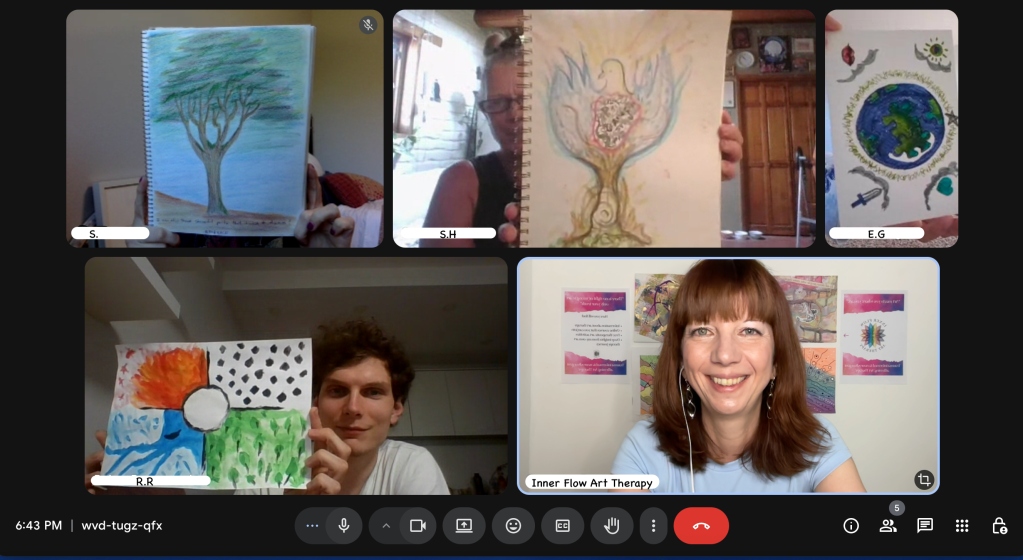
A group of courageous souls came together in my first online art therapy group ‘Meet your authentic self’ — exploring creativity, connection, and self-discovery through the gentle power of art therapy.

They created and reflected in ways that helped them peel back the layers of “shoulds” and “expectations,” making space for the truest parts of themselves to shine. They pushed through any uncertainty they were feeling and bravely shared their honest emotions and how they viewed themselves throughout this therapeutic experience and in general.

Group art therapy offers significant benefits, including improved mental health outcomes, enhanced social connections, and increased self-esteem. It provides a safe space for individuals to explore emotions, develop coping mechanisms, and build a sense of community. 

Benefits of Group Art Therapy:

  • Emotional Expression and Processing: Art therapy provides a non-verbal outlet for expressing and processing emotions, which can be particularly helpful for individuals who struggle with verbal communication or have experienced trauma. 
  • Social Connection and Support: Group settings foster a sense of community and belonging, reducing feelings of isolation and providing a supportive network for emotional healing. 
  • Increased Self-Esteem and Self-Awareness: Creative activities can lead to self-discovery, enhancing self-esteem and promoting a more positive self-image. 
  • Reduced Anxiety and Stress: Engaging in art therapy can be calming and relaxing, helping to reduce anxiety and stress levels. 
  • Development of Coping Mechanisms: Art therapy techniques can help individuals develop healthier coping mechanisms for managing difficult emotions and situations. 
  • Improved Communication and Interpersonal Skills: Collaborative art projects and group interactions can enhance communication and build stronger relationships among participants. 
  • Enhanced Creativity and Self-Expression: Art therapy encourages individuals to explore their creative potential and express themselves in new and meaningful ways. 

I’m so grateful for each participant’s openness and presence. Thank you for trusting me on this journey! Here’s to carrying these insights forward — and to continuing to meet yourselves with curiosity, compassion, and courage.

If you are interested in joining future online art therapy groups, or one to one art therapy sessions at a discounted price, please leave a comment below!

I will be announcing new dates for online art therapy groups starting in October 2025. If you would like to explore the benefits of one to one art therapy sessions, then I am offering these immediately at only 48euros per session.

You can of course join me from anywhere in the world and I am happy to accommodate your time zone as much as this is possible. I am currently in the CEST time zone.

Love Athina
How do you tell a friend about your childhood trauma?

Talking about childhood trauma can feel overwhelming, especially when opening up to a friend for the first time. How do we explore sharing our story in a way that feels safe and empowering, while also setting boundaries and managing expectations? How do we prepare ourselves for possibly being let down and invalidated by the person we tell?

Talking about something so difficult will never come easy to us, because safety was compromised in our childhood. Sharing the full range of our emotions, wasn’t acceptable and we may have been punished or invalidated a lot. That is why this feels scary and trust doesn’t come easy to us.

The first step to consider, could be to assess our friendship so far with the person we want to tell. Test the waters, so to speak.

Do we feel safe in their presence and can we truly be ourselves with this person?

Does this person listen to us empathetically?

Will we feel relieved by telling a (safe) friend about our trauma?

What will we do if they don’t respond in a validating way? Have there been any instances in the past where they may have invalidated us?

These are all good questions we can ask ourselves.

A safe person or ‘friend’ is one that listens and validates our experience, by saying something like ‘I am sorry to hear you went through that’.

In the above video, I talk about this tricky topic in a little more detail, so please watch it or share it if you think it will help someone.

Love Athina

Cognitive Bypassing & trauma

Cognitive Bypassing is the practice of avoiding feelings by detouring into cognitive ideas or beliefs. It means that we tend to overthink in order to avoid uncomfortable emotions such as grief, fear or anger.

There is nothing wrong with using cognitive strategies as part of your emotional well-being. However, when every negative emotion must be analysed, changed or explained cognitively, this is counterproductive. Compulsively adding cognition to emotion means that you don’t ever allow your traumas to fully heal. The uncomfortable truth is that there is a component of painful emotions that simply must be felt, as hard as that may be to hear.

Healing trauma has more to do with embracing the feeling in the body than holding on to the thoughts of the mind. Somatic healing is crucial in recovery from trauma when you live with CPTSD. Allowing yourself to grieve the losses of your childhood is also a huge part of the healing process. Throwing CBT techniques at clients who suffer with trauma just isn’t enough!

Different therapies that enable us to somatically process trauma are very important in healing childhood trauma. Art therapy, dance therapy, drama therapy, play therapy as well as somatic healing, EMDR, sensorimotor therapy and accelerated experiential dynamic psychotherapy are all very important.

Most of us who have experienced trauma, find ways to constantly avoid our emotions by overthinking but also by comfort eating, doing drugs or drinking alcohol, being compulsive, dissociating and so much more.

How many of us actually just sit with our uncomfortable emotions and allow ourselves to self soothe, allow ourselves to have a good cry and share what we are actually feeling? Do we actually allow ourselves to feel our sadness or fear and just give it the space to be present without analysing it? This isn’t easy for many of us. As much as it isn’t easy, we have to find ways to make room for it and really feel whatever comes up.

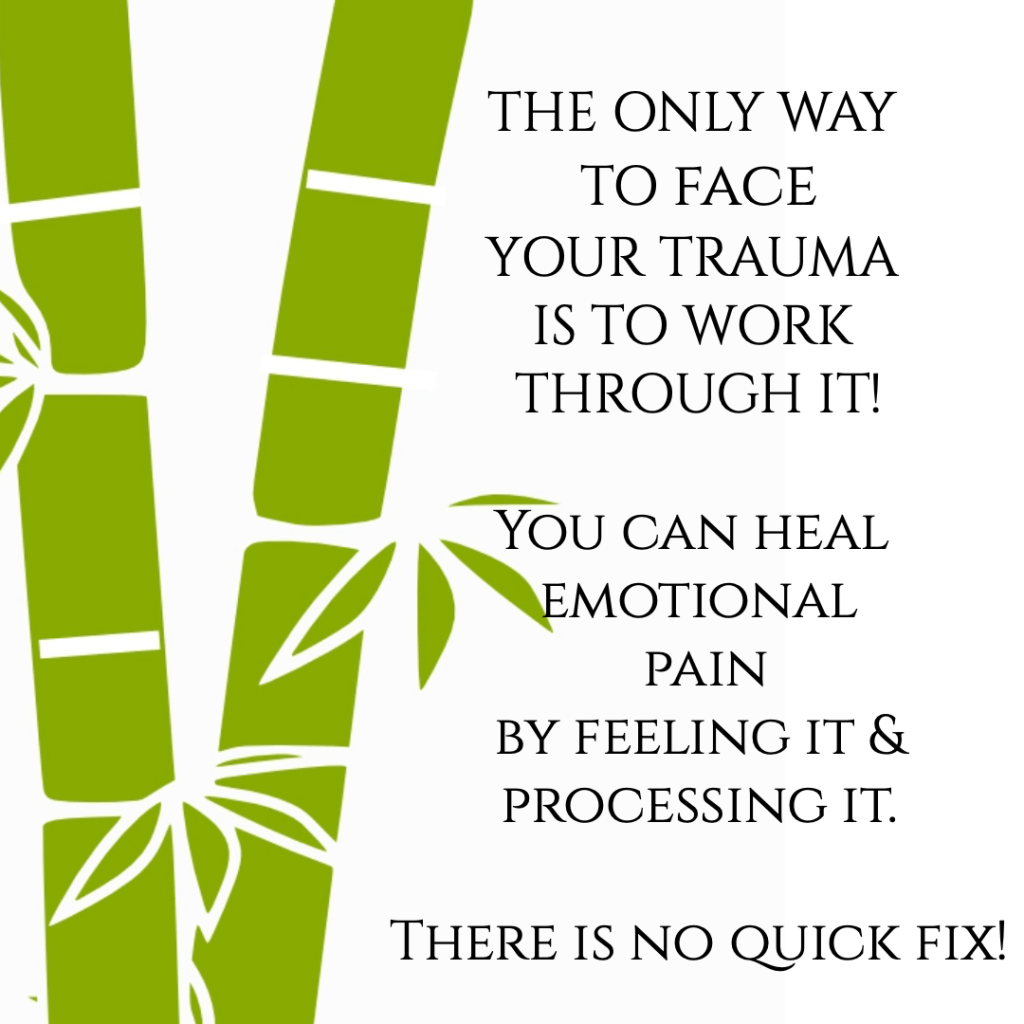
The only way to face your trauma is to work through it

Facing your trauma in the initial stages of awareness, may feel incredibly uncomfortable and daunting. Even admitting to yourself that you suffered abuse or trauma in your childhood, can feel very scary and soul crushing at first.

If you do reach that point however, please know that you are doing the right thing no matter how uncomfortable.

The only way to heal emotional pain is by acknowledging it, feeling it and grieving it.

There may be people out there that make big promises of how to heal quickly and offer quick fixes for alleviating your suffering, but please know that these quick fixes never work. They may provide temporary relief but they don’t holistically address the deeper parts of your psyche that need nurturing.

I am telling you this because I have been there myself. I have tried short term treatments and they don’t work in the long run. My healing journey from childhood trauma started at the tender age of 16 and I am now 41. I am still working on my healing and will continue to do so.

To change dysfunctional behaviours such as people-pleasing, avoidance, dissociation, toxic shame and inner critic attacks we must put in consistent effort daily for months, even years.

Dysfunctional behaviours that we learnt in our childhood to survive the abuse, need a long time to ‘undo’!

The only way to improve your emotional wellbeing is by peeling away each painful layer gently, acknowledging it and pouring self-compassion and love into it.

What are your thoughts?

Love Athina

Carrying your parents’ shame

Growing up in abuse means that you may have carried feelings of shame for the way you witnessed your parents acting or treating others.

Growing up in a dysfunctional family may mean that you witnessed your parents use, manipulate and control other people, just to get certain needs met. The people that these things were done to, were people that you genuinely liked and couldn’t believe had been treated in such a selfish and immoral way.

Growing up in a dysfunctional family, where one or both your parents had NPD, you will most likely have witnessed aggressive behaviour, socially inappropriate behaviour, victim playing, scapegoating, lying, manipulation and so much more. There will have been many times, where you felt ashamed that you were the son or daughter of such a parent. You would have literally felt like you were ‘bad’ or ‘toxic’ just by association. You would have felt like you had to constantly apologise for your parents’ awful behaviour. This was never your fault or ‘burden’ to carry however.

When dysfunction like this had always been your ‘normal’, you may have found yourself over-compensating somehow in adulthood. You may have noticed how much you are always trying to be kind, selfless and helpful to others. You may have noticed how much you people-please because you don’t want to be thought of as ‘bad’.

Your inner child took on your parents’ shame and this shame wasn’t yours to carry.

Your inner child may still need healing in regards to the abuse it witnessed and experienced.

Self-awareness is so important when trying to heal the trauma you experienced as a child.

You may not have awareness of certain behaviours you carry or even certain behaviours you still repeat because of what you were taught in your childhood.

To start healing, it is crucial to observe your emotions and pay attention to the intensity of your reactions in your body. What things trigger you and why? Why do some things upset you a lot? Why do you have low confidence in some areas but not in others? What things happened in your childhood that may remind you of the present?

Childhood trauma caused from abuse creates a lot of shame and emotional dysregulation.

If you want to start healing or figure out where things may be going wrong in your life, book an introductory call with me by emailing me at courageisallyouneed@gmail.com

Love Athina

How covert narcissistic mothers create shame

In this video, I discuss how narcissistic mothers and particularly covert narcissistic mothers create shame in their children.

Sadly these feelings of shame, follow these children into adulthood and contribute to the trauma these individuals live with.

Watch the video to find out more.

Love Athina

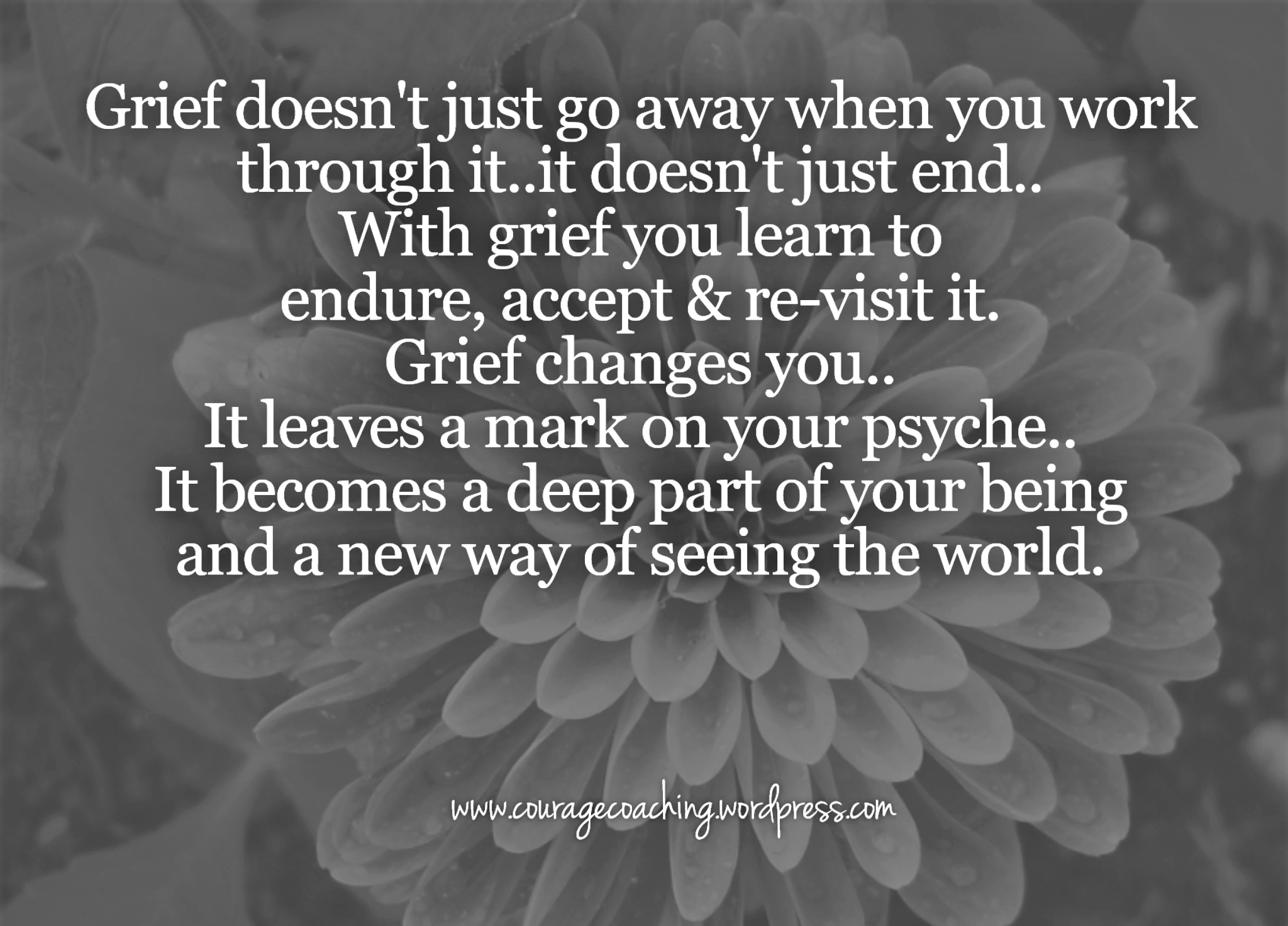
Grief

FontCandy (20)

Grief is a huge part of life and yet a very painful one. We all experience it and for some people grief can be an even bigger part of their lives than for others.

Grief can be about so many things, not just the death of a person.

Every new beginning means that there was also an ending and every ending can leave a trail of grief. Grief can be experienced at the end of a relationship, the end of a job, leaving the town you grew up in, saying goodbye to friends or family, saying goodbye to a beloved pet or business or even saying goodbye to life as a single person.

What are your experiences with grief?

Love Athina ♥

© All blog posts and images are owned by me and Courage Coaching. Please don’t use without consent and only re-blog if you would like to use the information on here.

2nd Video on emotional flashbacks

Hello fellow bloggers & friends,

I hope you had a good weekend and have started your week with hope in your heart. I have been unusually busy over the last week, as hubby has been on holiday from work. My mornings have been completely transformed from work & ‘me’ time, to long breakfasts and lots of ‘us’ time. We just celebrated our 2nd wedding anniversary on Saturday and took a mini break away in the wonderful town of Braunschweig. An escape from the usual routine we are well accustomed to, is so incredibly refreshing and enriching.

Although hubby is still on holiday this week as well, I want to make sure I keep up my blogging and Youtube Videos, even if at a lesser frequency.

I have finally managed to set up my new webcam and got the sound on the microphone to the level it should be at. I can safely say that the quality of my Youtube videos will finally be at an acceptable level.Hoorah 🙂

Although I started off my video today thinking it would only be a very short trial one (to test out my new webcam), it ended up being a long one!

The video is about emotional flashbacks once again and how to manage them.

The video below is the 2nd one I have posted on this topic, as I have received a few more requests to talk more about this difficult area of CPTSD.

Love Athina ♥

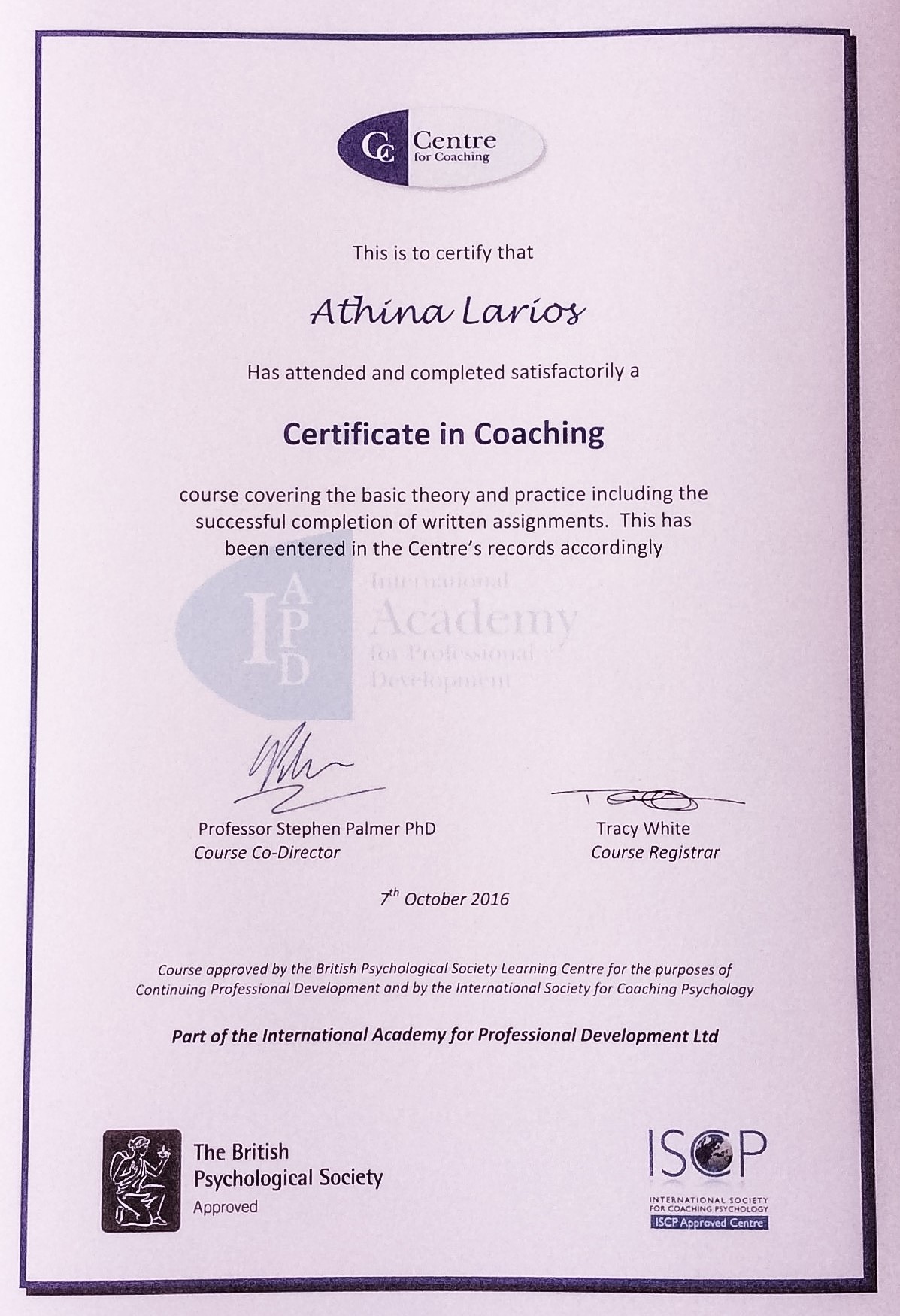
Ps: I finally received my full & approved ‘Certificate in Coaching’ today after completing the written assignment and waiting a long 12 weeks for the course tutors to correct it.

Unfortunately, they forgot to add my married name in brackets as I had originally requested but despite this, I am very very pleased 🙂

image1

© All blog posts and images are owned by me and Courage Coaching. Please don’t use without consent and only re-blog if you would like to use the information on here.

Intolerance to vulnerability is NOT OK!

Intolerance to vulnerability is everywhere.

Dysfunctional homes have this at their core.Children don’t feel safe to express emotions of sadness or pain..Children are taught that it is not ok to have sad or angry emotions..that they will be a burden if they dare to express these emotions..

This is not acceptable..This is emotional abuse..

Physical vulnerability is different to emotional vulnerability..When someone is physically disabled or physically ill, he/she seems to have more understanding from others..because you can see his/her illness physically..When a disability is emotional or mental however, people are quicker to dismiss it..This is where the stigma of mental illness comes in..Every single person out there with a mental disorder, is vulnerable..If they suffer with anxiety or depression, this makes them vulnerable..Just as much as someone who has a heart condition, or cancer or any other condition..

A vulnerable person is someone who struggles with day to day life.

Vulnerability refers to the inability to withstand the effects of a hostile environment (https://en.wikipedia.org/wiki/Vulnerability).

People with mental illness frequently become vulnerable and easy targets of physical and mental abuse.

People with mental illness can have poor boundaries, emotional dysregulation and many other extremely debilitating symptoms. They deserve the same compassion as those with obvious physical disabilities. They deserve the right to be able to talk about their struggles.

Love ♥ Athina

© All blog posts and images are owned by me and Courage Coaching. Please don’t use without consent and only re-blog if you would like to use the information on here.

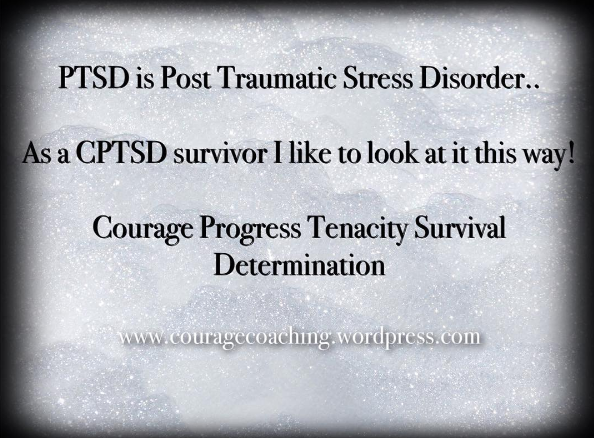
CPTSD= Courage Progress Tenacity Survival Determination

mychildwithin-healing_from_trauma-%e2%80%a2s-instagram-photos-and-videos4

Healing from PTSD is tough! Healing from Complex PTSD is even tougher.

In honour of World Suicide Prevention Awareness Day, I want to tell every single one of you survivors out there that you can look at your PTSD & CPTSD differently, just for today! ♥

C-PTSD = COURAGE PROGRESS TENACITY SURVIVAL DETERMINATION

Love ♥ Athina

© All blog posts and images are owned by me and Courage Coaching. Please don’t use without consent and only re-blog if you would like to use the information on here.