
Love Athina ♥

Love Athina ♥
When we ask for advice from someone that is very knowledgeable in certain areas or from someone whom we admire, this can be very useful both in the short term and long term.
On the other hand, unsolicited advice from close family or even from complete strangers can be an annoying and sometimes insulting behaviour.
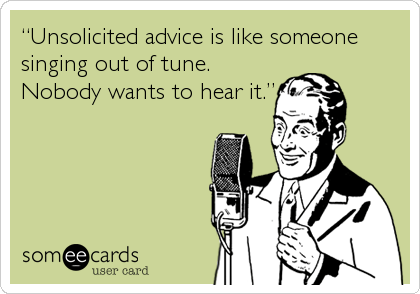
It could be done in a well meaning manner by some people but in most cases unsolicited advice is self-serving.
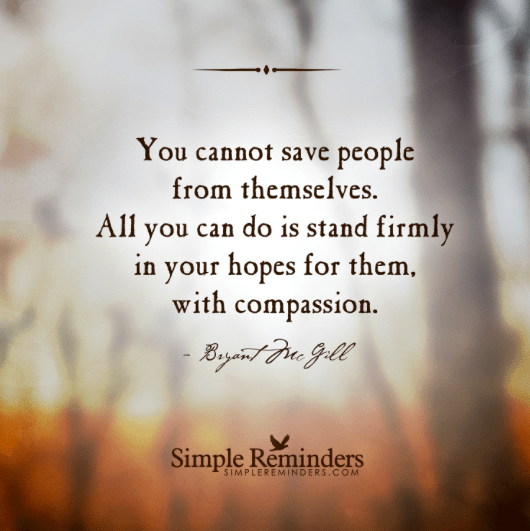
The more well meaning reasons someone gives unsolicited advice are firstly because they are trying to be friendly, secondly they are just excited to share something that worked for them or thirdly they are just completely altruistic.
Some other motivations that might be harder to spot however are listed below:
Helplessness & wanting to solve your problems: If you are sharing some thoughts on how you are struggling in a certain situation, the listener may think that you need them to fix your problem rather than just validate what you are saying. They think that by giving you some sort of solution you will feel happier. This isn’t the case though in most situations.
The need to be needed:
Some people just have an intense need to be needed and to feel important. It’s as simple as that.
Narcissistic tendencies: People who may have a Narcissistic Personality, think that what they have to say is very important and they tend to be in the role of ‘teacher’ very often. They think that they are better than you and that their opinions are of high value, so they tend to offer advice all the time.
Dominance: This is similar to the behaviour of a Narcissist. Being dominant in a conversation is very important to some people. They want to be the most influential person and they have difficulty understanding why somebody might not want to hear what they have to say.
Being judgemental: If someone doesn’t like the way you are doing something, then they will give you advice so you can change it. This is when unsolicited advise becomes insulting.
So how do you respond to someone giving you unsolicited advice?
This can be rather tricky. If your reply is too detailed then this might encourage more unsolicited advice. If your reply is too agressive or defensive, then this may cause an argument or even damage your relationship with this person.
Simple, clear and short responses are the best. It is important to set clear boundaries and to be assertive when necessary.
”I will think about it”
”That’s an interesting point of view. I will consider if this is right for me”
”Thank you but I would rather do it this way” or ”I would rather stick to my plan”
”I am not looking for any advice right now”
”That doesn’t suit my values”
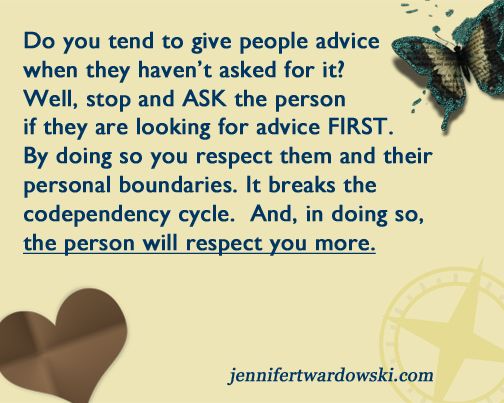
What are your experiences with unsolicited advice?
If you liked this post then please feel free to share & comment.
Love Athina ♥
© All blog posts and images are owned by me and Courage Coaching. Please don’t use without consent and only re-blog if you would like to use the information on here.
Happy Monday dear friends & followers!
After a wonderful 10 days off work, celebrating my birthday with friends and exploring new places with my husband, I am feeling grateful and refreshed.
Today’s topic is especially important to me, as someone I care about deeply is currently suffering with this type of depression.
Although high functioning depression is a milder form of depression, it is equally as important as other types of depression.
When it comes to depression, many of us envision a person caught in the depths of despair and hopelessness, who wants nothing more than to stay in bed and avoid people and work completely. We envision someone who has lost all interest in the things they love, who may be feeling suicidal and is barely holding it together.
Although the above isn’t inaccurate, it doesn’t portray life as a high functioning depressive.
When someone suffers with mild or high functioning depression, the typical joy and laughter they once felt, is usually replaced by an absence of emotion and a very deep feeling of emptiness.
This is known as anhedonia and it is the loss of interest in previously rewarding or enjoyable activities.
To the outside world they seem like they are coping fine. They are still able to go to work every day and communicate effectively. They are still able to reach goals and get out of bed in the morning.
The most unfortunate part of those with this milder form of depression is that when they talk about their feelings to loved ones and even doctors, they aren’t taken seriously enough.
Unless someone is literally unable to function, they seem to be dismissed as not having anything to worry about. This isn’t good!
When life circumstances change, those experiencing mild depression may be at greater risk for moderate to severe depression if treatment isn’t sought early enough.
This is also discussed in my youtube video, so feel free to share if you think it may help someone you know.
Love Athina ♥
© All blog posts and images are owned by me and Courage Coaching. Please don’t use without consent and only re-blog if you would like to use the information on here.
As much as I dislike watching the news and tend to limit what I take in, it is increasingly difficult to not be affected by the constant bombardment of war footage, terrorist attacks, murder and suffering.
When you are a highly sensitive & empathetic person, it is easy to get overwhelmed by the sadness of others. I am very much aware of the cruel injustice in our world and it hurts me deeply to see so many suffering. It is even tougher when this is repeated in your own country. Due to the fact that I know what it feels like to have your life threatened, I decided to make the following video on the aftermath of trauma. This is my small contribution towards all those affected.
Despite my traumatic childhood, I was also once caught up in armed robbery, where a gunshot went off right next to me and a woman was lying on the floor with blood on her leg. The disbelief of what I had witnessed was indescribable. The terror I felt shook me to the core. I couldn’t comprehend how someone could shoot a gun, when everyone at the cashier was cooperating and the robbers had managed to get their money.
This armed robbery happened at a time where I was very vulnerable already as my CPTSD was really bad. All I could think of after this robbery was ‘not again, not another trauma to add to my list’. Life felt so unfair and scary on that day and my mind was telling me that there was more damage done and that I would not recover this time.
If it wasn’t for my kind therapist at the time, to ground me and tell me that I wasn’t going to let this swallow me, I don’t know how I would have coped in the long term.
So this video is for those of you who are new to trauma. It is helpful in understanding yourself after a traumatic experience and it gives you the tools you need to ride the emotional waves that may at times feel like they are taking over.
Although I am not a qualified psychotherapist, I do have a lot of insight into trauma through my own journey and I know the many things that helped me, as well as others. If you are someone who is in deep distress, then please call a qualified mental health professional.
Thank you so much for reading & watching! ♥
Please share this post if you think it will help others.
Check out my patreon page below, if you would like to support the creation of more videos, documents and fact sheets.
https://www.patreon.com/AthinaEhlen
Love Athina ♥
© All blog posts and images are owned by me and Courage Coaching. Please don’t use without consent and only re-blog if you would like to use the information on here.
Inspired by a comment made by a friend on her facebook page, I wanted to address the difficulty of finding a balance between self-soothing and running away from emotional pain. I also wanted to write about what it actually means to self-soothe.
Self-soothing is about allowing yourself to experience any uncomfortable emotions by using healthy techniques to comfort and restore balance. Successful self-soothing doesn’t mean that you make the feelings more intense. It means that you will eventually enable the emotions to pass. Self-soothing is about tolerating an uncomfortable experience, without acting in ways that are not helpful in the long run. This is when running away from emotional pain comes in. If you choose to block your emotions or run from them, this will then make the emotions grow in intensity or come out in ways you didn’t intend in the future.
Running away from emotional pain looks like the following:
Do you see a pattern here? The more addictively or compulsively you do something, the more it means you are running away from what needs to be dealt with. It’s like an ostrich burying its head in the sand — just because you are hiding from everything and pretending everything is okay, does not mean that it will be okay.
We are all guilty of running away from our emotions. Sometimes they are just too painful to deal with and nobody wants to feel pain of any sort.
My biggest vice seems to still be comfort eating. I love my cakes & biscuits unfortunately, although apart from those, I generally eat a very balanced diet. Chain smoking used to be my biggest coping mechanism from the ages of 15-22 but I am so glad that I was able to quit.
Luckily, I have become better at self-soothing. I have realised that the more I deal with my emotions, the better I feel in the long term.
When feelings are dealt with head on, you talk about them, you cry, you blog about them, you ask a friend for support and you do something in that moment that will help you feel a little better, safer or comforted.
Self-soothing means that you wrap yourself in a blanket and play your favourite music. It means that you take yourself for a walk in nature. It means you find a quiet space in your home and you focus on breathing slowly and deeply and calming yourself down. It means that when you are feeling especially low, you read out some positive affirmations to help empower you. It means that you run a bath with your favourite oil or bath foam.It means that you engage in something creative. It means that you listen to your body.It means that you practice self-compassion and kindness to yourself. Self-soothing can be done using all 5 senses.
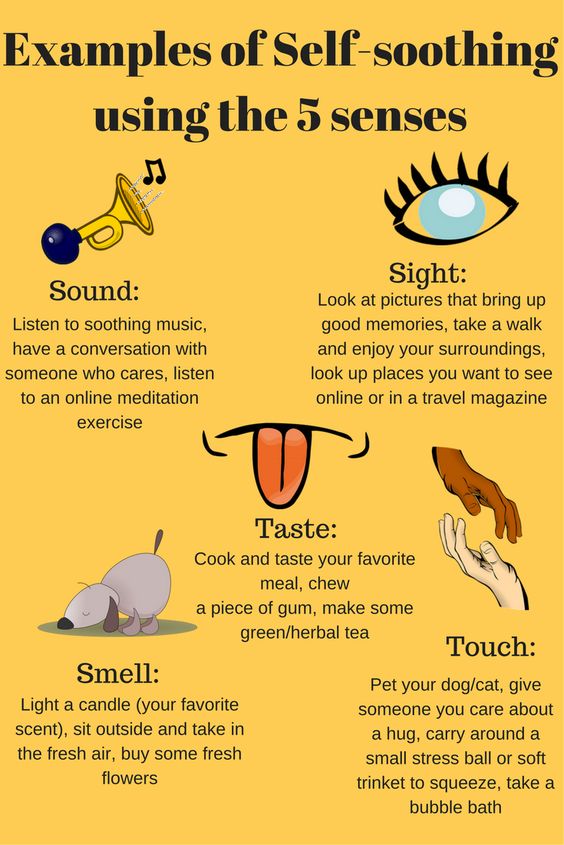
There are so many ways to self-soothe and everyone has different ways of doing so.
What is your experience?
Do you feel you are somewhere in the middle of self-soothing and running away from your problems or not?
Please share your experiences.
Thanks for reading
Love Athina♥♥
© All blog posts and images are owned by me and Courage Coaching. Please don’t use without consent and only re-blog if you would like to use the information on here.
Following on from my post Are you a chronic over-explainer? , I now want to address why & how to actually stop over-explaining.

As I mentioned in my previous post, many individuals who suffer from low self-esteem or people-pleasing, have an almost compulsive need to over-explain. Others do it, because they have been misunderstood many times in the past when talking.
Using more words should not be a go-to for clarity. It is better to try and use the right words the first time instead of all the words in a stream-of-consciousness style.
Being nervous of what others think of you, will make it hard for you to make simple statements about things you like or don’t like. For example, a new friend of yours who has cats may ask you if you like cats. Instead of your response being ”I don’t really like them” you end up saying ” I am not too fond of cats because I don’t like that they are selfish, although I am not saying that your cats are selfish, I just mean that I prefer dogs to cats because they are more communicative” etc……
It is important to remember that when you over-explain to others, you may at times make them feel stupid. They might think that you are over-explaining things because you are sure they just ‘dont get it’! Over-explaining also makes you look stressed, because you aren’t able to get to your point simply. This will then end up stressing your listener out. It may also make others think you are confused, which will then create confusion in them and eventually lead to even more over-explaining.
The key to stop over-explaining is to just tell yourself ”It is not that important”. If others think of you in a negative way after you state ‘a dislike’ or a particular way of doing things, then that reflects on them, not you.
Another good way to stop it is to try and be precise in the way you communicate. Try and limit your use of words by practicing beforehand (if for example you need to explain things to an intern at work or to someone you have assigned work to).
Thirdly, try and be mindful about whether you are over-thinking. If you are a worrier or an over-thinker, it will come naturally to you to want to over-explain. If you are thinking ”I hope they get what I am saying. I hope they don’t think I am selfish, cruel, stupid etc”. Try and let go of the worries by telling yourself ”So what if they think I am selfish? or ”so what if they get it wrong?”.
By taking time to try and listen more to what the other person is saying, this also helps you to avoid over-explaining, especially if you see that the other person completely ‘gets’ where you are coming from.
Lastly, ask yourself this when explaining ”Am I explaining or am I talking for my own benefit?” If it is the latter, then you are over-explaining!
Thanks for reading
If you like this post, then please like, comment or share.
Love Athina ♥
© All blog posts and images are owned by me and Courage Coaching. Please don’t use without consent and only re-blog if you would like to use the information on here.
Approval seeking is a very common behaviour that all of us are guilty of at some point in our life. It might be that we are trying to impress someone we like, make a new friend or make a good impression on our new boss. It is perfectly normal to seek approval in others occasionally.
Approval seeking only becomes a problem when we do it chronically. When we constantly seek to be validated externally because we don’t feel comfortable to accept ourselves as we are.
This is the topic of today’s video, which I felt was very important for those of you who are people-pleasers and/or codependents.
Love Athina ♥
© All blog posts and images are owned by me and Courage Coaching. Please don’t use without consent and only re-blog if you would like to use the information on here
Gratitude is a very important tool that most of us don’t use as often as we could.
To be grateful for all that we have in our life can bring a certain sense of contentment and peace.
Studies have been done, which show that gratitude improves both mental and physical health. Gratitude can reduce feelings of hopelessness and can greatly improve our relationships with others.
Doing a daily gratitude list just before bed, has been found to not only improve sleep quality but can also help with reducing depressive symptoms in people who are suffering.
”Gratitude makes sense of our past, brings peace for today, and creates a vision for tomorrow” – Melody Beattie
The key to really benefiting from the practice of gratitude, is to write 5 or more things that you are grateful for on each day.The more specific the things you write about, the more beneficial the effects.
One example for this may be ”My friend suprised me with a ‘Thank you’ card today” or ”I enjoyed playing with my cousin’s puppies”.
Another way of practicing gratitude, is to have a little jar and pop daily gratitude notes in it..At the end of the month or after a particularly bad day, it can be useful to return to your gratitude jar and read all the little gratitude notes you put in it.
Do you practice gratitude and if yes, is there something specific you do?
Thanks for reading
Love Athina ♥
© All blog posts and images are owned by me and Courage Coaching. Please don’t use without consent and only re-blog if you would like to use the information on here.

How do we each fit into this world?
Are we defined by whether we have a good job? A good marriage?
Do we feel that we constantly have to measure up to our friends’success?
Do we feel that we have to have the latest gadget, a new car or a big house?
Do we feel like a complete failure if we haven’t secured a stable job?
And what about relationships & family? When someone is single past the age of 40, everyone has an opinion about why that person is still single. If someone is jobless, everyone has an opinion on why that is.
STATUS ANXIETY is a constant worry about whether we are good enough in the world we live in. It is an insecurity about whether our life is a failure or whether it is a success.
Status anxiety is a term I came across after watching a video by Alain de Botton.
Status anxiety happens because we allow our environment to affect our inner world. Status anxiety happens when we allow other people to criticize us or the way we choose to live. It is only natural to become anxious, when we start comparing ourselves to others.
One of the most uncomfortable situations which may trigger status anxiety, is at a social event where you don’t know any of the guests. In such events, such as a party, you can only get to know someone initially by making small talk. You may be approached with questions such as ”What do you do? Where do you live?”. These questions may make you feel uncomfortable or inferior, because you don’t think your job is anything special and you don’t currently like the area you live in. In these situations you worry what the person asking the questions might think of you.
Status anxiety is rooted in judgements or how we think others will judge our choices, beliefs, skills and way of life. Nobody really has any control over the thoughts or judgements of others but everybody has control over how they react to others’ judgements.
If we really don’t care what other people think, then we probably won’t have status anxiety.
Status anxiety also frequently causes envy.We tend to envy in others, what we haven’t quite managed to achieve for ourselves. We may secretly envy the person who seems to have the perfect relationship when we are feeling lonely. We may envy the person who is always going on holidays because we can barely pay the bills with our low-wage job. Envy, can give us insight into a part of our lives we may need to work on.
What is the most important thing to consider when suffering with status anxiety?
Is it more important to worry because we haven’t managed to develop a good career for ourselves? Is success only measured by having a high salary, a perfect marriage and celebrity status?
What is MORE important, is the meaning WE give to our life. If we are happy with all we have achieved (despite all the difficulties or judgements by others), then that is all that matters.
Our judgement of our own life is the most important.
Not everyone is born equally lucky, supported, intelligent, confident or motivated.
The people who are highly successful in business and are making the big bucks, are usually lacking in many other areas in their life. They may lack emotional intelligence and empathy.
If you had a choice in your life, what would it be?
In my personal opinion, success is being a kind & empathetic person.
Success is being able to self-reflect and being able to help others do the same.
Success is being remembered as a good person.
I believe that success shouldn’t be measured by whether you work, have a relationship or have kids.
Success should be measured by the type of person that you are..
When I die in the future, I would much rather be remembered as a good human rather than a successful businesswoman or celebrity. I would much rather be remembered as empathetic, giving, respectful, generous & lovable. I would much rather be remembered as someone who meant something to someone or as someone who inspired others.
If you find that you suffer with status anxiety, make sure that you define your own life in a way that makes you feel comfortable.
At the end of the day, all that really matters is the opinion you have of yourself and the respect and kindness yougive to others.
Love Athina ♥♥
© All blog posts and images are owned by me and Courage Coaching. Please don’t use without consent and only re-blog if you would like to use the information on here.
I wanted to share this great article by Psych Central.
http://blogs.psychcentral.com/caregivers/2017/01/15-ways-you-are-resisting-therapy-or-recovery/
It is ok to not ‘click with a therapist’ or to not be ready for therapy.This can also happen in a coaching relationship too. You find someone to assist you on your journey of change or recovery and the 2 of you just don’t have any rapport.
From my own personal experience, rapport is very important in a therapeutic and coaching relationship.
Sometimes there have been sessions where a client isn’t managing to make any progress. There may be emotions that are too painful to deal with, or memories that haven’t quite resurfaced. It might be that they aren’t as commited as they initially set out to be. It might be that they are afraid of exposing the ‘truest’ part of themselves.
Whatever the reason, the Psych Central article is very insightful.
Let me know what you think 🙂
Love Athina ♥
© All blog posts and images are owned by me and Courage Coaching. Please don’t use without consent and only re-blog if you would like to use the information on here.
 couragecoaching.net