
Codependents & Narcissists in a relationship. Why are they so attracted to each other?

Happy Monday to all of you! It’s the 1st of August today and time seems to have flown by so quickly!

Today’s post is about another topic very close to my heart, due to my own healing journey from codependency to healthy love. It most definetely wasn’t easy to get to where I am. It required perseverance, determination and a little bit of hope.

To heal from dysfunctional relationships & codependency, there are 5 steps that are important to take.Having a therapist who specialises in healing from codepedency, is important in guiding you.

  • The first step is becoming AWARE that your choices or actions are dysfunctional.
  • The second step to changing dysfunction is understanding the source of the dysfunction, so where did it come from?
  • The 3rd step is grieving the loss of a healthy childhood. An abusive childhood usually leads to poor choices in relationships & life in general. Without a stable & nurturing childhood you never learn healthy love, healthy boundaries & your emotional regulation is damaged.
  • The 4th step is understanding the complexity of changing self-defeating behaviours & changing certain defense mechanisms, that protected you in your childhood but no longer serve you in adulthood. It takes time, patience and self-compassion.
  • The 5th step is actually trying out new relationships when you have made progress in your healing. You have to make a few more mistakes and discuss these with a therapist by your side, so you can see where you went wrong and how to improve this next time.

When I first found out I was codependent back in 2008, it was like the blindfold was taken off my eyes for the first time. Before learning this, I had a suspicion that something wasn’t right in my relationships but I had no idea how to change this.

I felt like I was in an emotional maze and had no idea which way to go. Everytime I thought I was making better choices in regards to who I was in a relationship with, the more unbearable the heartbreak became.I desperately wanted to be loved but wasn’t able to figure out this painful puzzle! At some point I was so exhausted from the traumatic end of each relationship & the subsequent self abandonment, that I decided to move countries! I wanted a new start…I hoped that I might meet my future husband if I moved away but I never in a million years thought I actually would..Sometimes you need a little bit of luck too!

When I moved back home to Greece after 11 years of living in the UK, I was met with more drama, a flare up of my CPTSD and a father who abandoned me over and over again. I was back in therapy again with a new therapist and was finally diagnosed with CPTSD. I was told both my parents were ’emotionally handicapped’ but that therapist never told me my parents were narcissistic. Maybe she decided at the time that it wasn’t relevant to me.

Despite this she looked after me very well. Each step I took into uncertainty, she held my hand.

I was also entered into a group psychotherapy group and it was extremely beneficial. I was in a group with 5 other people that also had similar backgrounds and it was very healing.

Support is crucial in healing. Without all this I would never have made progress.

The video above is a simple explanation (I hope) of the general dynamics of a codependent & narcissist in a relationship. Maybe you will see yourself in this and get curious. If you do, then please connect with me and I would be happy to have a chat with you.

Please feel free to re-blog this post so it reaches more people! Thank you 🙂

Much Love Athina ♥

© All blog posts and images are owned by me and Courage Coaching. Please don’t use without consent and only re-blog if you would like to use the information on here.

 

Speak your truth..

IMG_1523

Speak your truth, be yourself and if people don’t accept you then it is their loss, not yours!

If people don’t value your reality, your kindness, your honesty then they don’t deserve your time or your love.

When speaking your truth, have you ever felt overwhelmed with emotion? What has the emotion been? Anger, frustration, sadness, loss, disappointment?

The worst of all these for me was always frustration and then deep sadness..

When talking to a narcissistic parent, you feel all of these times 10!

Continuing to speak your truth despite the pain, frustration, loss and anger is very important…Don’t ever let anyone keep you silent..

Love Athina ♥

© All blog posts and images are owned by me and Courage Coaching. Please don’t use without consent and only re-blog if you would like to use the information on here.
The stages of healing-Victim, Survivor, Thriver

For those of you healing from child abuse (narcissistic abuse), this video includes the differences between each healing stage, as listed by Barbara Harris & Charles Whitfield. I found this very useful in my own healing. I am luckily mostly thriving now, with the exception of a few hiccups, here and there. Where do you see yourself on your journey of recovery?

If you find this video useful in any way, then please share on social media ♥

Love Athina ♥

© All blog posts and images are owned by me and Courage Coaching. Please don’t use without consent and only re-blog if you would like to use the information on here.
 

Trauma bonding & love addiction

depression-1241819_1280

In all my previous relationships, I always thought that intensity equaled love. I fell for the same abusive partners over & over again, that were mostly narcissistic & emotionaly unavailable. I had this deep desire within me, to fix and rescue and fight for their love. For many years I thought this was normal! In each relationship, I hoped that they would change and be able to offer me this unconditional love I was so desperately craving. What I didn’t realise at the time however, was that I was only trying to fill the void my parents’ had left after years of neglect and abuse. I was trying to resolve this feeling of not being lovable, through choosing further unsuitable partners that resembled the normality of my childhood abuse.

Each time a relationship ended I felt utterly crushed and devastated. I relived my abandonment over and over again and still had this intense feeling of  bonding with each and every one of my abusive ex’s.

The article in the link below, explains this bonding very well.

The part where it says ”there is a biological craving for intensity than no normal relationship will satisfy” is something that I deeply felt for 20 years and could never shake off..The more excited and addicted I felt to these men, the better..

I was always easily bored and not in any way attracted to healthy & stable men..I felt anxious and uncomfortable around them..This wasn’t my normal..I wasn’t normal..I was traumatised and stuck with what felt comfortable..and unfortunately comfortable for someone who has suffered abuse and trauma, is to crave more abuse and trauma..Sticking with what is familiar is more comfortable than doing something that feels unfamiliar, as us humans are creatures of habit & conditioning.

Growing up in an unsafe home makes later unsafe situations have more holding power. This has a biological basis beyond any cognitive learning. It is trauma in one’s history that makes for trauma bonding. Because trauma (and developmental trauma or early relational trauma is epidemic) cause numbing around many aspects of intimacy, traumatized people often respond positively to a dangerous person or situation because it makes them feel. It is neither rational nor irrational.

..the survivor can come to find that it can be almost impossible to relate to anyone, even family or old friends, except superficially. There is a biological craving for intensity that no normal relationship will satisfy.

http://www.abuseandrelationships.org/Content/Survivors/trauma_bonding.html

When I was first diagnosed as codependent in therapy, in 2008, I started attending a codependents anonymous group in London. I found it helpful inititially when I was recently out of a relationship but as time went on, my therapy was enough. Through the codependent meetings I also learnt about love addiction and being addicted to the need for love..This is something that I remember from the very young age of 13 where I would fantasize about my prince charming taking me away from my family and giving me everything I needed emotionally..As I got older, this intense need transformed into the most important thing in my world..Each boyfriend I subsequently had, became my everything and I felt completely hopeless and depressed without them..

This link below might be useful for some of you to identify whether you might be a love addict..This usually stems from childhood abuse, so don’t be too harsh on yourself! Healing is possible!

https://www.addiction.com/addiction-a-to-z/love-addiction/love-addiction-101/

In 2012 I was healed enough to be attracted to a healthier partner.With the help of more therapy I persevered through the anxiety of unfamiliarity and eventually got married. Marriage was something I was completely against after my parents got divorced.I never believed I could achieve healthy love let alone a marriage. I am still amazed at how much my life has changed. In 2008 I thought that life would never get better again..Now I sit across my husband and feel incredibly blessed to be loved and cherished for the first time in my life..My friends always felt more like family and I can truly say that I finally have a family in my friends and husband.

Any recovery process requires effort, patience and self-insight. It requires commitment, painful exploration and courage. It is possible to reach a deeper level of contentment, so each step forward is extremely important..

 My experience is vast in regards to relationship dynamics and overcoming narcissistic abuse. I am humbled to offer loads of advice on this blog and through my YouTube videos, as I believe that it is important to assist others on their journey. We all heal together..and we can all help each other..Whether some of you are only just starting your recovery process and whether others are ‘healed’, makes no difference..The connection and knowledge is crucial..The exchange of information is powerful..

Love Athina ♥

© All blog posts and images are owned by me and Courage Coaching. Please don’t use without consent and only re-blog if you would like to use the information on here.


How to protect yourself from narcissistic parents

A quick 2 minute video on ‘How to protect yourself from narcissistic parents’:

Love Athina ♥

© All blog posts and images are owned by me and Courage Coaching. Please don’t use without consent and only re-blog if you would like to use the information on here.
Narcissistic abuse survivors

FontCandy (58)

As some of you already know, I have great insight into narcissistic abuse, after a tumultuous life with 2 narcissistic parents, many narcissistic ex-partners and narcissistic ex friends. Before my father discarded my mother in 2000 and filed for divorce, he had already met his second narcissistic wife. He had already lined her up to fill his emptiness and later had a child with her. The cycle of abuse unfortunately continued and there was nothing I could do to prevent it.He has been married to her for 16 years now and it has been the most destructive, soul destroying relationship I have ever witnessed.

My histrionic/covert narcissistic mother, on the other hand, luckily didn’t re-marry. She just had 2 relationships which didn’t work out.She has remained irritable, negative and critical. She still blames everything & everyone else for her misery and struggles to cope with her own depression.

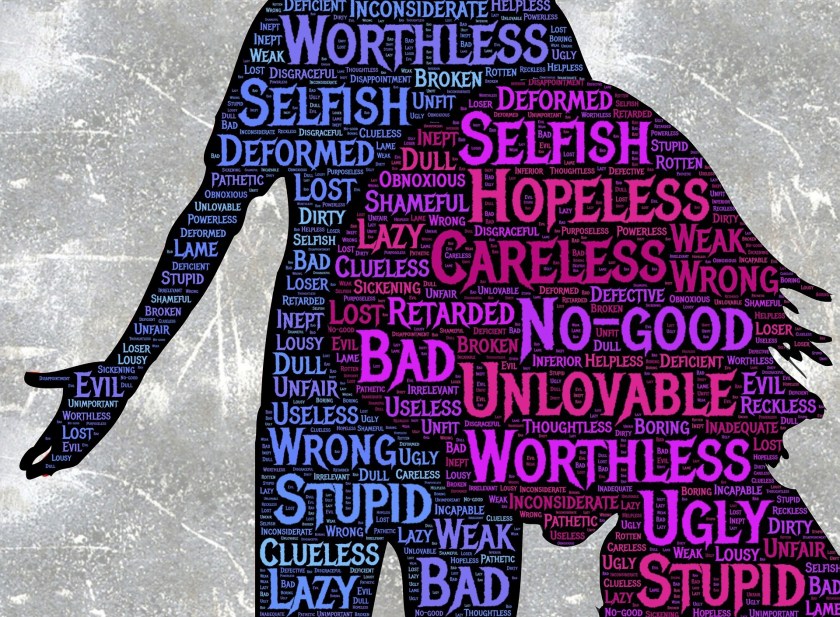
My childhood in general was always hot & cold.One minute things were relatively normal and my parents would be kind & thoughtful and the next they would be extremely hurtful & abusive. This almost made coping with the abuse harder, as the kind moments would give me hope as a child and then when the abusive moments would come around, I was utterly devastated and confused. I then learnt that whenever my parents were kind, there were always strings attached to this kindness. I was told many times as a child ‘After everything I have done for you, this is how you treat me?’. I felt guilty and ashamed. I felt worthless and no good.

The one thing I know for certain is that for those of you who have also been affected by narcissistic abuse, you have developed a deep sense of self-awareness, a sense of gratefulness for the tiny moments of kindness that others have shown you and a high level of empathy from a young age. Most of you sought out therapy and have always helped and be-friended the shy or needy. Yes you have made many mistakes along the way, by getting involved with people who resembled your family of origin, however this is a logical result of growing up in an abusive or neglectful home.

The thing that helped me the most in my recovery was forgiving myself for struggling so much in my life. Self-compassion is the best gift you can give yourself as an abuse survivor.Recovering from narcissistic abuse means that you have to dig deep to reveal the many layers of trauma. You have to acknowledge that it isn’t going to be easy to go through all the painful realisations of your past but that is extremely important to work through each layer and grieve your losses. Trusting that others won’t hurt you is a huge struggle for those who have been abused. If your primary caregivers let you down so badly, why on earth would you trust complete strangers?

The most important thing to remember is that there is no time frame on healing and that everyone copes and heals differently.

My advice will always be to ask yourself ‘What do I need’? ‘What am I scared of’? ‘How can I look after myself’?

For those of you who can relate and understand, just remind yourselves daily that you survived an unfair childhood and that from now on you can give yourself the unconditional love your parents weren’t able to give you. In every low moment, remind yourself that you are brave and resilient.

Now in my 30’s I have already been through the darkest moments of despair and have healed extensively through many years of trauma therapy. I am now armed with knowledge,coping skills and the most important thing: the knowledge that healing is possible and that you ARE able to live a more fulfilling life. If you had asked me this same question 2 years ago, I wouldn’t be feeling so optimistic.

Now I am putting all my knowledge into helping others and it feels good! It feels good to see that others feel validated & comforted, because this is a feeling I missed out on a lot! It feels good to be there and pass on information, even if it only helps one other person. Free advice is so valuable and we can all do it! So many of us are already doing it!

Love Athina ♥

© All blog posts and images are owned by me and Courage Coaching. Please don’t use without consent and only re-blog if you would like to use the information on here.
 

Dealing with criticism

shame-799099_1920

When someone criticizes us, it tends to touch a nerve and can sometimes leave us feeling very vulnerable, very angry and sometimes both!

This may be because there is absolutely no truth in the criticism and we feel it is completely unfair or actually because there is some truth in the criticism and we are just not ready to deal with it.

Being criticized is also especially difficult when the person criticizing us is someone we hold in high regard. It could be our boss at work or a new partner.

The thing that most people don’t realise is that criticism on it’s own isn’t what makes us upset. The meaning we attach to criticism is what affects us. As I mentioned in one of my previous blog posts, being a people-pleaser means that we give others too much power over our emotions and how we feel about ourselves. If others’ approval is extremely important, then we give them consent to always make us feel bad about ourselves.

In order to stay away from seeking approval, we have to learn to practice self-acceptance and only rate our actions or traits but not ourselves. We are responsible for our reaction to someone’s criticism and it is up to us to change how we respond.

If we already have low self-esteem, then criticism will be especially hurtful and it could take us days to recover from it.

Are you someone who struggles from others’ criticism? Do you find that you always get overly upset when someone criticizes you or overly agree?  Do you avoid contact with that person after the criticism occurs? I would love to hear your experiences.

If you are a childhood abuse survivor, I am especially interested in your experiences. When you have internalised your parents’ negative and unhealthy criticisms, this will then follow you around and will be brought to the surface everytime someone criticizes you. This is actually quite a painful, traumatic reaction because a present criticism can send you into an emotional flashback of your parents’ abuse. This is something I am particularly experienced in through my own recovery from abuse but also through talking to others who still struggle with this internal self-critic.

Love Athina ♥

© All blog posts and images are owned by me and Courage Coaching. Please don’t use without consent and only re-blog if you would like to use the information on here.

Take control of your own healing

FontCandy (38)

Every healing journey is unique to each person. No journey should be judged, minimised or discounted.

Whether it is childhood abuse, emotional, sexual or physical abuse, domestic abuse, grief, a single trauma or multiple traumas, nobody has the right to criticize someone else’s journey.

If you have compassion and maybe share what helped you, it doesn’t necessarily mean it will help others in the same way. Having compassion and empathy is so crucial. Listening, without trying to fix is also important.

After you reach a certain point in your healing, you will notice that things get easier. The intensity of certain emotions lessen and your sense of self-protection and boundaries are solid. If you suffer from a mental illness, it doesn’t necessarily mean it will go away. You eventually just learn to accept that it is a part of you and that you can handle it in a self-compassionate way.

What is your experience with healing?

Do you believe you will reach a point in your recovery where things eventually feel better?

Are you persistent in practicing self-care and healing with appropriate professional support?

Don’t forget that healing is a very up and down process. It isn’t always straightforward. Sometimes just as you are starting to feel better, something else comes along which needs processing. It might feel that you are back to square one again but this really isn’t the case.

Changes happen in very small ways sometimes and it depends on whether you have regular support.

Always be kind to yourself and others going through a process of healing ♥

Love Athina ♥

© All blog posts and images are owned by me and Courage Coaching. Please don’t use without consent and only re-blog if you would like to use the information on here.


Fear of negative emotions & being a People pleaser

If you are afraid of experiencing other peoples’ negative responses or emotions, then you will do everything you can to avoid this.This fear will make it hard for you to say NO to someone and you end up doing things you really don’t want to do.You feel compelled to always do as they say and become completely submissive to their needs. This is the core of being a people pleaser.

These fears usually stem from childhood abuse, where you had an overbearing, manipulative parent or parents. If your parents would punish you severely if you didn’t do what they wanted, then you will have been conditioned to be obedient at all times.

Some really important characteristics of being a people pleaser is when you have low self-esteem, are addicted to others’ approval and are always dependent on them for your self-worth and validation. This happens especially when you might have had a narcissistic/psychopathic parent that criticised you negatively all the time and made you feel excessively guilty and shameful when you didn’t do as they said. With extremely self-centered parents, everything is always about their needs and your needs take a back seat. Every time you want to take a step forward and be more independent in your thinking & behaviour, they will always find a way to pull you back and make you feel dependent on them and their way of thinking.(codependent).It is a very strong type of conditioning that happens in abusive homes and as a young child you aren’t able to escape this environment.

Something that is very common when you are people pleaser is always rationalising peoples’ abusive behaviour to the point of always forgiving it. You always make excuses for others’ bad behaviour and say things like ‘Yes my father beat me but at least he provided a roof over my head’ or ‘I know my mother is very manipulative but deep down she has a good heart’.This has a lot to do with ‘toxic bonding’ or stockholm syndrome’, where you are extremely attached to your abuser in a very emotionally damaging way. You aren’t able to accept the reality of how bad something actually is, because it is extremely painful.

Another couple of traits that make someone a people pleaser and also make them more susceptible to emotional abuse is the fact that they may be emotionally immature and have very weak boundaries. They don’t know what is theirs and what is others’. If they grew up in a home with a parent that would constantly go through their things as a teenager, always invade their space whilst at the same time parentifying them and giving them things to do that weren’t their responsibiliy, this has a detrimental effect on how they view others and how they view themselves. They grow up thinking that it is ok for someone to use them, to take advantage of their lack of assertiveness and self-respect.

A very important part of dealing with manipulative or pushy people is developing self- assertiveness. This is something very useful for people that are constantly submissive to others in an unhealthy way. Assertiveness can be taught and this is something I offer in Coaching.

If you think you might need assertiveness training, then please let me know.

Best Wishes

Athina

Surround yourself with supportive people

When you suffer from a mental illness it is very difficult to feel hopeful when you are really struggling.Every day can be a battle and those negative thoughts can be very hard to silence. Sometimes feelings can overcome you at the most inappropriate times and others may think you are overreacting or being a drama queen. Paying close attention to the people in your life can determine how much your overall mood is affected. If you are an empath or highly sensitive person, you suck in other peoples’ emotions like a sponge. For this reason, you need to have the right kind of people around you or limit your time with those who aren’t enriching to your life.

Think about how the people in your life make you feel 80% of the time? Are they supportive & uplifting? Are they encouraging and empathetic? Do they understand your struggles and offer to help?

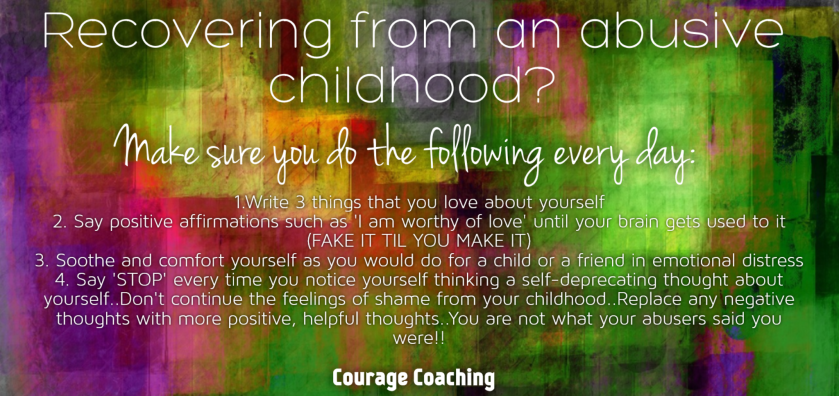
This is very important when you have a low tolerance for stressful situations due to a history of toxic child abuse. When complex trauma is part of your life, you need to feed your brain with the things you were starved of as a child. You should provide yourself with unconditional love, acceptance, validation and comfort. It is also important to have friends and family that can also provide these things for you.  It might feel unnatural at first and almost feel silly to tell yourself that you are worthy and lovable every day, however this is what your brain needs. It needs a new healthy habit!

Recent studies have shown that victims of childhood abuse and combat veterans actually experience physical changes to the hippocampus, a part of the brain involved in learning and memory, as well as in the handling of stress. The hippocampus also works closely with the medial prefrontal cortex, an area of the brain that regulates our emotional response to fear and stress. PTSD sufferers often have impairments in one or both of these brain regions. Studies of children have found that these impairments can lead to problems with learning and academic achievement.

We know that psychotherapy can really help survivors of severe trauma and also we know that EMDR is very helpful for reducing nightmares, flashbacks & overwhelming emotions.What you do for yourself however is equally important as you are the person that feels, thinks and reacts to your surroundings 24/7! It has been proven that with a mixture of validating affirmations, manageable goal setting, therapy and loving relationships, people can improve the quality of their life dramatically, especially in regards to their overall outlook.

FontCandy (29).png