
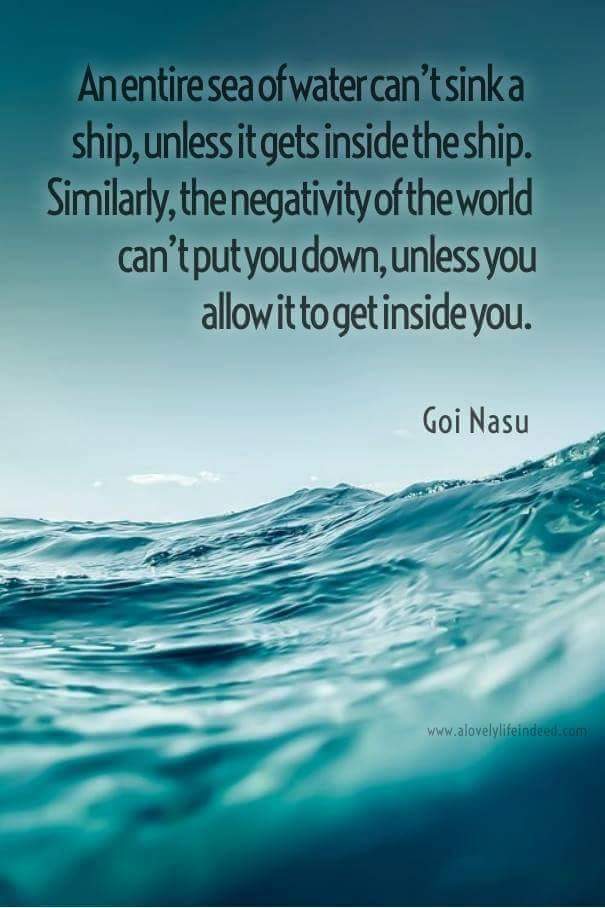
”The negativity of the world can’t put you down, unless you allow it to get inside you”

13319811_1301290503231574_4191169891370358081_n

The above quote is easier said than done when we are constantly surrounded by negativity, tragedy, pain and loss. If we were raised by mentally ill, abusive parents, the negativity that we carry with us takes years to change in therapy. It is a huge commitment but it is possible to change for the better.

If we have been lucky enough to only have certain certain negative experiences with others and in our life, then this of course makes it easier to not sink into the depths of negativity or despair.

If we have many loving, uplifting people in our life, a good job, a healthy lifestyle and a loving marriage then does negativity affect us less? It probably does but what is also important to consider is the amount of inner resilience and courage we have and the possibility of mental illness or physical illness which can touch anyone.

Every person is unique and each experience is also unique but how prepared are we to challenge that inner voice we might have of worry or destructive thinking? Not everyone is willing to reflect on themselves.

It is difficult to commit to changing a bad habit but if this habit is making us miserable then we should want to put in the effort to change it at whatever cost, right?

One of the biggest things I learnt is that we are the driver in our life. We get to choose what direction we go in and whatever comes our way is up to us how we deal with it. Making excuses in life is easy but when we are really passionate about something, excuses don’t exist.  Maybe we should always aspire to finding passionate purpose in our life.Some of us may choose to dedicate our lives helping those less fortunate. Others may be passionate about art, science or education. Whatever we choose to do in our life, balance is very important, respect of others and ourselves is important and giving back as much as we take, is also important.

Currently, I wake up every morning with the ability to spend my days freely and I feel fortunate in so many ways. Although I have experienced tragedy, trauma and been surrounded by negativity in my immediate family for most of my life, I have chosen to give back, to share, to support and to be grateful for every single thing I have. When I watch the news, I feel overwhelmed with the state of our world. The greed that has destroyed so many lives, the fantasies of wealth and power that continue to kill innocence and safety. The constant lies that we are fed in the media, the poverty, the destruction and the neverending war are enough to erase any hope for a stable future.

What can we do however? Do we turn a blind eye and retreat into our own little bubble of life, work and family or do we make sure that we do one good thing for somebody else each day? If we earn an extra 100 or 200 a month, shall we donate it to charity to help others or do we keep it in case tragedy hits us and we need to pay medical bills?

There are so many questions to answer but the one most important thing I have realised is that we can always give back, that we can assist and share our love and be kind to others as much as possible. Keeping negativity away is very difficult, especially when you are a highly sensitive person but whenever you have the opportunity to help someone in need, then I believe you should do it. It is important to have a good conscience and that is the thing that drives me in most of my decisions.What is yours?

We are not infallible and just like any other person we have days where we feel that we haven’t done enough or could have been a bit more aware of our choices. The important thing however is that we keep learning and we keep growing.

Love Athina ♥

© All blog posts and images are owned by me and Courage Coaching. Please don’t use without consent and only re-blog if you would like to use the information on here.
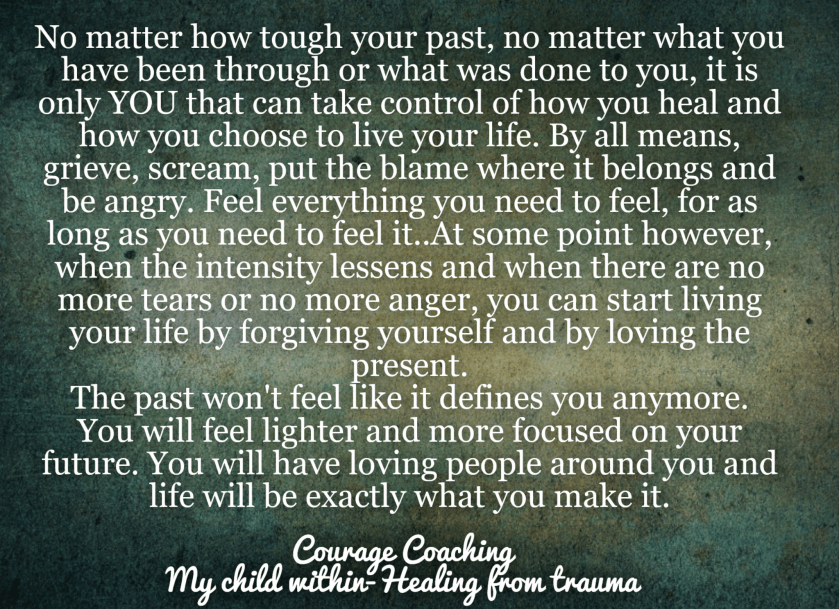
Take control of your own healing

FontCandy (38)

Every healing journey is unique to each person. No journey should be judged, minimised or discounted.

Whether it is childhood abuse, emotional, sexual or physical abuse, domestic abuse, grief, a single trauma or multiple traumas, nobody has the right to criticize someone else’s journey.

If you have compassion and maybe share what helped you, it doesn’t necessarily mean it will help others in the same way. Having compassion and empathy is so crucial. Listening, without trying to fix is also important.

After you reach a certain point in your healing, you will notice that things get easier. The intensity of certain emotions lessen and your sense of self-protection and boundaries are solid. If you suffer from a mental illness, it doesn’t necessarily mean it will go away. You eventually just learn to accept that it is a part of you and that you can handle it in a self-compassionate way.

What is your experience with healing?

Do you believe you will reach a point in your recovery where things eventually feel better?

Are you persistent in practicing self-care and healing with appropriate professional support?

Don’t forget that healing is a very up and down process. It isn’t always straightforward. Sometimes just as you are starting to feel better, something else comes along which needs processing. It might feel that you are back to square one again but this really isn’t the case.

Changes happen in very small ways sometimes and it depends on whether you have regular support.

Always be kind to yourself and others going through a process of healing ♥

Love Athina ♥

© All blog posts and images are owned by me and Courage Coaching. Please don’t use without consent and only re-blog if you would like to use the information on here.
 

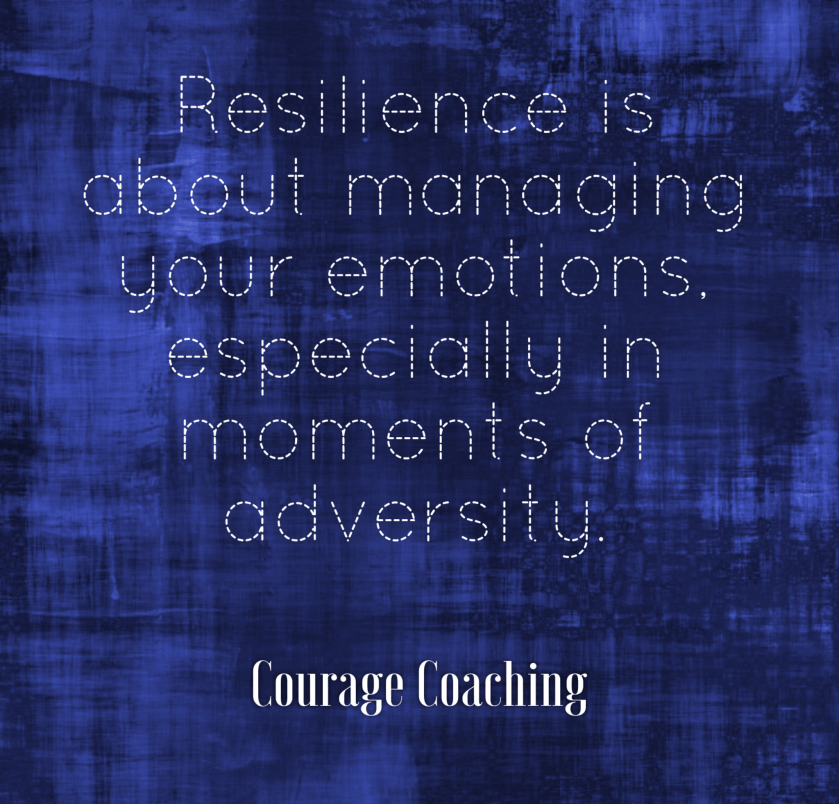
The importance of resilience

FontCandy (36)

So what is resilience and is it common?

Resilience can be defined as an individual’s ability to properly adapt to stress and adversity. It is about an individual’s ability to manage difficult emotions that arise in times of difficulty, without supressing them.

Research shows that resilience is actually more common, than uncommon, as life has many ups and downs and people are having to adapt all the time to many difficult situations.

A person’s attitude is the most important element of having resilience. If someone generally has a negative thinking style, this is not helpful to having resilience.

There are a few many important attributes associated with resilience:

  • The capacity to make realistic plans and take steps to carry them out.
  • A positive and self-accepting view of yourself and confidence in your strengths and abilities.
  • Skills in communication and problem solving.
  • The capacity to manage strong feelings and impulses without complaining about any struggles or falling into self-pity when setbacks arise.
  • Adaptability-The ability to act flexibly in changing or challenging circumstances.
  • Asking for support or accepting support from others. Positive, supportive relationships are key to coping in tough times.
  • Having humour- Finding light moments in depressing times can sometimes help lift the mood.
  • Being aware of unhealthy thoughts that may pop up and don’t benefit you in times of adversity.

Now that you are aware of what makes someone resilient, what happens when you need to develop more resilience? What steps could you take?

Here are a few things to keep in mind:

  • Take care of yourself and treat yourself with respect, comfort & acceptance.
  • Try and be hopeful for the future no matter what the current circumstances. A positive outlook is very important.
  • Ask for support from friends or family
  • Look for opportunities of self-discovery. Adversity isn’t obviously welcomed but if something negative happens, look at how you handle it and learn something about yourself.
  • Accept that change is part of living
  • Make decisions or take actions when confronted with a difficult situation. Don’t avoid it!
  • Set small goals that are easy for you to reach. It doesn’t matter how small. The more you achieve, the better you will feel
  • If you are spiritual, use your faith to support you.Prayer or meditation can be very helpful
  • Journaling, blogging, art therapy or other therapies can also be useful in developing resilience.

I would love to hear your thoughts on resilience. Is there anything in particular that happened which improved your resilience? Do you think you are resilient or do you think you could develop better resilience?

♥ Athina

© All blog posts and images are owned by me and Courage Coaching. Please don’t use without consent and only re-blog if you would like to use the information on here.
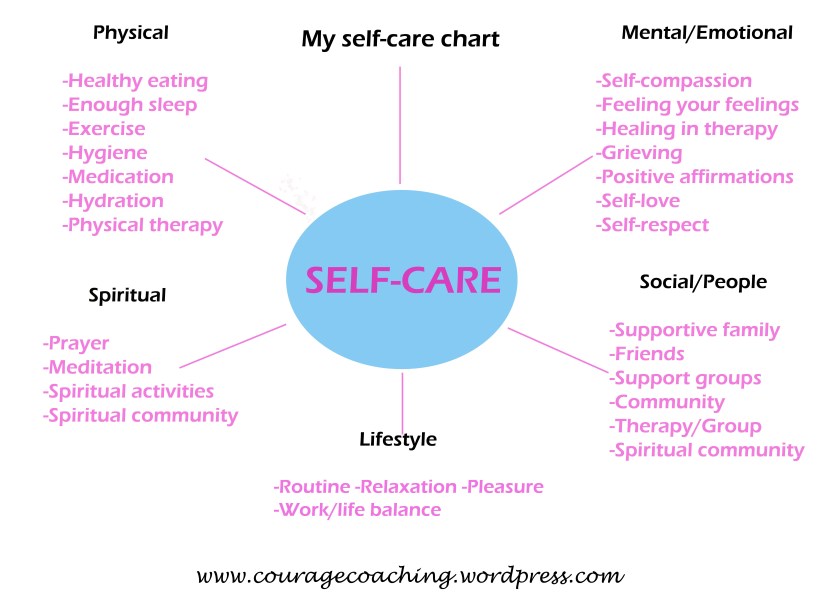
Self-care chart

my self-care chart - courage coaching

When you are struggling from a mental illness, self-care can sometimes take a back seat.

You forget or are unable to eat properly. You have trouble sleeping which then results in not having the motivation and energy to do much at all. You can become more isolated when trying to cope and can even forget to ask for support.

This little chart above gives you a little insight into the important things to consider.

The 2 most important areas in my opinion are physical and mental self-care but a balance amongst all 5 of these areas is crucial, as they are interlinked.

If you feel that there are any areas of self-care that you are particularly struggling with, then please let me know in the comments below. I would be happy to help you come up with an easy action plan, that might enable you to move forward.

Love Athina ♥

Unhelpful thinking styles/Cognitive distortions

This link below gives you a useful list of all the unhelpful thinking styles that we might use in our daily lives.For those of you who suffer from depression or anxiety, keeping an eye on your thinking style is really important. Try and challenge those negative thoughts by replacing them with more positive or helpful alternative thoughts. With practice, this should help you feel better.

http://media.psychology.tools/worksheets/english_us/unhelpful_thinking_styles_en-us.pdf

Love Athina ♥

Real change sometimes requires patience..

FontCandy (20)

How many times have you found yourself trying something new and giving up after the 1st try? What are your thoughts? Do you make excuses to avoid trying again? Are you embarassed because others witnessed you make a mistake? Or are you one of those people who really doesn’t care and keeps trying regardless of the initial result…

Most of the time when we try something new, we are curious and interested in how we will progress and this keeps us moving forward until we get better. This is great!

What happens however, when we have to learn a new language but find it really difficult and don’t have the motivation to really try? Is it ok to just accept that some things are just not for us? How much of a chance do we have to give new things?

In my experience, if you give up too soon you haven’t really given it enough of a chance to become habitual. To make a lasting change in anything we have to keep at it until it becomes automatic. It is like learning to ride a bike. Once we have learned the skill we are able to just do it..

The biggest challenge for people having to learn a new way of thinking or behaving is that they have to be able to sit with any uncomfortable feelings that may arise. Change can be very scary and to try something new that you also aren’t really interested in, makes things a lot harder.Being motivated is very important. If you lack motivation and interest in something, then it makes sense that you will give up straight away.

The more you try, the more experience you gain. You can make many mistakes but that is ok as long as you eventually learn from them. Once you start slowly accumulating small successes in your efforts, the whole learning experience then becomes more comfortable and enjoyable.