YouTube video:Is it possible to completely cure Complex PTSD?Tips for a better chance at healing.

I hope you are all enjoying your weekend to the best of your ability.To those of you struggling at the moment, I hope you are doing ok and reaching out for support. The blogging community is filled with wonderful, caring people and it is important to keep this community positive and encouraging. To those of you who need it, I am sending you a big hug! ♥ Take it one step at a time ♥

As some of my regural readers know, I am off to London tomorrow until Thursday to visit family and friends, while my husband is away for work.My Youtube videos are usually posted every Monday, however due to the fact I am off to London tomorrow, I decided to do this one a little earlier.

I talk about Complex PTSD once again, as there are so many of you who suffer with it and I am pretty sure that you need some hope, to keep fighting it and keep moving forward. Through lots of research and from my own personal experience, I talk about the most helpful things you can do to support your healing.

Much love Athina ♥

© All blog posts and images are owned by me and Courage Coaching. Please don’t use without consent and only re-blog if you would like to use the information on here.

Recovery from abuse- 3 basic stages & how to identify whether you have reached the acceptance stage of recovery

Happy Monday fellow bloggers. This is quite a late post, so I hope it reaches some of you.

I have just done another video on YouTube, where I talk about the 3 main stages of recovery that someone goes through, in particular concerning the recovery from childhood narcissistic abuse. I also talk a little bit about the acceptance stage of recovery, which I personally found the toughest in my own recovery.

Acceptance that you parents weren’t able to love you unconditionally, is a painful, rejecting reality. It is easier to spend most of your adult life being in denial of this, as it is such an incomprehensible reality to accept.

Once you are able to reach this stage of acceptance however, you feel like a huge burden has been lifted off you.

I wish all of you who struggle with this sort of realisation, to be able to finally reach this stage one day.

Love Athina ♥

© All blog posts and images are owned by me and Courage Coaching. Please don’t use without consent and only re-blog if you would like to use the information on here.
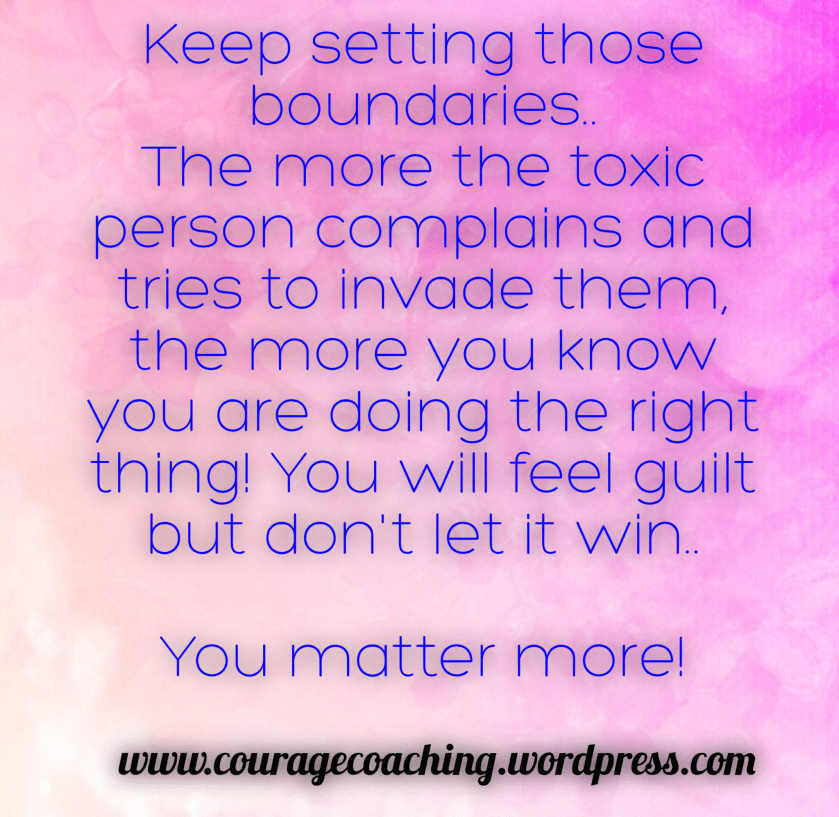
Setting boundaries with toxic people

FontCandy (86)

Love Athina ♥

© All blog posts and images are owned by me and Courage Coaching. Please don’t use without consent and only re-blog if you would like to use the information on here.

Eye Movement Desensitization & Reprocessing -EMDR (Short term therapy for trauma)

Happy Monday dear friends! I have reached 100 followers on this page and I am very grateful for those of you who have supported this new venture. My other blog mychildwithin , documents a lot more about my healing journey and has already been around for just over 1 year. For those of you who already follow it, you may have read about how successful EMDR therapy has been for me, in regards to treating my trauma.

I uploaded a very quick informational video on Youtube about what EMDR is. I will be following this video with 2nd one that focuses on EMDR in a little more detail, in which I will talk about how it feels to have EMDR and what the different phases are that you go through.

As a narcissistic childhood abuse survivor, it has helped me neutralise my biggest traumas. That said, it isn’t of course suitable for everyone. I would recommend it through my own positive experience with it but I would urge you to research it really well and only find a qualified therapist who has training in it.

Love Athina ♥

© All blog posts and images are owned by me and Courage Coaching. Please don’t use without consent and only re-blog if you would like to use the information on here.

Can’t afford Coaching or Therapy? Then try Co-counseling :-)

Apologies for not having posted since Friday..My laptop has been very slow so I have found it extremely hard getting stuff done on it.

In this post I would like to introduce Co-coaching to those of you who have never heard of it..

My YouTube video explains it in more detail and by watching it you can find out more about it. Hint hint 😉

I would love it if this post could reach as many people as possible, so please share away 😉

This is something you can practice with a friend or partner..

It’s free, it helps with personal growth, relieves stress and provides you with a weekly outlet for all your pent up emotions or thoughts.

So what are you waiting for ?

Help me spread awareness on Co-counseling 🙂

Love Athina ♥

© All blog posts and images are owned by me and Courage Coaching. Please don’t use without consent and only re-blog if you would like to use the information on here.

The importance of feeling our feelings

a6d7f1c996ab656267d279e27cbb667e

If we were able to count how many times we avoided our own suffering, I think we would fail miserably..

We have all at some point avoided emotions that are uncomfortable, by distracting ourselves, by numbing ourselves and by completely ignoring what is really going on..

This makes complete sense..Humans don’t like suffering..

By avoiding pain, we are temporarily soothing ourselves so we can better cope with what is bubbling under the surface. We might drink alcohol, do drugs, eat too much food, watch too much tv or spend too much time on the internet. We might develop addictions to numerous things and not even realise it.This is how we cope and in society at the moment, a huge percentage of us are addicted to the internet. If we are feeling down, we go online to search for clues as to what might make us feel better.If we are lonely, we announce it to the world on social media to get attention, instead of just reaching out to a caring friend. If we are happy, we also go online and share it with the world, instead of just enjoying the moment.

Since the focus of this post is on uncomfortable feelings, we need to acknowledge how often we avoid them..How will we ever grow and better ourselves if we constantly hide behind our suffering?

Distractions are good sometimes, don’t get me wrong..and also connecting with people online, blogging, watching videos etc..The important thing to remember is however, that we still need to be aware of what we still need to improve or change in our lives and actually do it!

For those of us who suffer with a mental illness, it is even more challenging to not run from suffering..Especially if it is a constant part of our lives to feel really low, anxious, terrified, lonely etc..If we have a history of trauma, no matter how much we try to ‘numb ourselves’, this will eventually start seeping out..

If we have been made to feel small, unimportant or ashamed in our childhood, then this will be incredibly tough to run from or avoid..We will feel it in the depth of our being..It will reveal itself in every step forward we may try to take..No matter what we do in our life, we will never feel good enough, lovable enough, deserving enough..It is a tough reality to bare..

Avoiding our feelings gives us temporary relief but with a whole life ahead of us, this isn’t enough..

If you are suffering at the moment, then face the pain..cry…ask for a hug..have human contact..Talk to someone who will genuinely listen..Don’t bury your suffering inside a tv or by reading about how you can make it better on numerous sites….This can also become addictive..gathering information about a certain area constantly but without actually taking any actions to improve that area of our suffering, is also avoiding pain..

Yes, of course we need validation for our suffering but make sure that you are making progress..If you want to deal with your anxiety, then take active steps to improve this..Talk to a qualified Coach or Therapist..Practice daily positive affirmations..Take ACTUAL STEPS to accept and manage your feelings..ACCEPTANCE is very important but ACTION is too!

If you want to change jobs but feel too scared, then face your discomfort head on and start applying for new ones..Attend interviews..Keep trying..

If you are scared of heights but would love to go trekking, then find a way to face your fear..

The list goes on..and applies to many areas of our lives..

No matter what uncomfortable feelings you are avoiding, face them..The longer you avoid them, the longer they will remain..

We have to face discomfort..

We have to face reality..

We have to face our fears..

This is how we will grow..heal..get better

This is how we will improve our confidence, reduce our suffering and release our fears..

and lastly, if a situation is unchangeable due to our lack of control over it,  learn to ACCEPT it for what it is..

Love Athina ♥

© All blog posts and images are owned by me and Courage Coaching. Please don’t use without consent and only re-blog if you would like to use the information on here.

5 tips on healing codependency & dysfunctional relationships

This video is the 2nd one of my codependent series on my Youtube channel.

It is mostly informational in text, with the help of a few cute characters! Just the way I like it! ♥

Feel free to re-blog or share 🙂

I love cute things and music…so here you go ♥

Love Athina ♥

© All blog posts and images are owned by me and Courage Coaching. Please don’t use without consent and only re-blog if you would like to use the information on here.

Codependents & Narcissists in a relationship. Why are they so attracted to each other?

Happy Monday to all of you! It’s the 1st of August today and time seems to have flown by so quickly!

Today’s post is about another topic very close to my heart, due to my own healing journey from codependency to healthy love. It most definetely wasn’t easy to get to where I am. It required perseverance, determination and a little bit of hope.

To heal from dysfunctional relationships & codependency, there are 5 steps that are important to take.Having a therapist who specialises in healing from codepedency, is important in guiding you.

  • The first step is becoming AWARE that your choices or actions are dysfunctional.
  • The second step to changing dysfunction is understanding the source of the dysfunction, so where did it come from?
  • The 3rd step is grieving the loss of a healthy childhood. An abusive childhood usually leads to poor choices in relationships & life in general. Without a stable & nurturing childhood you never learn healthy love, healthy boundaries & your emotional regulation is damaged.
  • The 4th step is understanding the complexity of changing self-defeating behaviours & changing certain defense mechanisms, that protected you in your childhood but no longer serve you in adulthood. It takes time, patience and self-compassion.
  • The 5th step is actually trying out new relationships when you have made progress in your healing. You have to make a few more mistakes and discuss these with a therapist by your side, so you can see where you went wrong and how to improve this next time.

When I first found out I was codependent back in 2008, it was like the blindfold was taken off my eyes for the first time. Before learning this, I had a suspicion that something wasn’t right in my relationships but I had no idea how to change this.

I felt like I was in an emotional maze and had no idea which way to go. Everytime I thought I was making better choices in regards to who I was in a relationship with, the more unbearable the heartbreak became.I desperately wanted to be loved but wasn’t able to figure out this painful puzzle! At some point I was so exhausted from the traumatic end of each relationship & the subsequent self abandonment, that I decided to move countries! I wanted a new start…I hoped that I might meet my future husband if I moved away but I never in a million years thought I actually would..Sometimes you need a little bit of luck too!

When I moved back home to Greece after 11 years of living in the UK, I was met with more drama, a flare up of my CPTSD and a father who abandoned me over and over again. I was back in therapy again with a new therapist and was finally diagnosed with CPTSD. I was told both my parents were ’emotionally handicapped’ but that therapist never told me my parents were narcissistic. Maybe she decided at the time that it wasn’t relevant to me.

Despite this she looked after me very well. Each step I took into uncertainty, she held my hand.

I was also entered into a group psychotherapy group and it was extremely beneficial. I was in a group with 5 other people that also had similar backgrounds and it was very healing.

Support is crucial in healing. Without all this I would never have made progress.

The video above is a simple explanation (I hope) of the general dynamics of a codependent & narcissist in a relationship. Maybe you will see yourself in this and get curious. If you do, then please connect with me and I would be happy to have a chat with you.

Please feel free to re-blog this post so it reaches more people! Thank you 🙂

Much Love Athina ♥

© All blog posts and images are owned by me and Courage Coaching. Please don’t use without consent and only re-blog if you would like to use the information on here.


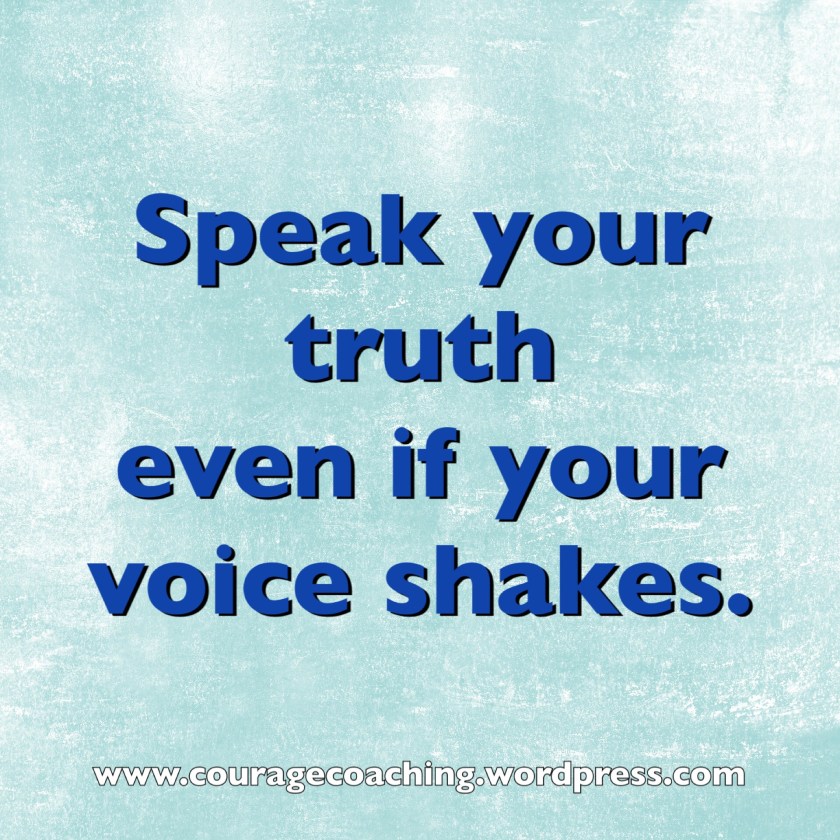
Speak your truth..

IMG_1523

Speak your truth, be yourself and if people don’t accept you then it is their loss, not yours!

If people don’t value your reality, your kindness, your honesty then they don’t deserve your time or your love.

When speaking your truth, have you ever felt overwhelmed with emotion? What has the emotion been? Anger, frustration, sadness, loss, disappointment?

The worst of all these for me was always frustration and then deep sadness..

When talking to a narcissistic parent, you feel all of these times 10!

Continuing to speak your truth despite the pain, frustration, loss and anger is very important…Don’t ever let anyone keep you silent..

Love Athina ♥

© All blog posts and images are owned by me and Courage Coaching. Please don’t use without consent and only re-blog if you would like to use the information on here.

Are you a chronic over-explainer?

Where does over-explaining stem from?

People naturally feel the need to make sure their point of view is clearly understood when in conversation with someone else. Nobody wants to be misunderstood when expressing an opinion or thought.

What happens however when someone feels the need to always over-explain something?

IMG_0926

Is this something that stems from an underlying anxiety, that they will be misunderstood?

Yes

Is this also something that happens because in the past they might have been misunderstood quite a lot and for this reason they have to make sure it doesn’t happen again?

Absolutely..

Does over-explaining ever make you think, that the person doing the over-explaining, must think that the person they are over-explaining to must be stupid. Does this make sense?

I have been on both sides of this. I have over-explained to someone who got what I was saying from the first sentence and said I didn’t need to explain further. They said, I am not stupid, I get it. I have also been over-explained to and could immediately tell that the other person was anxious and insecure about something.

In my experience, many individuals who suffer from low self-esteem or people-pleasing, have an almost compulsive need to over-explain. This usually stems from childhood abuse, where either 1 or both parents were unable to meet the child’s needs and were unable to understand the child’s feelings. If parents don’t have empathy, are self-centered and dont have the ability to genuinely listen and understand, then a child will chronically feel frustrated, misunderstood and alone.

Have you ever tried to explain a simple concept such as sadness or feeling alone to a person who lacks empathy?

The reply is usually uncaring and hurtful.

Have you ever tried to reason with someone who has a low IQ and has intellectual disabilities?

They are not able to understand certain simple concepts because they just aren’t able to and if you insist on trying to make them understand, you can make yourself feel crazy with frustration.

When does over-explaining become chronic?

This usually happens when someone is unable to simply state something, that doesn’t need explaining, to someone who hasn’t even asked for an explanation. It becomes chronic when a person feels the need to explain in great detail and repeats themselves over and over again.It becomes chronic when it is a habitual thing that someone does all the time, even with people that are understanding and empathetic.

The particular thing I would like to highlight in this post, is that over-explaining becomes habitual for people who have suffered narcissistic abuse. If you are constantly around someone who makes you doubt yourself by gaslighting you, who doesn’t validate and understand your feelings and always tries to manipulate you, then it is only natural that you will be chronically frustrated when communicating..

I would love to hear your thoughts on this..

© All blog posts and images are owned by me and Courage Coaching. Please don’t use without consent and only re-blog if you would like to use the information on here.

Much Love Athina ♥