World Mental Health Day

FontCandy (4)

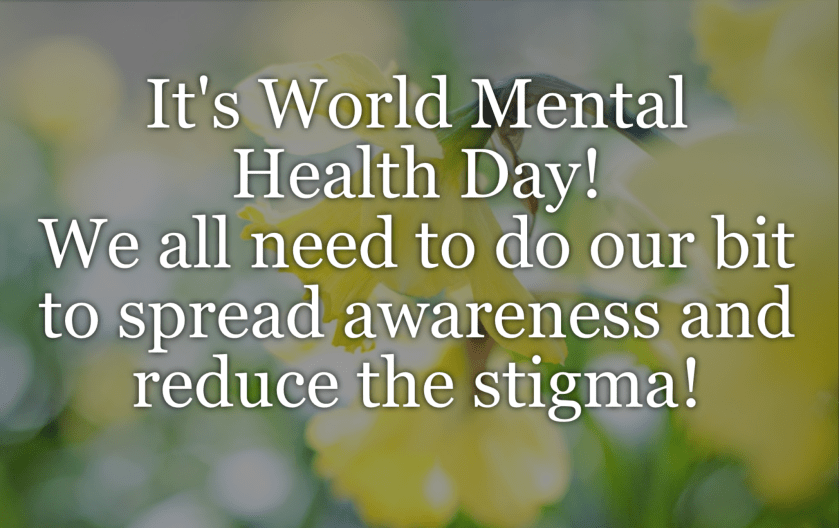
Mental illness has always been a part of my life. Whether it is through my own personal journey, through my family’s or watching friends struggle.

Although I haven’t been writing on here much, mental health will always remain a very important cause that I will always talk about. It is crucial for anybody struggling with mental illness to feel heard, to feel validated & to feel safe.

Empathy & understanding are necessary and we must all do our best to listen without judgement.

Life can sometimes throw us a curveball and none of us will ever know when this might happen.

Talk about mental health!

Be open & honest!

Be understanding!

Listen & give plenty of hugs to those struggling!

Sometimes that is enough to make someone’s day a little better!

Love Athina ♥

© All blog posts and images are owned by me and Courage Coaching. Please don’t use without consent and only re-blog if you would like to use the information on here.

Healing from abuse

The sad thing about healing from abuse is that many people who haven’t themselves been abused, can’t possibly understand the survivor’s journey.

Healing from abuse is unique to each individual who has experienced it. The survivor will be emotionally damaged and/or physically hurt and unfortunately this damage is sometimes irreversible. Abuse leaves behind scars unique to each survivor’s experience.

Although healing means that your mind and body are able to recover, this doesn’t mean that the person can return to being ‘normal’.

The aftermath of abuse is usually permanent.

There might be long-lasting Complex PTSD for those who suffered child abuse, human trafficking, kidnapping or other severe types of abuse.

For some individuals abuse might be all they have known. They don’t have a pre-trauma or pre-abuse identity. They might not know what it is truly like to feel safe.

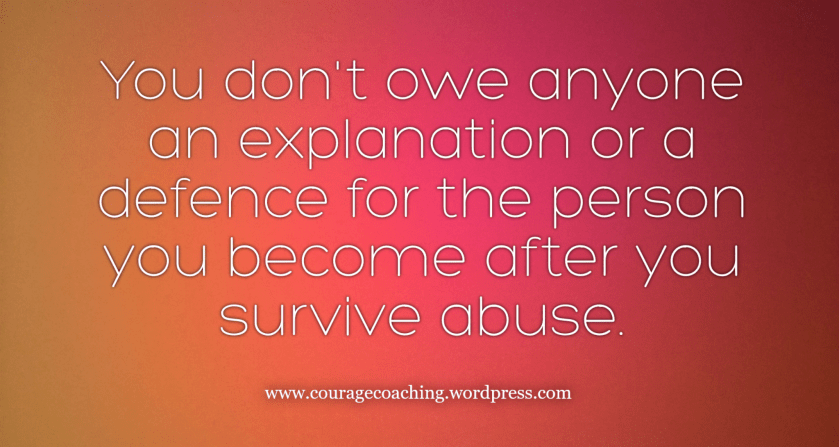
To all survivors of abuse or trauma,it is very important to remember this:

FontCandy (3)

Love Athina ♥

© All blog posts and images are owned by me and Courage Coaching. Please don’t use without consent and only re-blog if you would like to use the information on here.


The narcissist’s vortex

swirly

Being in a relationship with a narcissist, whether that is a family member or partner, is like constantly being sucked into a vortex with no escape. Every time you think you are getting somewhere, you get sucked in deeper and deeper. Your confidence is constantly eroded, you start doubting your feelings and logic and the narcissist continues to do what he or she does best: Turning the tables on you everytime you have an argument.

They are masters at saying things like ” I never said that”, ”you are imagining things”, ”stop being so sensitive”, ” you hurt me way more than I hurt you” etc. …

Everything can & will always be used against you

Everything is always your fault

Everything is about how you hurt their feelings more than they hurt yours..

They are always one step ahead..

You will never win, you will never beat them..

The worst part is, that being in a relationship with a narcissist can become extremely addictive…

A trauma bond is created over time and the victim in this dysfunctional relationship clings onto the hope that the narcissist will become the positive person they remember from the beginning..The caring side that they were lured in with at the start, is what keeps them from walking away from the relationship..

If the relationship is with a narcissistic parent rather than a partner, then it is ever tougher for the adult child to break free..The trauma bond is even stronger, especially because a child’s love for their parents never dies and also because the brainwashing that goes on in the family home, is even more long-lasting and intense.

If you are in a relationship with someone whom you think is a narcissist and are starting to come around to this realisation, then please feel free to comment.

For support, please email me at courageisallyouneed@gmail.com

Love Athina ♥

© All blog posts and images are owned by me and Courage Coaching. Please don’t use without consent and only re-blog if you would like to use the information on here.


Covert narcissism-The hidden narcissist

Today’s post and youtube video is about the more hidden type of narcissism known as covert narcissism.

I know how destructive this type of narcissism can be from personal experience and I believe that more people need to be aware that covert narcissists sometimes hide behind a mask of generosity, fake empathy and self-sacrifice.

They walk among us more often than anyone realises and they can be doctors, healthcare workers and psychologists.

Covert means: not openly acknowledged or displayed, concealed or hidden

If you find the video or this post useful please feel free to comment, like & share it with anyone who might benefit.

Love Athina ♥

© All blog posts and images are owned by me and Courage Coaching. Please don’t use without consent and only re-blog if you would like to use the information on here.


Grief

FontCandy (20)

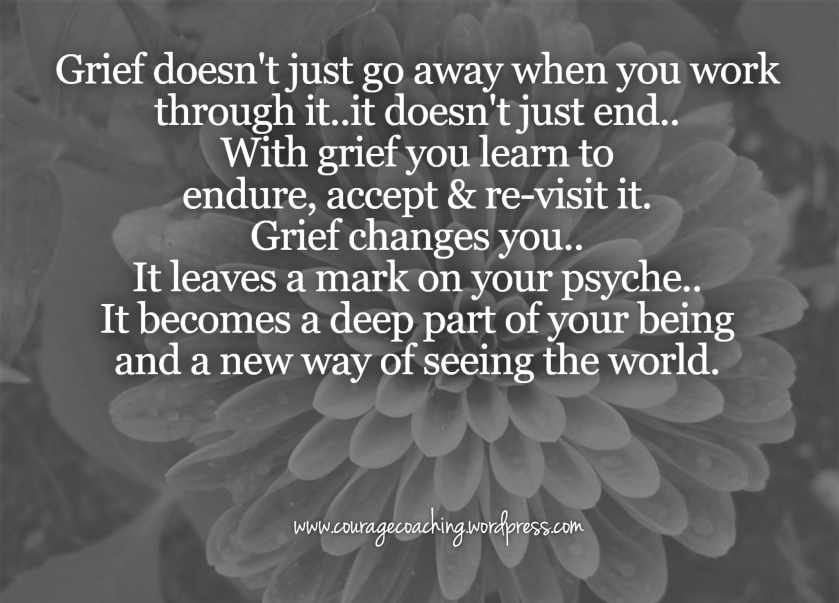
Grief is a huge part of life and yet a very painful one. We all experience it and for some people grief can be an even bigger part of their lives than for others.

Grief can be about so many things, not just the death of a person.

Every new beginning means that there was also an ending and every ending can leave a trail of grief. Grief can be experienced at the end of a relationship, the end of a job, leaving the town you grew up in, saying goodbye to friends or family, saying goodbye to a beloved pet or business or even saying goodbye to life as a single person.

What are your experiences with grief?

Love Athina ♥

© All blog posts and images are owned by me and Courage Coaching. Please don’t use without consent and only re-blog if you would like to use the information on here.

High functioning depression

Happy Monday dear friends & followers!

After a wonderful 10 days off work, celebrating my birthday with friends and exploring new places with my husband, I am feeling grateful and refreshed.

Today’s topic is especially important to me, as someone I care about deeply is currently suffering with this type of depression.

Although high functioning depression is a milder form of depression, it is equally as important as other types of depression.

When it comes to depression, many of us envision a person caught in the depths of despair and hopelessness, who wants nothing more than to stay in bed and avoid people and work completely. We envision someone who has lost all interest in the things they love, who may be feeling suicidal and is barely holding it together.

Although the above isn’t inaccurate, it doesn’t portray life as a high functioning depressive.

When someone suffers with mild or high functioning depression, the typical joy and laughter they once felt, is usually replaced by an absence of emotion and a very deep feeling of emptiness.
This is known as anhedonia and it is the loss of interest in previously rewarding or enjoyable activities.

To the outside world they seem like they are coping fine. They are still able to go to work every day and communicate effectively. They are still able to reach goals and get out of bed in the morning.

The most unfortunate part of those with this milder form of depression is that when they talk about their feelings to loved ones and even doctors, they aren’t taken seriously enough.

Unless someone is literally unable to function, they seem to be dismissed as not having anything to worry about. This isn’t good!

When life circumstances change, those experiencing mild depression may be at greater risk for moderate to severe depression if treatment isn’t sought early enough.

This is also discussed in my youtube video, so feel free to share if you think it may help someone you know.

Love Athina ♥

© All blog posts and images are owned by me and Courage Coaching. Please don’t use without consent and only re-blog if you would like to use the information on here.

Why is going ‘no contact’ so hard?

It’s been an extremely busy few days for me recently, which means my blog posts and youtube videos have had to take a back seat.

Work has been a priority, with little time for writing and reflecting.

I have also had an influx of emails from people needing immediate support dealing with narcissistic individuals. It always deeply saddens me to hear all the grief so many are currently experiencing and sometimes I wish I could just take all their pain away.

The ‘No contact’ question has been popping up a lot, so in this video I stress the importance of acceptance. Acceptance in this case, of the fact that a narcissist isn’t able to love or empathize and isn’t going to change and treat you better.

Once you manage to reach a place of acceptance through grief and talking with a professional, it is then easier to make the decision to go ‘no contact’.

Thanks for watching and reading

Love Athina ♥♥

© All blog posts and images are owned by me and Courage Coaching. Please don’t use without consent and only re-blog if you would like to use the information on here.

Avoidant Personality-Video II

In yesterday’s video, I decided to talk about Avoidant Personality in a little more detail, as my first video became very popular in a short amount of time and many viewers reached out to me with questions .

In this video I discuss some examples of what avoidance may look like, not only in full blown Avoidant Personality Disorder but also with people who just have a lot of the avoidant traits. I also talk about what specifically causes avoidant traits and what the consequences are.

Thanks for watching ❤

Love Athina ♥

© All blog posts and images are owned by me and Courage Coaching. Please don’t use without consent and only re-blog if you would like to use the information on here.

Mental Health Awareness week

32ce6e_73173c5b28504cf4b73dd1f1d98bd913~mv2

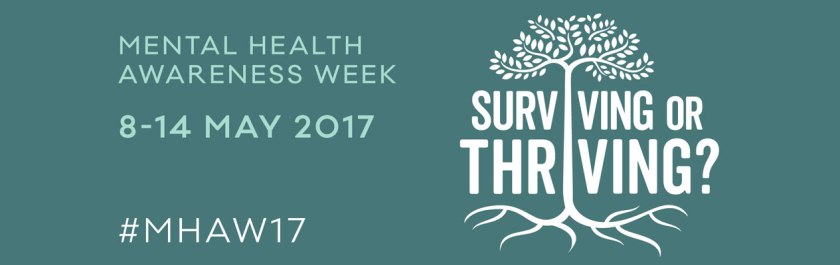
Ending the stigma of mental health is still proving to be a challenge, although in the UK we are getting ever closer to our goal of a deeper understanding, tolerance & acceptance of the importance of talking about our mental health.

As somebody who has never known what life is like without mental health problems, I know how difficult it is to be open and honest about it..People are still uncomfortable with knowing what to say or not say..Even if they try to be understanding, deep down you can sense whether they get it or they don’t..

Every single one of us is touched by stress or anxiety at some point in our lives, whereas others live with it every day…I am one of those people who lives with chronic mental health problems..Complex PTSD isn’t something to be taken lightly..There are still so many moments in my life at the age of 34 that I still learn new things about myself that I am not able to do, that others would find incredibly easy to complete. The hypervigilance and overwhelm never goes away..The chronic fatigue never goes away..The low mood is always lingering in the background..The voice that says ‘you are just not good enough’, pops up a lot when I am working alongside others…

Self-care is so important in these moments and remembering to accept ourselves when we are struggling can make a world of difference!

Walking the same path as others with mental illness really helps people feel less alone..

All the wonderful people who ran the London Marathon raising money for Mental Health are simply incredible..

If you think about how much these runners must have battled with those nasty little voices inside their head, it makes you feel incredibly inspired. The voice of depression or the voice of anxiety is not an easy task to manage..but yet they did it, and in what an admirable way!

I am also blessed to have many friends & fellow bloggers who do so much to raise awareness about mental health! They have all been personally affected however and live with debilitating conditions themselves..

The most crucial part in my opinion of raising awareness, is to also hear more people talking about mental health that don’t have any personal experience with it..People that feel concerned about someone they know but just don’t know how to respond..People that are lucky enough to live with good mental health and are surrounded by people who aren’t that lucky..

If you have experience with ill mental health, stigma or intolerance, then please feel free to comment.

Lastly, I would also like to share my latest information video on defence mechanisms. I was having a bad day yesterday and couldn’t face the camera to film myself talk, so I came up with this instead.

Thanks so much for reading & watching!

Love Athina ♥

© All blog posts and images are owned by me and Courage Coaching. Please don’t use without consent and only re-blog if you would like to use the information on here.


Dealing with parental estrangement

If you have become estranged from your parents, it’s important to remember that this can be a very vulnerable place to be. Making the decision to become estranged from your family may alleviate some of the instant emotional pain after a huge argument, however, many people find that estrangement is a constant battle in their life, as it can cause them to endlessly think about their situation, even if they do feel an initial sense of relief.

Some people become estranged from their parents because they have been emotionally, physically or sexually abusive during childhood or beyond. This is a difficult decision to make but sometimes a necessary one. It’s immensely tricky to continue a healthy relationship if there has been abuse, and it can be extremely risky to continue a genuine relationship with this family member without the right professional intervention and support.

Others become estranged with their parents or siblings due to conflicts about religion or sexuality. This can also be especially painful, as the adult child isn’t able to truly be who they are. Authenticity is crucial for a happy life.

DSCN3757 (2)

Grieving the estrangement from a parent, no matter what the circumstances, is a very important part of healing from it, as the loss of an accepting & healthy parent is an extremely painful experience, even more so than normal grief. Nothing will ever fill the void of not having had what every child so rightfully deserves. Comfort, validation & unconditional love. Realising that a parent was never truly able to love & accept you, is utterly heartbreaking.

Even if there was abuse, children never stop loving their parent unconditionally and never stop hoping that their parent will change. This is the main reason adult children remain in contact with a parent, despite any abuse that may have occured. They will always long for the unconditional love they never had. In cases when the abuse or invalidation was constant, the trauma bond will also be why the adult child finds it hard to cut ties with their parent.

If the adult child isn’t able to fully grieve the loss of a healthy parent, they will not be able to move forward in a new relationship with them. If the parent continues to be abusive, shows no remorse, shows no understanding and doesn’t make any attempts to make amends, then it is healthier for the relationship to end.

In both cases of estrangement and remaining in contact, grieving is essential. Grieving helps lift the intense painful heaviness of not having had your needs met in childhood. It helps lessen the anger, frustration and injustice.

Most importantly, the adult children who end up going ‘no contact’, have to learn to live with the ‘early death’ of their parent before that parents actually dies. They have to continue living their life, without any communication or knowledge of how that parent is. They have to swallow the grief that creeps up from time to time, during holidays, birthdays, Mother’s day, Father’s day and during other emotional times in their life.

Those adult children who were lucky enough to have had good childhoods, with unconditionally loving parents, will never truly understand the deep pain of those who didn’t have good childhoods.

Family estrangement is a huge challenge and living with it requires support in more ways than one. It is important to have counselling from time to time and to be surrounded by understanding friends or a partner that can truly empathize. Lastly, it is crucial for the estranged, to feel the sadness that emerges and be self-compassionate as much as possible.

Love Athina ♥

© All blog posts and images are owned by me and Courage Coaching. Please don’t use without consent and only re-blog if you would like to use the information on here