

GAD (Generalised Anxiety Disorder)

img_0568

Generalised Anxiety Disorder is a long-term condition that causes you to feel anxious about a wide range of situations and issues, rather than one specific event.

People with GAD feel anxious most of the time and often struggle to remember the last time they felt truly relaxed. They are constantly affected by worried thinking, which can affect their daily routines, their work, their appetite and their sleep.

GAD can cause both psychological (mental) and physical symptoms. These vary from person to person, but can include:

  • Dizziness & or heart palpitations
  • Excessive worrying and obsessing
  • Difficulty handling uncertainty
  • Muscle tension
  • Trembling or twitching
  • Headaches
  • Being easily startled
  • Dry mouth
  • Cold or hot sweats
  • Nausea
  • Trouble concentrating
  • Trouble sleeping
  • Anxiety which can at times lead to panic attacks

GAD can commonly also co-occur with other mental health disorders such as social anxiety disorder, panic disorder, (C)PTSD or depression.

GAD can be caused by genetics, by childhood trauma or loss or by an imbalance of serotonin and noradrenaline in the brain.

If you are affected by GAD, then please feel free to share your experience.

I am offering free initial consultations to anyone who is affected and is in need of support.

Love Athina ♥

© All blog posts and images are owned by me and Courage Coaching. Please don’t use without consent and only re-blog if you would like to use the information on here.


 

Status anxiety

img_0646

How do we each fit into this world?

Are we defined by whether we have a good job? A good marriage?

Do we feel that we constantly have to measure up to our friends’success?

Do we feel that we have to have the latest gadget, a new car or a big house?

Do we feel like a complete failure if we haven’t secured a stable job?

And what about relationships & family? When someone is single past the age of 40, everyone has an opinion about why that person is still single. If someone is jobless, everyone has an opinion on why that is.

STATUS ANXIETY is a constant worry about whether we are good enough in the world we live in. It is an insecurity about whether our life is a failure or whether it is a success.

Status anxiety is a term I came across after watching a video by Alain de Botton.

Status anxiety happens because we allow our environment to affect our inner world. Status anxiety happens when we allow other people to criticize us or the way we choose to live. It is only natural to become anxious, when we start comparing ourselves to others.

One of the most uncomfortable situations which may trigger status anxiety, is at a social event where you don’t know any of the guests. In such events, such as a party, you can only get to know someone initially by making small talk. You may be approached with questions such as ”What do you do? Where do you live?”. These questions may make you feel uncomfortable or inferior, because you don’t think your job is anything special and you don’t currently like the area you live in. In these situations you worry what the person asking the questions might think of you.

Status anxiety is rooted in judgements or how we think others will judge our choices, beliefs, skills and way of life. Nobody really has any control over the thoughts or judgements of others but everybody has control over how they react to others’ judgements.

If we really don’t care what other people think, then we probably won’t have status anxiety.

Status anxiety also frequently causes envy.We tend to envy in others, what we haven’t quite managed to achieve for ourselves. We may secretly envy the person who seems to have the perfect relationship when we are feeling lonely. We may envy the person who is always going on holidays because we can barely pay the bills with our low-wage job. Envy,  can give us insight into a part of our lives we may need to work on.

What is the most important thing to consider when suffering with status anxiety?

Is it more important to worry because we haven’t managed to develop a good career for ourselves? Is success only measured by having a high salary, a perfect marriage and celebrity status?

What is MORE important, is the meaning WE give to our life. If we are happy with all we have achieved (despite all the difficulties or judgements by others), then that is all that matters.

Our judgement of our own life is the most important.

Not everyone is born equally lucky, supported, intelligent, confident or motivated.

The people who are highly successful in business and are making the big bucks, are usually lacking in many other areas in their life. They may lack emotional intelligence and empathy.

If you had a choice in your life, what would it be?

In my personal opinion, success is being a kind & empathetic person.

Success is being able to self-reflect and being able to help others do the same.

Success is being remembered as a good person.

I believe that success shouldn’t be measured by whether you work, have a relationship or have kids.

Success should be measured by the type of person that you are..

When I die in the future, I would much rather be remembered as a good human rather than a successful businesswoman or celebrity. I would much rather be remembered as empathetic, giving, respectful, generous & lovable. I would much rather be remembered as someone who meant something to someone or as someone who inspired others.

If you find that you suffer with status anxiety, make sure that you define your own life in a way that makes you feel comfortable.

At the end of the day, all that really matters is the opinion you have of yourself and the respect and kindness yougive to others.

Love Athina ♥♥

© All blog posts and images are owned by me and Courage Coaching. Please don’t use without consent and only re-blog if you would like to use the information on here.

Sexual abuse Youtube Video-Part 2

Hello dear followers,

I have just completed the 2nd part of my sexual abuse video series.I know this topic isn’t relevant to a lot of you but for those it is relevant to, I hope it helps.If you have only just started coming to terms with any past sexual abuse, then this video series will be useful.

As I did at the end of the first video, which you can find here : https://www.youtube.com/watch?v=EKlfQMVeyBA , in this 2nd video I list a more comprehensive set of questions that you can ask yourself. The more of these you can relate to, the more support you will need in your recovery of sexual abuse.

Much love to you

Athina ♥♥

© All blog posts and images are owned by me and Courage Coaching. Please don’t use without consent and only re-blog if you would like to use the information on here.
Happy New Year dear readers!

c1gjrs0xgaaitam
Our journey by car today on a freezing New Year’s day! (Germany,Worms  1-1-17)

Wishing all my readers, fellow bloggers and friends a Happy New Year full of love, health & good memories!

May this year be your strongest, your most loving & your most cared for.

Let there be compassion & understanding for those without a home or a family.

Let there be empathy for those who are suffering with ill health.

Lets support each other in this tough journey called ‘Life’.

Love to you all

Athina ♥

When to emotionally detach from a toxic relationship or situation

Hi everyone,

This is my 2nd attempt to write this blog post, after the last one was unfortunately lost. 😦

I hope you all had a good Christmas weekend and managed to relax and enjoy time with your loved ones. For those of you who find Christmas tough due to past trauma or dysfunctional relationships, you have just survived yet another Christmas, so give yourself a pat on the back and treat yourself to something you enjoy. The New Year is nearly here and with it comes new hope and a renewed sense of direction. 🙂

The following youtube video is 1 day late, due to the fact that I allowed myself a little time to relax over the last 3 days. I caught up on some much needed sleep and I started studying for my German exam (which is fast approaching).

In my own recovery back in 2008, I was introduced to the concept of letting go of relationships that no longer served me. I was introduced to the concept of emotionally detaching from a toxic person. Although at first this was extremely hard to do, with practice and with time, I slowly started making changes for the better. I started learning to put my self-care first and to set boundaries. I started noticing the repetitive patterns that were present in my relationships and I started questioning the reasons as to why I couldn’t choose healthier relationships. In my case, the narcissistically abusive background I come from, is what influenced my choice of abusive or unavailable partners, friends & even colleagues.

This video is for those of you who are just starting out in your recovery from dysfunctional relationships, so I really hope it helps ♥

200

Love Athina ♥

© All blog posts and images are owned by me and Courage Coaching. Please don’t use without consent and only re-blog if you would like to use the information on here.

 

How to survive over-thinking

Over-thinking an issue or event is a very common coping mechanism for dealing with stress. When there are unresolved issues or stressful situations with more than one possible solution, this is usually what leads to never-ending ruminating.

monkey-1757972_1920

Unfortunately, over-thinking is usually linked to depression & anxiety. People that already suffer from a mental illness, are usually big over-thinkers. However, someone can also become mentally ill by starting to think destructively. All it takes is one single stressful life event to trigger unhelpful ruminating.

The best way to cope with your possible over-thinking, is to look at the way you think and to analyse the different thinking errors (otherwise known as cognitive distortions) you may be indulging in.

If you don’t know much about the different types of cognitive distortions, then click below:

Cognitive distortions

Secondly, it is important to challenge any unhelpful thinking patterns by looking honestly at the evidence that supports those thoughts. Sometimes over-thinking can really spiral out of control and what may have started off as a minor problem, might have escalated into a catastrophe. Thinking isn’t always based on actual facts.

Thirdly, it is important to replace any unhelpful or overly dramatic thoughts with more grounded and sensible thoughts. If you are overly critical of yourself or others, then maybe try to tone it down a little. If you are worried that something bad is going to happen, then ask yourself ‘What are the chances of this really happening’? and ‘Is this really as bad as I think?Give yourself more constructive, positive thoughts and even write them down on paper if it helps!

Lastly, try and distract yourself when you are lost in endless over-thinking. Do something you enjoy, which will stop your mind from going into an uncomfortable state of hyperarousal.

Love Athina ♥

© All blog posts and images are owned by me and Courage Coaching. Please don’t use without consent and only re-blog if you would like to use the information on here.


How PTSD affects intimate relationships

PTSD doesn’t only affect the person suffering with it.

I hope this video helps those of you who are close to someone who suffers with PTSD.

PTSD can affect partners as well as close family members, or flatmates.

There is the possibity of secondary traumatisation.

Love Athina ♥

© All blog posts and images are owned by me and Courage Coaching. Please don’t use without consent and only re-blog if you would like to use the information on here.

Video on PTSD related Insomnia

This is my 2nd video from my Q & A video series. My followers, viewers & subscribers ask the questions and I answer to the best of my knowledge with a video.

I really hope that this video is useful to those of you who suffer from insomnia in general and I hope it also provides a little more insight for those of you who have specific PTSD related Insomnia.

PTSD related insomnia is a very tough symptom to tackle and is usually managed with a combination of anti-depressants, the short term use of sedatives and talking therapy( all under the watchful eye of a psychotherapist or psychiatrist).

Love Athina ♥

© All blog posts and images are owned by me and Courage Coaching. Please don’t use without consent and only re-blog if you would like to use the information on here.

Question & Answer- YouTube videos

Today I am starting off my series of Q & A videos, where my viewers and subscribers are able to get their questions answered by me, in a video each week. Please feel free to ask me questions on the following topics:

  • Complex PTSD
  • Narcissistic abuse
  • Dysfunctional relatioships
  • Negative thinking
  • Dealing with emotional flashbacks
  • Anxiety
  • Depression
  • Trauma Bonding
  • Toxic shame
  • Codependency

I also am happy to answer questions on how to :

  • Better manage your time
  • Practice self-compassion
  • Develop resilience
  • Stop self-defeating thinking patterns
  • Better manage your workload
  • Build confidence
  • Set boundaries
  • Deal with toxic people

Here is the first video on a question asked by one of my viewers:

Please note: **I will always keep the identity of my viewers confidential**

Thanks for reading and watching

Love Athina ♥

© All blog posts and images are owned by me and Courage Coaching. Please don’t use without consent and only re-blog if you would like to use the information on here.


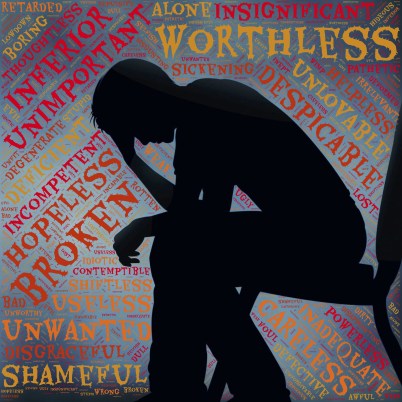
You are not a failure

Nobody told you when you were a child that life could feel so tough sometimes.

Nobody told you that life could drain the joy right out of you, just when you thought things were getting better.

depression-1250870_1920

Life is a crazy rollercoaster and you have to ride it out, no matter what it throws at you.

It might be that your boss criticizes you, no matter how much extra work you put in.

It might be that your partner who once made you smile, now only seems to point out all your flaws.

Your family might be hopeless at supporting you and instead always tells you when you have let them down.

Your looks fall short of what is considered beautiful, your body has piled on the pounds and your health is deteriorating.

Your money problems never seem to end and you are surrounded by angry, hateful and impatient people.

Everywhere you seem to look, there are people pointing out what is wrong with you.

Your career isn’t where it is supposed to be. You still aren’t married and people think there is something wrong with you for not wanting to have kids.

Even people with the best self-esteem, can end up feeling horrible.

Everywhere you look, people are pointing out that you are a failure..

Outer criticism ends up becoming inner criticism. That inner criticism ends up taking hold of your daily life and you can’t seem to silence that nasty little voice inside you that tells you, you have failed.

You might have once been a reasonably confident person and now you are nowhere near that.

Do you find yourself being haunted by this inner voice of failure? Do you find yourself needing to apologise for things that are out of your control?

Are you sorry that you couldn’t do better at work?  Then you failed

Are you sorry that you couldn’t lose weight? Then you failed

Are you sorry that your partner left you? Then you failed

Are you sorry that you are too sick to support your family? Then you failed

Are you sorry that you are struggling with the housework? Then you failed

Are you sorry that everything is too stressful? Then you failed

These negative thoughts are very harmful, even though you may not think so. When you internalise self-doubt your body absorbs it. Your muscles tense and you can actually become physically ill from it. If you allow others negativity to affect how you see yourself, then this might become a vicious cycle.

Have you ever noticed that when an abusive spouse, parent or boss criticizes you, you get nervous and are more likely to make more mistakes? The more difficult the people around you, the more on edge you feel and the more clumsy you may become. This was definetely the case with me for many years…

It is crucial to be aware of how destructive it can be to give your control away to others. If you constantly accept that you are a failure, because you judge yourself through others’ eyes, then you will eventually freeze. You will stop trying, you will stop living..

So how do you change this? How do you manage to keep the negativity that surrounds you away?

First of all, remember this! You are NOT A FAILURE!

You are not a failure because you failed your driving test.

You are not a failure because your relationship ended.

You are not a failure because you lost your job.

You are not a failure because you don’t want kids.

You are not a failure because others think you are.

Making mistakes in life is NORMAL. Making mistakes in life doesn’t mean that you are a failure. A mistake is just a mistake! This doesn’t make you anything less than wonderful.

Mistakes help you learn and at least you were brave enough to take on new opportunities.

Every time you catch yourself telling yourself that you are a failure, then say the word ‘STOP’. You are not a failure..

Remind yourself of all the good things you have done and that you are proud of. Even the tiniest things can mean so much! Don’t let others define you. Nothing matters more than the opinion YOU HAVE of yourself.img_1844

Never apologise for not being good enough because you are a valuable and worthy person. No matter how much others judge you, don’t let their voice drown out your own.

YOU ARE NOT A FAILURE!

Love Athina ♥

© All blog posts and images are owned by me and Courage Coaching. Please don’t use without consent and only re-blog if you would like to use the information on here.