
Tag: Narcissistic abuse
Blocks to healthy self-assertion
Being assertive can come very easily to many of us whilst some of us might have an extreme difficulty in this area, due to many of the following blocks as stated by Hauck (1981b):

1.Fear of injury -Physical violence may be threatened or unleashed in order to keep you in line. This might be the case in an abusive relationship.
2. Fear of failure
3. Fear of hurting other people’s feelings-For example, if I tell him that ‘his gift wrapping is not very good, I might hurt his feelings’
4. Fear of rejection– For example: I couldn’t cope if they criticised me or abandoned me
5.Fear of financial insecurity- For example, you stay in a job you hate because you are worried about financial instability if you leave.
According to Trower et al (2011)there are these 2 blocks:
1.Guilt – You believe it is wrong to assert your own wishes because you believe this is selfish behaviour or you don’t feel worthy enough.
2.Damning anger– You end up blaming others for frustrating you by insulting or hurting them. For example, you might say ‘You are such a lazy and slow worker’ rather than saying ‘I would like to talk about how we could equally distribute the work load between yourself and Adam’
According to Gilbert (2000) there are these blocks to being assertive:
1.Loss of control– Assertion can involve high psychological arousal which might lead to shouting at your partner.
2.Fear of counter attack– After you have asserted your complaints, you fear being overwhelmed by the other person’s response. You fear blushing, you mind going blank or maybe even getting tongue tied. You fear looking worse off after asserting your wishes.
3.Self-blame– You might blame yourself for causing tension or conflict by asserting your needs.
4.Positive self– You view lack of assertiveness as having positive qualities of being kind and caring.
Assertiveness in general will help you get more of what you want and less of what you don’t want but there is the possiblity that it might not always work out in the way that you hope. If you have been someone who isn’t assertive and suddenly start asserting yourself with familiar people in your life, things may become increasingly uncomfortable with those people, as they aren’t used to you being assertive. People don’t like change!
Which of these blocks do you struggle with? If not, feel free to share your experience of being self-assertive.
Thanks for reading
Much love Athina ♥
© All blog posts and images are owned by me and Courage Coaching. Please don’t use without consent and only re-blog if you would like to use the information on here.
The importance of self-reflection & self-awareness
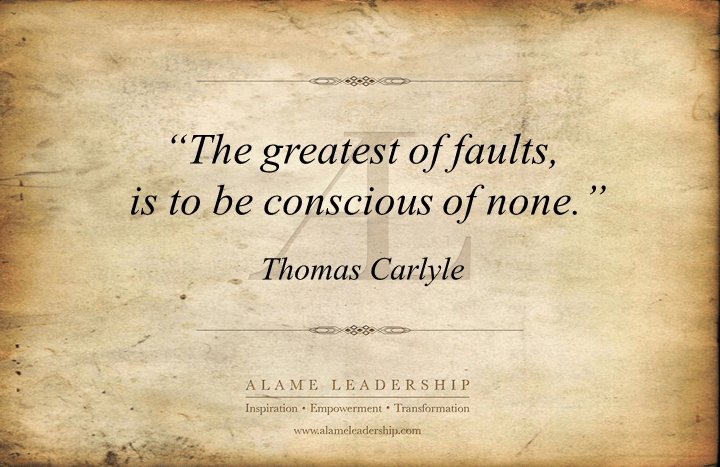
This quote speaks to me in so many ways..
Through coaching, I aim to guide people find their answers through enabling them to self-reflect on where they are at currently and where they want to be. Self-reflection is very important in the process of change, as is persistence (which I talked about in this previous blog post- The importance of persistence).
The driving force behind change, is when an individual is able to look at their current life and notice that there is something negative popping up for them. If we feel negative or sad about something, then this can be the one thing that pushes us to make lasting change. If we don’t have self-awareness however, we remain stuck in a sad or negative existence and just keep repeating the same mistakes or habits over and over again.
As a survivor of complex trauma, I luckily became self-aware from a young age. I noticed I was struggling more than other children at school and had really low confidence. I found it very difficult to focus on school work the older I got and when I hit 15 I was already very depressed.I used art & poetry as a way to self-soothe and manage my emotional pain and luckily sought therapy when I was 17.
Over the years, with extensive therapy, I learned to tap into my emotional self-awareness even more. I continued to question my choices and behaviours and realised that actually it wasn’t my fault I was so sensitive and depressed but actually that my parents were both narcissistic, specifically with NPD. I was diagnosed at 29 as having Complex Post Traumatic stress and was told by my therapist that I was incredibly resilient and able to self-reflect a lot more than most of her clients. I left the session that day happy to be someone with self-awareness and wouldn’t change this for the world!
Self-awareness is incredibly hard for people with NPD, as well as the ability to feel empathy for others. When a healthy individual hurts others and causes them distress, they usually genuinely apologise and try to make a change for the better. For people that are aware of their actions, of their flaws, are sensitive to their body sensations, sensitive to their health and are also able to make sensible choices, change comes more easily.
What are your thoughts? How destructive have you found people that lack self-awareness?What difficulties have you had? Are their times when it took you a few failed attempts to finally have an epiphany about an unhelpful behaviour you may have had?
Thanks for reading
Much love Athina ♥
© All blog posts and images are owned by me and Courage Coaching. Please don’t use without consent and only re-blog if you would like to use the information on here.
DSM traits of someone with narcissistic personality disorder (NPD)
In this video I state the criteria that someone needs to have, to be diagnosed as having NPD (at least 5 or more to qualify ).
If you or someone you know has suffered greatly due to someone with this disorder, please leave a comment or share your experience. More and more people are realising that they have been abused by such pathologically ill individuals.
Most of the time, these individuals know that they are being abusive as they try to hide their actions in public. They are very good at turning people against the victim of such abuse if they dare speak out and making them out to be the abusive one.
Take care, always ♥
Love Athina
© All blog posts and images are owned by me and Courage Coaching. Please don’t use without consent and only re-blog if you would like to use the information on here.
Dealing with criticism
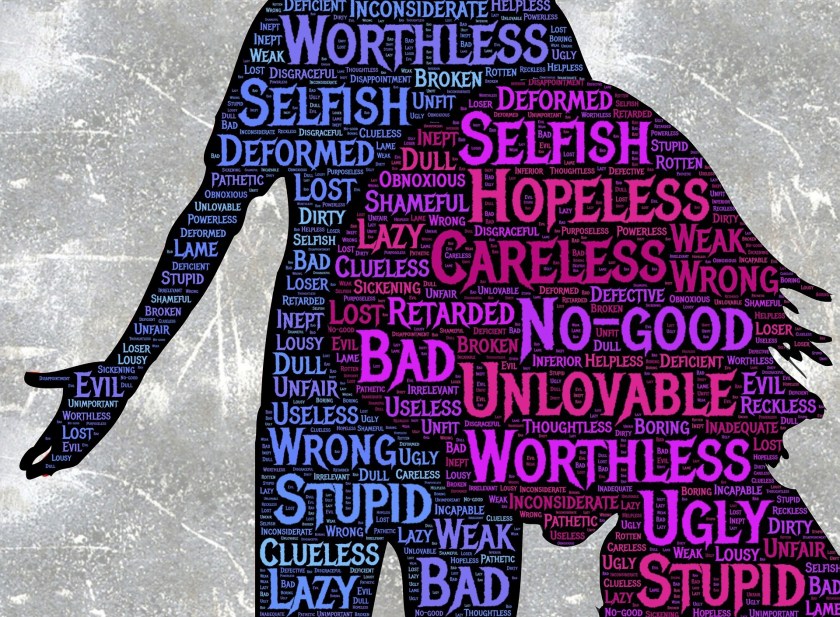
When someone criticizes us, it tends to touch a nerve and can sometimes leave us feeling very vulnerable, very angry and sometimes both!
This may be because there is absolutely no truth in the criticism and we feel it is completely unfair or actually because there is some truth in the criticism and we are just not ready to deal with it.
Being criticized is also especially difficult when the person criticizing us is someone we hold in high regard. It could be our boss at work or a new partner.
The thing that most people don’t realise is that criticism on it’s own isn’t what makes us upset. The meaning we attach to criticism is what affects us. As I mentioned in one of my previous blog posts, being a people-pleaser means that we give others too much power over our emotions and how we feel about ourselves. If others’ approval is extremely important, then we give them consent to always make us feel bad about ourselves.
In order to stay away from seeking approval, we have to learn to practice self-acceptance and only rate our actions or traits but not ourselves. We are responsible for our reaction to someone’s criticism and it is up to us to change how we respond.
If we already have low self-esteem, then criticism will be especially hurtful and it could take us days to recover from it.
Are you someone who struggles from others’ criticism? Do you find that you always get overly upset when someone criticizes you or overly agree? Do you avoid contact with that person after the criticism occurs? I would love to hear your experiences.
If you are a childhood abuse survivor, I am especially interested in your experiences. When you have internalised your parents’ negative and unhealthy criticisms, this will then follow you around and will be brought to the surface everytime someone criticizes you. This is actually quite a painful, traumatic reaction because a present criticism can send you into an emotional flashback of your parents’ abuse. This is something I am particularly experienced in through my own recovery from abuse but also through talking to others who still struggle with this internal self-critic.
Love Athina ♥
© All blog posts and images are owned by me and Courage Coaching. Please don’t use without consent and only re-blog if you would like to use the information on here.
Take control of your own healing
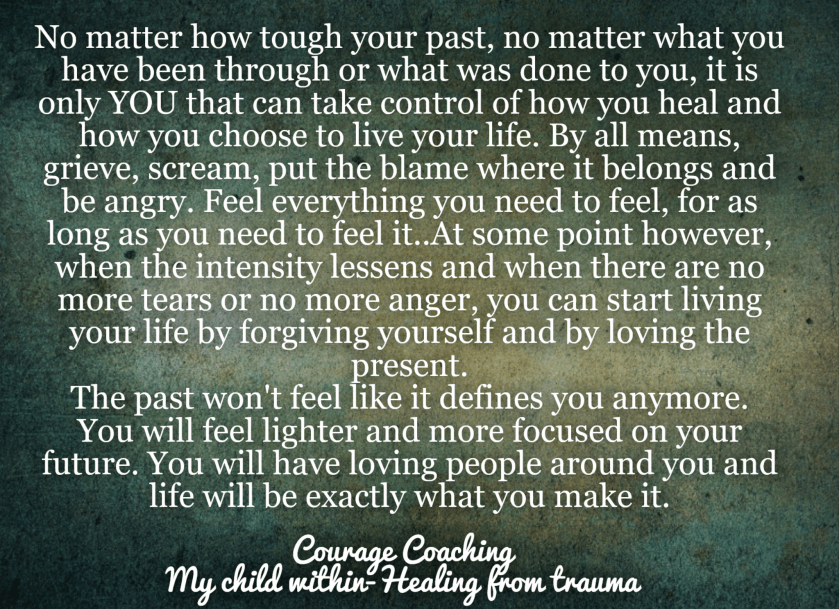
Every healing journey is unique to each person. No journey should be judged, minimised or discounted.
Whether it is childhood abuse, emotional, sexual or physical abuse, domestic abuse, grief, a single trauma or multiple traumas, nobody has the right to criticize someone else’s journey.
If you have compassion and maybe share what helped you, it doesn’t necessarily mean it will help others in the same way. Having compassion and empathy is so crucial. Listening, without trying to fix is also important.
After you reach a certain point in your healing, you will notice that things get easier. The intensity of certain emotions lessen and your sense of self-protection and boundaries are solid. If you suffer from a mental illness, it doesn’t necessarily mean it will go away. You eventually just learn to accept that it is a part of you and that you can handle it in a self-compassionate way.
What is your experience with healing?
Do you believe you will reach a point in your recovery where things eventually feel better?
Are you persistent in practicing self-care and healing with appropriate professional support?
Don’t forget that healing is a very up and down process. It isn’t always straightforward. Sometimes just as you are starting to feel better, something else comes along which needs processing. It might feel that you are back to square one again but this really isn’t the case.
Changes happen in very small ways sometimes and it depends on whether you have regular support.
Always be kind to yourself and others going through a process of healing ♥
Love Athina ♥
© All blog posts and images are owned by me and Courage Coaching. Please don’t use without consent and only re-blog if you would like to use the information on here.
The importance of resilience
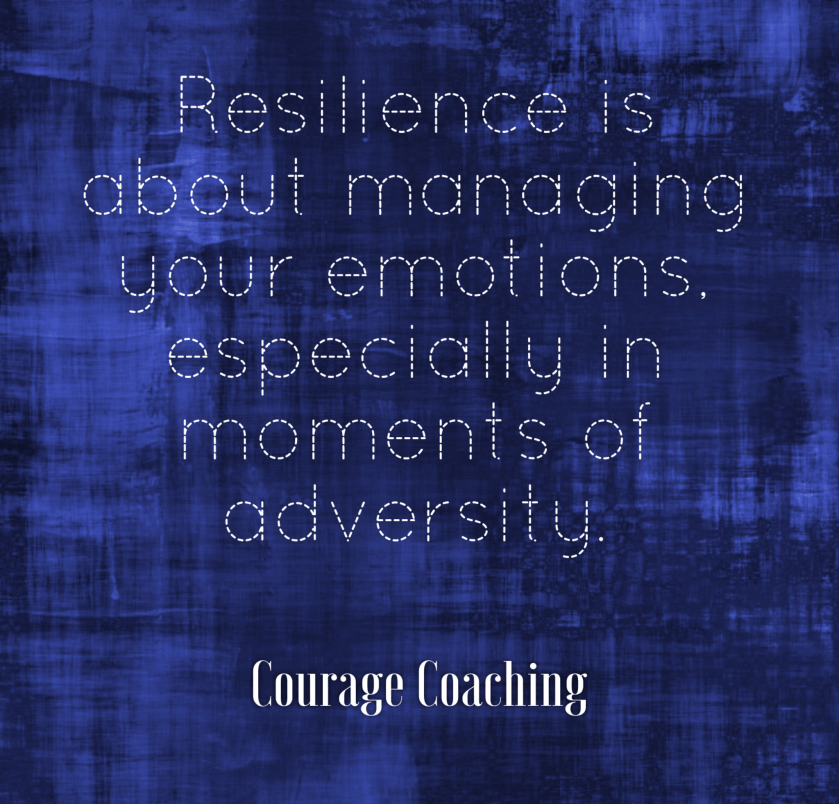
So what is resilience and is it common?
Resilience can be defined as an individual’s ability to properly adapt to stress and adversity. It is about an individual’s ability to manage difficult emotions that arise in times of difficulty, without supressing them.
Research shows that resilience is actually more common, than uncommon, as life has many ups and downs and people are having to adapt all the time to many difficult situations.
A person’s attitude is the most important element of having resilience. If someone generally has a negative thinking style, this is not helpful to having resilience.
There are a few many important attributes associated with resilience:
- The capacity to make realistic plans and take steps to carry them out.
- A positive and self-accepting view of yourself and confidence in your strengths and abilities.
- Skills in communication and problem solving.
- The capacity to manage strong feelings and impulses without complaining about any struggles or falling into self-pity when setbacks arise.
- Adaptability-The ability to act flexibly in changing or challenging circumstances.
- Asking for support or accepting support from others. Positive, supportive relationships are key to coping in tough times.
- Having humour- Finding light moments in depressing times can sometimes help lift the mood.
- Being aware of unhealthy thoughts that may pop up and don’t benefit you in times of adversity.
Now that you are aware of what makes someone resilient, what happens when you need to develop more resilience? What steps could you take?
Here are a few things to keep in mind:
- Take care of yourself and treat yourself with respect, comfort & acceptance.
- Try and be hopeful for the future no matter what the current circumstances. A positive outlook is very important.
- Ask for support from friends or family
- Look for opportunities of self-discovery. Adversity isn’t obviously welcomed but if something negative happens, look at how you handle it and learn something about yourself.
- Accept that change is part of living
- Make decisions or take actions when confronted with a difficult situation. Don’t avoid it!
- Set small goals that are easy for you to reach. It doesn’t matter how small. The more you achieve, the better you will feel
- If you are spiritual, use your faith to support you.Prayer or meditation can be very helpful
- Journaling, blogging, art therapy or other therapies can also be useful in developing resilience.
I would love to hear your thoughts on resilience. Is there anything in particular that happened which improved your resilience? Do you think you are resilient or do you think you could develop better resilience?
♥ Athina
© All blog posts and images are owned by me and Courage Coaching. Please don’t use without consent and only re-blog if you would like to use the information on here.
Fear of negative emotions & being a People pleaser
If you are afraid of experiencing other peoples’ negative responses or emotions, then you will do everything you can to avoid this.This fear will make it hard for you to say NO to someone and you end up doing things you really don’t want to do.You feel compelled to always do as they say and become completely submissive to their needs. This is the core of being a people pleaser.
These fears usually stem from childhood abuse, where you had an overbearing, manipulative parent or parents. If your parents would punish you severely if you didn’t do what they wanted, then you will have been conditioned to be obedient at all times.
Some really important characteristics of being a people pleaser is when you have low self-esteem, are addicted to others’ approval and are always dependent on them for your self-worth and validation. This happens especially when you might have had a narcissistic/psychopathic parent that criticised you negatively all the time and made you feel excessively guilty and shameful when you didn’t do as they said. With extremely self-centered parents, everything is always about their needs and your needs take a back seat. Every time you want to take a step forward and be more independent in your thinking & behaviour, they will always find a way to pull you back and make you feel dependent on them and their way of thinking.(codependent).It is a very strong type of conditioning that happens in abusive homes and as a young child you aren’t able to escape this environment.
Something that is very common when you are people pleaser is always rationalising peoples’ abusive behaviour to the point of always forgiving it. You always make excuses for others’ bad behaviour and say things like ‘Yes my father beat me but at least he provided a roof over my head’ or ‘I know my mother is very manipulative but deep down she has a good heart’.This has a lot to do with ‘toxic bonding’ or stockholm syndrome’, where you are extremely attached to your abuser in a very emotionally damaging way. You aren’t able to accept the reality of how bad something actually is, because it is extremely painful.
Another couple of traits that make someone a people pleaser and also make them more susceptible to emotional abuse is the fact that they may be emotionally immature and have very weak boundaries. They don’t know what is theirs and what is others’. If they grew up in a home with a parent that would constantly go through their things as a teenager, always invade their space whilst at the same time parentifying them and giving them things to do that weren’t their responsibiliy, this has a detrimental effect on how they view others and how they view themselves. They grow up thinking that it is ok for someone to use them, to take advantage of their lack of assertiveness and self-respect.
A very important part of dealing with manipulative or pushy people is developing self- assertiveness. This is something very useful for people that are constantly submissive to others in an unhealthy way. Assertiveness can be taught and this is something I offer in Coaching.
If you think you might need assertiveness training, then please let me know.
Best Wishes
Athina
Surround yourself with supportive people
When you suffer from a mental illness it is very difficult to feel hopeful when you are really struggling.Every day can be a battle and those negative thoughts can be very hard to silence. Sometimes feelings can overcome you at the most inappropriate times and others may think you are overreacting or being a drama queen. Paying close attention to the people in your life can determine how much your overall mood is affected. If you are an empath or highly sensitive person, you suck in other peoples’ emotions like a sponge. For this reason, you need to have the right kind of people around you or limit your time with those who aren’t enriching to your life.
Think about how the people in your life make you feel 80% of the time? Are they supportive & uplifting? Are they encouraging and empathetic? Do they understand your struggles and offer to help?
This is very important when you have a low tolerance for stressful situations due to a history of toxic child abuse. When complex trauma is part of your life, you need to feed your brain with the things you were starved of as a child. You should provide yourself with unconditional love, acceptance, validation and comfort. It is also important to have friends and family that can also provide these things for you. It might feel unnatural at first and almost feel silly to tell yourself that you are worthy and lovable every day, however this is what your brain needs. It needs a new healthy habit!
Recent studies have shown that victims of childhood abuse and combat veterans actually experience physical changes to the hippocampus, a part of the brain involved in learning and memory, as well as in the handling of stress. The hippocampus also works closely with the medial prefrontal cortex, an area of the brain that regulates our emotional response to fear and stress. PTSD sufferers often have impairments in one or both of these brain regions. Studies of children have found that these impairments can lead to problems with learning and academic achievement.
We know that psychotherapy can really help survivors of severe trauma and also we know that EMDR is very helpful for reducing nightmares, flashbacks & overwhelming emotions.What you do for yourself however is equally important as you are the person that feels, thinks and reacts to your surroundings 24/7! It has been proven that with a mixture of validating affirmations, manageable goal setting, therapy and loving relationships, people can improve the quality of their life dramatically, especially in regards to their overall outlook.
Breaking the cycle of your childhood abuse-Start being kind to yourself
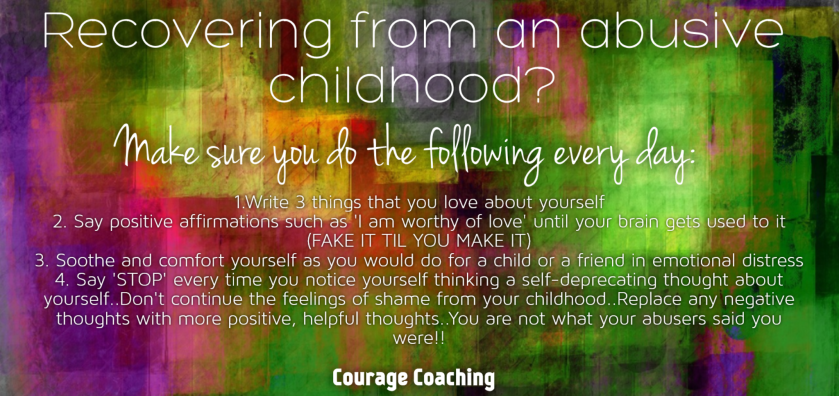
Of course it isn’t as simple as the 4 things written in the photo but it is definetely true that in order to break the horrible pattern of abuse from your childhood, you have to stop abusing yourself. YOU hold the answers to how much you will recover and it is up to you to start changing your thought patterns day by day..Nobody ever said it would be easy but it is possible..
The internalised messages of ‘You are not good enough, you are stupid’ are just repeats of what your abusers told you. They aren’t the ‘real’ you! The real you is a worthwhile person who deserves love and happiness.The real you is a person who deserves to heal and doesn’t need a nasty inner critic. With the help of a therapist or a coach, you can keep yourself on track. By having someone to report to, this might help you be more motivated. It is very important to keep trying as your brain needs sustained effort to learn ‘new, healthier messages’. That is why it is important to practice the above steps every day.
Your brain needs time to destroy the old habit wiring already in existence and then build new wiring for your new empowering positive affirmations.
Whatever your mind keeps hearing, it will eventually accept as truth. So what you want to do is to start repeating your new positive thoughts to yourself. Do it constantly. Do it repeatedly. Do it daily. Do it with passion, conviction and belief.
 couragecoaching.net