
Love Athina ♥

Love Athina ♥
Inspired by a comment made by a friend on her facebook page, I wanted to address the difficulty of finding a balance between self-soothing and running away from emotional pain. I also wanted to write about what it actually means to self-soothe.
Self-soothing is about allowing yourself to experience any uncomfortable emotions by using healthy techniques to comfort and restore balance. Successful self-soothing doesn’t mean that you make the feelings more intense. It means that you will eventually enable the emotions to pass. Self-soothing is about tolerating an uncomfortable experience, without acting in ways that are not helpful in the long run. This is when running away from emotional pain comes in. If you choose to block your emotions or run from them, this will then make the emotions grow in intensity or come out in ways you didn’t intend in the future.
Running away from emotional pain looks like the following:
Do you see a pattern here? The more addictively or compulsively you do something, the more it means you are running away from what needs to be dealt with. It’s like an ostrich burying its head in the sand — just because you are hiding from everything and pretending everything is okay, does not mean that it will be okay.
We are all guilty of running away from our emotions. Sometimes they are just too painful to deal with and nobody wants to feel pain of any sort.
My biggest vice seems to still be comfort eating. I love my cakes & biscuits unfortunately, although apart from those, I generally eat a very balanced diet. Chain smoking used to be my biggest coping mechanism from the ages of 15-22 but I am so glad that I was able to quit.
Luckily, I have become better at self-soothing. I have realised that the more I deal with my emotions, the better I feel in the long term.
When feelings are dealt with head on, you talk about them, you cry, you blog about them, you ask a friend for support and you do something in that moment that will help you feel a little better, safer or comforted.
Self-soothing means that you wrap yourself in a blanket and play your favourite music. It means that you take yourself for a walk in nature. It means you find a quiet space in your home and you focus on breathing slowly and deeply and calming yourself down. It means that when you are feeling especially low, you read out some positive affirmations to help empower you. It means that you run a bath with your favourite oil or bath foam.It means that you engage in something creative. It means that you listen to your body.It means that you practice self-compassion and kindness to yourself. Self-soothing can be done using all 5 senses.
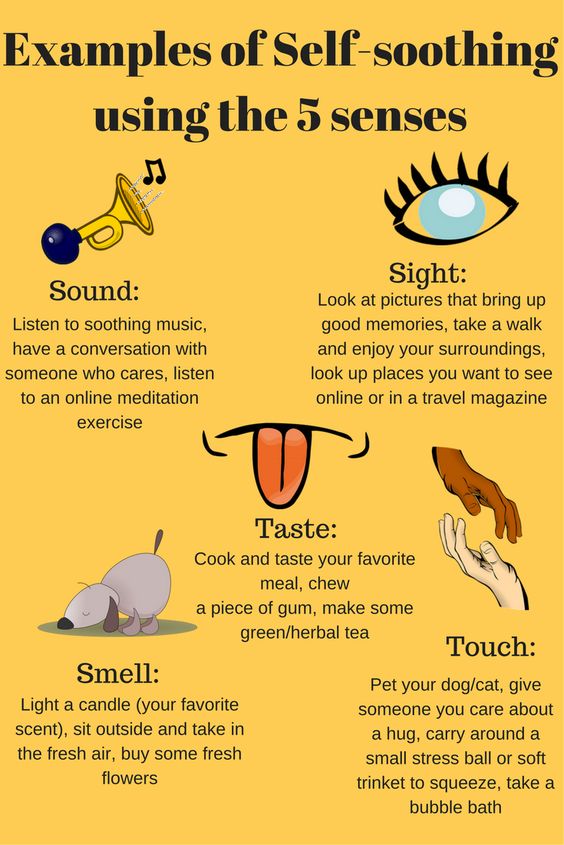
There are so many ways to self-soothe and everyone has different ways of doing so.
What is your experience?
Do you feel you are somewhere in the middle of self-soothing and running away from your problems or not?
Please share your experiences.
Thanks for reading
Love Athina♥♥
© All blog posts and images are owned by me and Courage Coaching. Please don’t use without consent and only re-blog if you would like to use the information on here.
Ending the stigma of mental health is still proving to be a challenge, although in the UK we are getting ever closer to our goal of a deeper understanding, tolerance & acceptance of the importance of talking about our mental health.
As somebody who has never known what life is like without mental health problems, I know how difficult it is to be open and honest about it..People are still uncomfortable with knowing what to say or not say..Even if they try to be understanding, deep down you can sense whether they get it or they don’t..
Every single one of us is touched by stress or anxiety at some point in our lives, whereas others live with it every day…I am one of those people who lives with chronic mental health problems..Complex PTSD isn’t something to be taken lightly..There are still so many moments in my life at the age of 34 that I still learn new things about myself that I am not able to do, that others would find incredibly easy to complete. The hypervigilance and overwhelm never goes away..The chronic fatigue never goes away..The low mood is always lingering in the background..The voice that says ‘you are just not good enough’, pops up a lot when I am working alongside others…
Self-care is so important in these moments and remembering to accept ourselves when we are struggling can make a world of difference!
Walking the same path as others with mental illness really helps people feel less alone..
All the wonderful people who ran the London Marathon raising money for Mental Health are simply incredible..
If you think about how much these runners must have battled with those nasty little voices inside their head, it makes you feel incredibly inspired. The voice of depression or the voice of anxiety is not an easy task to manage..but yet they did it, and in what an admirable way!
I am also blessed to have many friends & fellow bloggers who do so much to raise awareness about mental health! They have all been personally affected however and live with debilitating conditions themselves..
The most crucial part in my opinion of raising awareness, is to also hear more people talking about mental health that don’t have any personal experience with it..People that feel concerned about someone they know but just don’t know how to respond..People that are lucky enough to live with good mental health and are surrounded by people who aren’t that lucky..
If you have experience with ill mental health, stigma or intolerance, then please feel free to comment.
Lastly, I would also like to share my latest information video on defence mechanisms. I was having a bad day yesterday and couldn’t face the camera to film myself talk, so I came up with this instead.
Thanks so much for reading & watching!
Love Athina ♥
© All blog posts and images are owned by me and Courage Coaching. Please don’t use without consent and only re-blog if you would like to use the information on here.
Approval seeking is a very common behaviour that all of us are guilty of at some point in our life. It might be that we are trying to impress someone we like, make a new friend or make a good impression on our new boss. It is perfectly normal to seek approval in others occasionally.
Approval seeking only becomes a problem when we do it chronically. When we constantly seek to be validated externally because we don’t feel comfortable to accept ourselves as we are.
This is the topic of today’s video, which I felt was very important for those of you who are people-pleasers and/or codependents.
Love Athina ♥
© All blog posts and images are owned by me and Courage Coaching. Please don’t use without consent and only re-blog if you would like to use the information on here
Although it isn’t Monday yet, I have already uploaded Monday’s Youtube video 3 hours early, as tomorrow I am mostly on the go and won’t be checking in much.
As most of my videos focus on CPTSD, Narcissistic abuse, Dysfunctional Relationships and other areas of emotional difficulty, I wanted to address a cluster C disorder this time, as this is something I have experience with. Avoidant Personality is an anxious disorder which can be very pervasive and self-limiting for those who live with it.
It can be caused by childhood trauma and can co-exist with Depression, CPTSD, Dependent Personality Disorder, as well as other disorders.
An individual is diagnosed as having AVPD, if they meet 4 or more of the following 7 criteria.
Definition: A pervasive pattern of social inhibition, feelings of inadequacy, and hypersensitivity to negative evaluation, beginning by early adulthood and present in a variety of contexts, as indicated by four (or more) of the following:
(1) avoids occupational activities that involve significant interpersonal contact, because of fears of criticism, disapproval, or rejection
(2) is unwilling to get involved with people unless certain of being liked
(3) shows restraint within intimate relationships because of the fear of being shamed or ridiculed
(4) is preoccupied with being criticized or rejected in social situations
(5) is inhibited in new interpersonal situations because of feelings of inadequacy
(6) views self as socially inept, personally unappealing, or inferior to others
(7) is unusually reluctant to take personal risks or to engage in any new activities because they may prove embarrassing
As with most personality disorders AVPD isn’t completely curable, although therapy, medication and the right support can help people lead more successful lives.
Is this something you may suffer with? If yes, then get in touch!
Love Athina ♥
© All blog posts and images are owned by me and Courage Coaching. Please don’t use without consent and only re-blog if you would like to use the information on here
You might have heard of the term infantilization but you may not realise how incredibly abusive it is when a parent does this to their child.
It is only natural for a growing child to start developing independent thoughts, actions and opinions. For a narcissistic parent this can be very threatening, as they want to continue controlling their child and use them for narcissistic supply.
Check out my video for an explanation of what infantilization is.
Some examples of infantilization are as follows:
A parent stops a teenager from socialising with friends or doesn’t allow them any privacy in their bedroom. The parent may still treat them as if they are a young child whereas a teenager needs growing independence and privacy.
A parent buys their child age-inappropriate clothing and/or arranges age-inappropriate activities.
A parent might not allow the child to speak for themselves, when they are asked a question directly by somebody else.
A parent might discourage the child from pursuing new interests as they don’t want the child to become more skilled at new things than they are.
If a parent isn’t able to have healthy relationships, they may try to influence the child against their choice of partner. They can’t allow their child to leave the family nest. The parent wants to continue their enmeshed relationship for as long as possible.
The effects of infantilization are as follows:
If you can relate to any of what I have written or said in the video, then please re-blog so it reaches more people.
Knowledge is power and with knowledge comes healing. To also further promote healing on a larger scale, I have recently signed up to patreon to further support my creations of videos, pdfs & hopefully in the near future, e-books.
Patreon is a platform that enables creators to reach new goals by having their followers & supporters fund their work.
If you find my videos & blog posts helpful, then please check out my patreon page.
It would mean the world to me to be able to reach more people and help them on their journey of recovery.
https://www.patreon.com/AthinaEhlen

Love Athina ♥
© All blog posts and images are owned by me and Courage Coaching. Please don’t use without consent and only re-blog if you would like to use the information on here.

Generalised Anxiety Disorder is a long-term condition that causes you to feel anxious about a wide range of situations and issues, rather than one specific event.
People with GAD feel anxious most of the time and often struggle to remember the last time they felt truly relaxed. They are constantly affected by worried thinking, which can affect their daily routines, their work, their appetite and their sleep.
GAD can cause both psychological (mental) and physical symptoms. These vary from person to person, but can include:
GAD can commonly also co-occur with other mental health disorders such as social anxiety disorder, panic disorder, (C)PTSD or depression.
GAD can be caused by genetics, by childhood trauma or loss or by an imbalance of serotonin and noradrenaline in the brain.
If you are affected by GAD, then please feel free to share your experience.
I am offering free initial consultations to anyone who is affected and is in need of support.
Love Athina ♥
© All blog posts and images are owned by me and Courage Coaching. Please don’t use without consent and only re-blog if you would like to use the information on here.

How do we each fit into this world?
Are we defined by whether we have a good job? A good marriage?
Do we feel that we constantly have to measure up to our friends’success?
Do we feel that we have to have the latest gadget, a new car or a big house?
Do we feel like a complete failure if we haven’t secured a stable job?
And what about relationships & family? When someone is single past the age of 40, everyone has an opinion about why that person is still single. If someone is jobless, everyone has an opinion on why that is.
STATUS ANXIETY is a constant worry about whether we are good enough in the world we live in. It is an insecurity about whether our life is a failure or whether it is a success.
Status anxiety is a term I came across after watching a video by Alain de Botton.
Status anxiety happens because we allow our environment to affect our inner world. Status anxiety happens when we allow other people to criticize us or the way we choose to live. It is only natural to become anxious, when we start comparing ourselves to others.
One of the most uncomfortable situations which may trigger status anxiety, is at a social event where you don’t know any of the guests. In such events, such as a party, you can only get to know someone initially by making small talk. You may be approached with questions such as ”What do you do? Where do you live?”. These questions may make you feel uncomfortable or inferior, because you don’t think your job is anything special and you don’t currently like the area you live in. In these situations you worry what the person asking the questions might think of you.
Status anxiety is rooted in judgements or how we think others will judge our choices, beliefs, skills and way of life. Nobody really has any control over the thoughts or judgements of others but everybody has control over how they react to others’ judgements.
If we really don’t care what other people think, then we probably won’t have status anxiety.
Status anxiety also frequently causes envy.We tend to envy in others, what we haven’t quite managed to achieve for ourselves. We may secretly envy the person who seems to have the perfect relationship when we are feeling lonely. We may envy the person who is always going on holidays because we can barely pay the bills with our low-wage job. Envy, can give us insight into a part of our lives we may need to work on.
What is the most important thing to consider when suffering with status anxiety?
Is it more important to worry because we haven’t managed to develop a good career for ourselves? Is success only measured by having a high salary, a perfect marriage and celebrity status?
What is MORE important, is the meaning WE give to our life. If we are happy with all we have achieved (despite all the difficulties or judgements by others), then that is all that matters.
Our judgement of our own life is the most important.
Not everyone is born equally lucky, supported, intelligent, confident or motivated.
The people who are highly successful in business and are making the big bucks, are usually lacking in many other areas in their life. They may lack emotional intelligence and empathy.
If you had a choice in your life, what would it be?
In my personal opinion, success is being a kind & empathetic person.
Success is being able to self-reflect and being able to help others do the same.
Success is being remembered as a good person.
I believe that success shouldn’t be measured by whether you work, have a relationship or have kids.
Success should be measured by the type of person that you are..
When I die in the future, I would much rather be remembered as a good human rather than a successful businesswoman or celebrity. I would much rather be remembered as empathetic, giving, respectful, generous & lovable. I would much rather be remembered as someone who meant something to someone or as someone who inspired others.
If you find that you suffer with status anxiety, make sure that you define your own life in a way that makes you feel comfortable.
At the end of the day, all that really matters is the opinion you have of yourself and the respect and kindness yougive to others.
Love Athina ♥♥
© All blog posts and images are owned by me and Courage Coaching. Please don’t use without consent and only re-blog if you would like to use the information on here.
Over-thinking an issue or event is a very common coping mechanism for dealing with stress. When there are unresolved issues or stressful situations with more than one possible solution, this is usually what leads to never-ending ruminating.

Unfortunately, over-thinking is usually linked to depression & anxiety. People that already suffer from a mental illness, are usually big over-thinkers. However, someone can also become mentally ill by starting to think destructively. All it takes is one single stressful life event to trigger unhelpful ruminating.
The best way to cope with your possible over-thinking, is to look at the way you think and to analyse the different thinking errors (otherwise known as cognitive distortions) you may be indulging in.
If you don’t know much about the different types of cognitive distortions, then click below:
Secondly, it is important to challenge any unhelpful thinking patterns by looking honestly at the evidence that supports those thoughts. Sometimes over-thinking can really spiral out of control and what may have started off as a minor problem, might have escalated into a catastrophe. Thinking isn’t always based on actual facts.
Thirdly, it is important to replace any unhelpful or overly dramatic thoughts with more grounded and sensible thoughts. If you are overly critical of yourself or others, then maybe try to tone it down a little. If you are worried that something bad is going to happen, then ask yourself ‘What are the chances of this really happening’? and ‘Is this really as bad as I think?Give yourself more constructive, positive thoughts and even write them down on paper if it helps!
Lastly, try and distract yourself when you are lost in endless over-thinking. Do something you enjoy, which will stop your mind from going into an uncomfortable state of hyperarousal.
Love Athina ♥
© All blog posts and images are owned by me and Courage Coaching. Please don’t use without consent and only re-blog if you would like to use the information on here.
Today I am starting off my series of Q & A videos, where my viewers and subscribers are able to get their questions answered by me, in a video each week. Please feel free to ask me questions on the following topics:
I also am happy to answer questions on how to :
Here is the first video on a question asked by one of my viewers:
Please note: **I will always keep the identity of my viewers confidential**
Thanks for reading and watching
Love Athina ♥
© All blog posts and images are owned by me and Courage Coaching. Please don’t use without consent and only re-blog if you would like to use the information on here.
 couragecoaching.net