A great resource for CPTSD sufferers that have trouble sleeping

moon-769918_1920 I came across this wonderful website & blog known as ‘Beauty after bruises’, which is a voluntary website that provides invaluable support for those with CPTSD and/or Dissociation.

The links I am adding here are very useful for those of you who really struggle with sleeping and generally dread the night time. Please check them out if you think they might help you and feel free to re-blog this post so it also reaches others.

nighttime101

nighttime201

Love Athina ♥

© All blog posts and images are owned by me and Courage Coaching. Please don’t use without consent and only re-blog if you would like to use the information on here.

 

The Link Between Childhood Trauma and Chronic Fatigue Syndrome

sleeping-1159279_1920

Childhood trauma produces physiological effects upon the developing brain that have an adverse effect upon the individual’s stress response system.

Childhood trauma is likely to increase a person’s vulnerability to falling victim to Chronic Fatigue Syndrome (CFS).

FACTS ABOUT CFS.

The symptoms of CFS are as follows :

– persistent fatigue/exhaustion which affects everyday life and is not rectified by sleep or rest

– in the UK, the condition is thought to affect approximately a quarter of a million people

– the condition is more prevalent in females than in males

– it normally affects people between about the ages of 20 – 45 years; however, it can begin during childhood – if so, it normally begins between the ages of 13 and 15 years

CFS can be split into 3 different levels of severity :

– MILD : the person can probably care for him/herself, but may require days off in order to rest

– MODERATE : at this level the individual may well experience reduced mobility, disturbed sleep, as well as a need to sleep in the afternoon

– SEVERE : at this level the person will have significantly decreased mobility, possible impairments to his/her ability to concentrate as well as greatly reduced ability to perform many everyday tasks

Individuals with CFS who were tested in various studies, had higher overall trauma scores than those without CFS.

Exposure to trauma increases the risk of CFS between three and eight times, depending on the type. Emotional neglect and sexual abuse during childhood were most strongly associated with CFS.

It generally appears that CFS is part of a spectrum of disorders that are associated with childhood adversity.

Do you suffer with Chronic Fatigue Syndrome?

As someone who lives with CPTSD, I would say that I suffer from it moderately.

What is your experience?

Love Athina ♥

© All blog posts and images are owned by me and Courage Coaching. Please don’t use without consent and only re-blog if you would like to use the information on here.


Narcissistic abuse-Trauma bonding with a parent

giphygf

As many of you already know, my journey to qualifying as a Life Coach, was based on my own recovery from my narcissistically abusive parents.

For those of you who don’t follow my more personal blog, I wanted to just give you a little insight into my own struggles.

In the last few days, I have been struggling with contact again from my father, after 1 year and a half of not speaking.

I sent him a letter, so he could stop harrassing me by phone.

I never exclusively told him I wanted no contact, but after a very traumatic time following his attempted suicide, (as a way of stopping his wife from leaving him) he gave me the silent treatment for a year, so I just went along with it.

I was not willing to respond to him and was already in a grieving process, even though there was no closure of any sort.

When he finally decided to start hoovering me back in with his phonecalls and sudden caring, I continued to ignore his calls. This communication from him went on for 8 months. I finally got fed up with the constant calls that I decided to send him a letter to end our relationship. I briefly explained my reasons and gave him the chance to reply.

I received his reply and it hit me really hard! More than I expected it to.

I realised that I still had a tiny glimmer of hope that he might change his behaviour and this was a huge setback for me. I also realised how incredibly strong the trauma bonding is between us, even more so than with my mother.

As a means of coping with my recent distress and the final letter to him, which I am in the process of writing at the moment, I created the below video!

It outlines what I have been going through and what many other survivors of abuse face all the time.

Please feel free to share it, if you think it may help others.

Just visit my Youtube page and embed it into your page.

Thanks for reading

Love Athina ♥

© All blog posts and images are owned by me and Courage Coaching. Please don’t use without consent and only re-blog if you would like to use the information on here.

GAD (Generalised Anxiety Disorder)

img_0568

Generalised Anxiety Disorder is a long-term condition that causes you to feel anxious about a wide range of situations and issues, rather than one specific event.

People with GAD feel anxious most of the time and often struggle to remember the last time they felt truly relaxed. They are constantly affected by worried thinking, which can affect their daily routines, their work, their appetite and their sleep.

GAD can cause both psychological (mental) and physical symptoms. These vary from person to person, but can include:

  • Dizziness & or heart palpitations
  • Excessive worrying and obsessing
  • Difficulty handling uncertainty
  • Muscle tension
  • Trembling or twitching
  • Headaches
  • Being easily startled
  • Dry mouth
  • Cold or hot sweats
  • Nausea
  • Trouble concentrating
  • Trouble sleeping
  • Anxiety which can at times lead to panic attacks

GAD can commonly also co-occur with other mental health disorders such as social anxiety disorder, panic disorder, (C)PTSD or depression.

GAD can be caused by genetics, by childhood trauma or loss or by an imbalance of serotonin and noradrenaline in the brain.

If you are affected by GAD, then please feel free to share your experience.

I am offering free initial consultations to anyone who is affected and is in need of support.

Love Athina ♥

© All blog posts and images are owned by me and Courage Coaching. Please don’t use without consent and only re-blog if you would like to use the information on here.


Narcissists & their relationship to money

This is a topic I previously covered on my personal blog last year but it is important to highlight again, especially in the current climate.

Most extremely powerful & wealthy people in this world, are usually void of empathy. Politicians, country leaders, business tycoons etc..

Narcissists and especially overt & malignant narcissists, lack empathy, lack self insight and aren’t able to form healthy & reciprocal relationships.

In this video, I talk about the importance of money in a narcissist’s world.

I talk about financial abuse and how narcissists may use this sort of abuse.

Having had first hand experience with a narcissistic & very controlling father, I have witnessed the obsession of a narcissist with his money & how he uses it in his life, to harm those close to him.

If you have experienced financial abuse or known someone who has used money in a harmful way, then please feel free to share this in the comments below.

Love Athina ♥

© All blog posts and images are owned by me and Courage Coaching. Please don’t use without consent and only re-blog if you would like to use the information on here.

2nd Video on emotional flashbacks

Hello fellow bloggers & friends,

I hope you had a good weekend and have started your week with hope in your heart. I have been unusually busy over the last week, as hubby has been on holiday from work. My mornings have been completely transformed from work & ‘me’ time, to long breakfasts and lots of ‘us’ time. We just celebrated our 2nd wedding anniversary on Saturday and took a mini break away in the wonderful town of Braunschweig. An escape from the usual routine we are well accustomed to, is so incredibly refreshing and enriching.

Although hubby is still on holiday this week as well, I want to make sure I keep up my blogging and Youtube Videos, even if at a lesser frequency.

I have finally managed to set up my new webcam and got the sound on the microphone to the level it should be at. I can safely say that the quality of my Youtube videos will finally be at an acceptable level.Hoorah 🙂

Although I started off my video today thinking it would only be a very short trial one (to test out my new webcam), it ended up being a long one!

The video is about emotional flashbacks once again and how to manage them.

The video below is the 2nd one I have posted on this topic, as I have received a few more requests to talk more about this difficult area of CPTSD.

Love Athina ♥

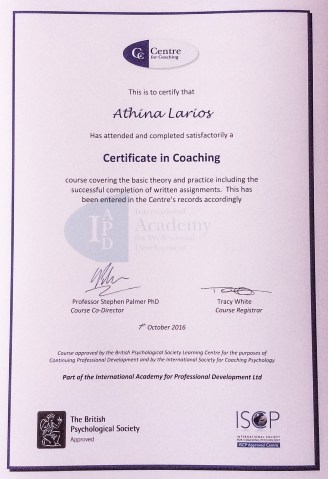
Ps: I finally received my full & approved ‘Certificate in Coaching’ today after completing the written assignment and waiting a long 12 weeks for the course tutors to correct it.

Unfortunately, they forgot to add my married name in brackets as I had originally requested but despite this, I am very very pleased 🙂

image1

© All blog posts and images are owned by me and Courage Coaching. Please don’t use without consent and only re-blog if you would like to use the information on here.

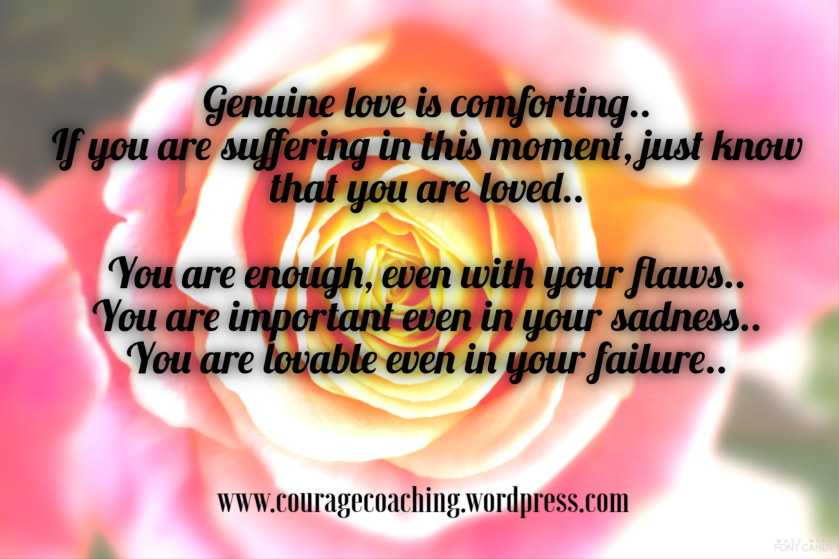
You are loved, you are enough

fontcandy-8

I know there are so many of you battling your demons every day..It takes guts..It takes courage to fight the war inside your head..

This post is for all of you who are struggling..One breath at a time is so important when the world is feeling especially cruel..

This blogging community supports so many people with mental illness…

So Reblog this post and support each other..

Love Athina ♥


Spreading a little awareness sparkle

fontcandy-6

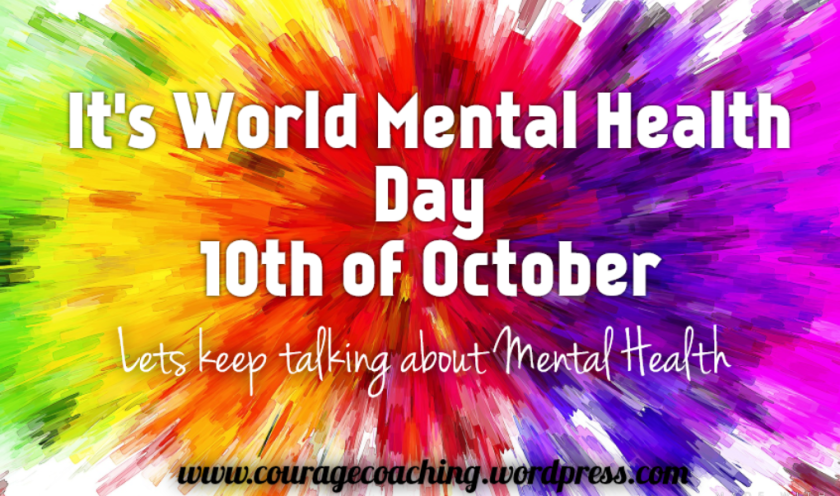
Just a quick post about something that matters as equally as physical health.

We all live with mental health and mental illness can touch all of us at least once in our lifetime.So how openly do we talk about it and how easily do we feel uncomfortable mentioning our struggles to a co-worker, family member or friend?

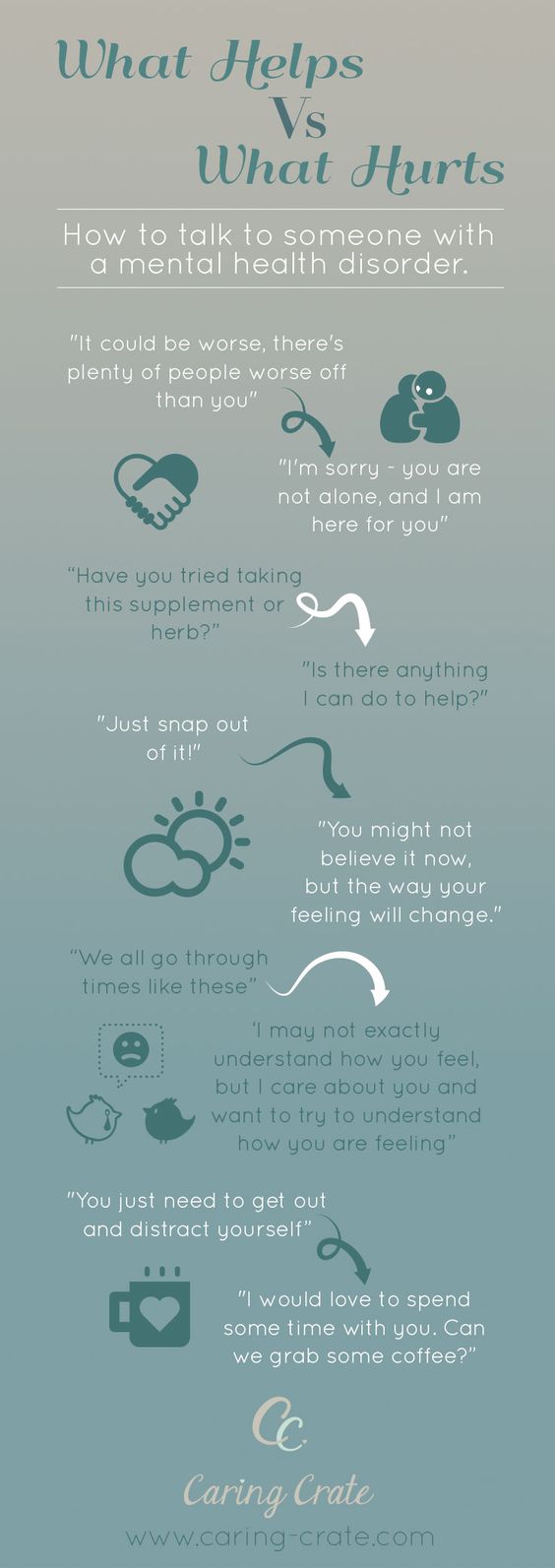
I have encountered so many of the below unhelpful phrases from ignorant individuals, so for this reason, I will keep spreading awareness of the importance of validating someone’s struggles with their mental health.

‘Don’t dwell on the past’

‘Aren’t you over it by now?’

‘Can’t you just try and be more happy?’

‘Stop focusing on the negative’

‘Strong people just get on with it’

‘Stop being a hypochondriac’

‘Stop being so self-centered’

‘Just snap out of it!’

‘You are just looking for attention’

IMG_0546

68996263715234a6de2749035a255252

Look after yourselves ♥

Love Athina ♥

© All blog posts and images are owned by me and Courage Coaching. Please don’t use without consent and only re-blog if you would like to use the information on here.

Living as an expat and the additional challenges of those with a mental illness

img_0582

Some of you may have had the experience of moving abroad for the first time to follow your partner’s work. Some of you may have actually been the ones that were offered a job in another country. Whatever your circumstances, being an expat is challenging. If the country you have chosen to move to also speaks another language, then this obviously poses another challenge: that of not being able to communicate effectively.

From my own personal experience, being an expat has been eye-opening and tough at times. My husband has a typical full time work routine and I on the other hand, do some coaching, some voluntary work and the odd child-care. The voluntary work & coaching is mostly from home & online and life has felt very isolating at times. Trying to set up an English speaking business in a German speaking country also has its challenges.

Although learning the language in the country you are living in, is the best option by far, for some of us this just isn’t an option. The reasons for this are many. Some people may only be staying in the country for a short time, 1 or 2 years and will then be moving on to another country. Their job requires constant moving around the globe, so learning a new language each time just isn’t worth the time and effort. Others, aren’t able to learn the language due to health problems, other commitments or a general fear of leaving their comfort zone.

From personal experience and if I am completely honest, I don’t like the language in the country I am living in. I really wish I did but unfortunately I don’t. Secondly I don’t have the motivation to put in the hard work to learn it. This all stems from the fact that when we originally moved abroad with my husband, I was only going to be staying for a year and then moving back home to study. If I had known that I would be abroad for nearly 2,5 years initially, I probably wouldn’t have made the move.

Secondly, due to my mental health and the fact that I live with Complex PTSD, motivating myself to learn a new skill is tough at the best of times, due to the many symptoms of my illness. I am triggered often by my surroundings and feel easily overwhelmed. In order for me to do something well, I have to be determined to learn it and also have an interest in it. This is enough to help me push through the uncomfortable symptoms of my CPTSD. The greater the interest in something, the more motivated I am & the better I become at it.

If you think back to when you were at school, your best subjects were mostly the ones you enjoyed, right? If you were forced to learn things you really didn’t enjoy or even understand, then the result is usually one of frustration or boredom. If on top of that, you also struggled with depression or other mental health problems, your concentration & memory might have also been affected. This was something I was very familiar with for most of my school & subsequent university years. Everything had always been a struggle, due to the neglect and abuse I suffered as a child.

Having a mental illness is a struggle in your daily life even when you are within your comfort zone of ‘HOME’ but when you consider the life as an expat, this can be even more overwhelming. Not only do you feel like a fish out of water and have to deal with homesickness but you also have to get used to the dissapproval you constantly feel for not being what others expect you to be. A fully integrated member of the country you are living in. This obviously means knowing the language, having a job and taking part in some social activities. If however, you aren’t able to be this fully integrated member, this makes you miss home more and more. It can trigger episodes of anxiety & depression and every day becomes even more of a challenge.

We are all different in the way we choose to live our lives and that is totally okay. Some of us have never lived outside our hometown and don’t have an interest in ever doing so. Some of us don’t mind moving around to different cities within our country & others choose to move all around the world and absolutely love it.

I think it is always okay to be honest with ourselves and know our limitations. It is ok to admit that living as an expat might be absolutely terrifying for us.For those of us who are lucky enough to have many friends and family living nearby, we might always value these relationships above moving abroad for a job and that is completely okay!

For me personally, I don’t have a problem living abroad in general but I am just not someone who has an interest in languages. I already speak 2 fluently and have constantly travelled between Greece & England all of my life. I am very content with that. I also am happy to support my husband in his work, which is currently in Germany, as he has created the comfortable lifestyle we have. I am very blessed to be able to share this with him. In future however, I would only move to an English speaking country or back to Greece, which is is where I grew up.

In regards to mental health, when thinking about the difficulties and stigma of mental illness in addition to the difficulties of those of us living as an expat, people need to become more aware of the importance of talking about this and being more understanding.

People need to stop stigmatising those people who are making certain choices in their life, which may differ hugely from others. Expats that choose to live abroad but also struggle with mental health issues, need to cut themselves some slack and be more self-accepting. Other expats who live abroad and have absolutely no mental health issues, need to be aware of those of us who do. It is a big challenge!

It can be very isolating to have mental health problems but even more so when you are living abroad. You will already have your limitations and you will find certain things even tougher than you may have thought of originally. Things that never scared you before will feel absolutely terrifying when you are abroad. If you are also living abroad and don’t have any close friends or family to rely on, then this in itself can be very challenging.

The purpose of this post was to raise awareness of the struggles of those with mental illness that live abroad. I feel no shame in admitting that I am one of those people.

Luckily, despite my struggles, I managed to gain a qualification in CB Coaching and am able to support those with bigger struggles than my own, but in no means should I ignore my own daily living challenges in my life as an expat in Germany.

If you are an expat with mental health issues, then please pop by and say hello!

Love Athina ♥♥

© All blog posts and images are owned by me and Courage Coaching. Please don’t use without consent and only re-blog if you would like to use the information on here.


Trauma is a loss, so it must be grieved

Trauma happens to all of us..We all go through life with a few small traumas. Most of the time, small traumas or small losses don’t leave emotional scars. We just keep going and adjust to whatever life throws at us.

If on the other hand, the trauma or loss we suffer is profound, then this means that we will be more deeply affected by it and will need longer to overcome it or learn to live with the affects.

In this video, I touch on the importance of grief and the 3 main stages of grief you go through when dealing with a major loss or trauma.

Love ♥ Athina

© All blog posts and images are owned by me and Courage Coaching. Please don’t use without consent and only re-blog if you would like to use the information on here.