
How to survive over-thinking

Over-thinking an issue or event is a very common coping mechanism for dealing with stress. When there are unresolved issues or stressful situations with more than one possible solution, this is usually what leads to never-ending ruminating.

monkey-1757972_1920

Unfortunately, over-thinking is usually linked to depression & anxiety. People that already suffer from a mental illness, are usually big over-thinkers. However, someone can also become mentally ill by starting to think destructively. All it takes is one single stressful life event to trigger unhelpful ruminating.

The best way to cope with your possible over-thinking, is to look at the way you think and to analyse the different thinking errors (otherwise known as cognitive distortions) you may be indulging in.

If you don’t know much about the different types of cognitive distortions, then click below:

Cognitive distortions

Secondly, it is important to challenge any unhelpful thinking patterns by looking honestly at the evidence that supports those thoughts. Sometimes over-thinking can really spiral out of control and what may have started off as a minor problem, might have escalated into a catastrophe. Thinking isn’t always based on actual facts.

Thirdly, it is important to replace any unhelpful or overly dramatic thoughts with more grounded and sensible thoughts. If you are overly critical of yourself or others, then maybe try to tone it down a little. If you are worried that something bad is going to happen, then ask yourself ‘What are the chances of this really happening’? and ‘Is this really as bad as I think?Give yourself more constructive, positive thoughts and even write them down on paper if it helps!

Lastly, try and distract yourself when you are lost in endless over-thinking. Do something you enjoy, which will stop your mind from going into an uncomfortable state of hyperarousal.

Love Athina ♥

© All blog posts and images are owned by me and Courage Coaching. Please don’t use without consent and only re-blog if you would like to use the information on here.


Question & Answer- YouTube videos

Today I am starting off my series of Q & A videos, where my viewers and subscribers are able to get their questions answered by me, in a video each week. Please feel free to ask me questions on the following topics:

  • Complex PTSD
  • Narcissistic abuse
  • Dysfunctional relatioships
  • Negative thinking
  • Dealing with emotional flashbacks
  • Anxiety
  • Depression
  • Trauma Bonding
  • Toxic shame
  • Codependency

I also am happy to answer questions on how to :

  • Better manage your time
  • Practice self-compassion
  • Develop resilience
  • Stop self-defeating thinking patterns
  • Better manage your workload
  • Build confidence
  • Set boundaries
  • Deal with toxic people

Here is the first video on a question asked by one of my viewers:

Please note: **I will always keep the identity of my viewers confidential**

Thanks for reading and watching

Love Athina ♥

© All blog posts and images are owned by me and Courage Coaching. Please don’t use without consent and only re-blog if you would like to use the information on here.
 

How to deal with negative emotions

Happy Monday dear followers & friends,

I have been busy making & editing youtube videos for the last few days, as towards the end of the month I will be very busy studying. I am trying to do videos on topics that people have emailed me about and today’s video is based on a question from a YouTube Subscriber.

Dealing with negative emotions is something everyone can relate to and is something that nobody wants to face in this life. Unfortunately, every single one of us has constant experience with negative or uncomfortable emotions.

I have already written a blog post about the main point I make in the video below: https://couragecoaching.wordpress.com/2016/08/04/the-importance-of-feeling-our-feelings/

In the video I talk about the importance of dealing with negative emotions in the healthiest way.

This healthiest way, is something that has already helped many people who have had coaching and psychotherapy and  I am offering it in this video for free.

I really hope it is helpful and makes sense. If you think it might help others, please re-blog or share it on social media.

Love Athina ♥

© All blog posts and images are owned by me and Courage Coaching. Please don’t use without consent and only re-blog if you would like to use the information on here.

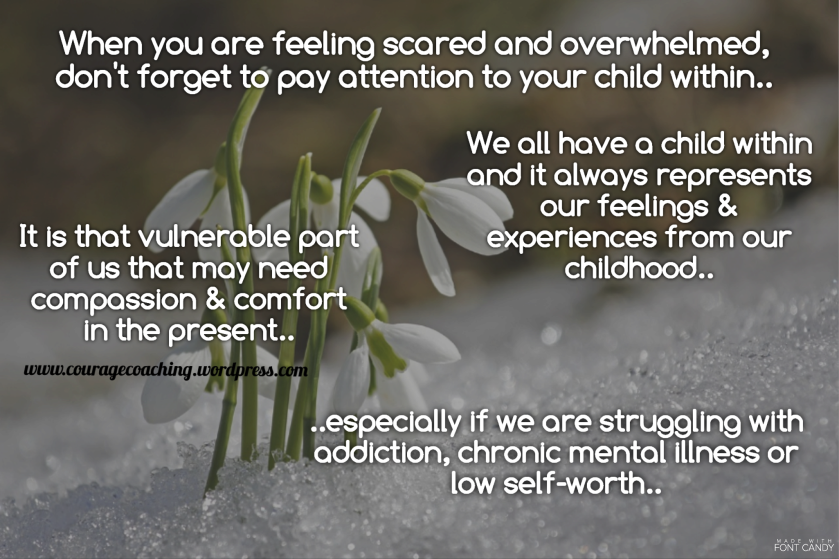
Our child within

fontcandy-11

Love Athina ♥

© All blog posts and images are owned by me and Courage Coaching. Please don’t use without consent and only re-blog if you would like to use the information on here.
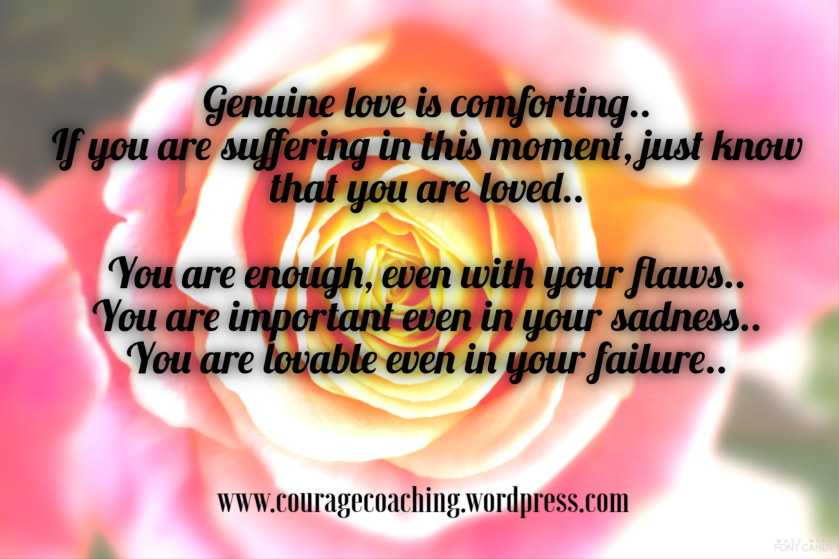
You are loved, you are enough

fontcandy-8

I know there are so many of you battling your demons every day..It takes guts..It takes courage to fight the war inside your head..

This post is for all of you who are struggling..One breath at a time is so important when the world is feeling especially cruel..

This blogging community supports so many people with mental illness…

So Reblog this post and support each other..

Love Athina ♥


Spreading a little awareness sparkle

fontcandy-6

Just a quick post about something that matters as equally as physical health.

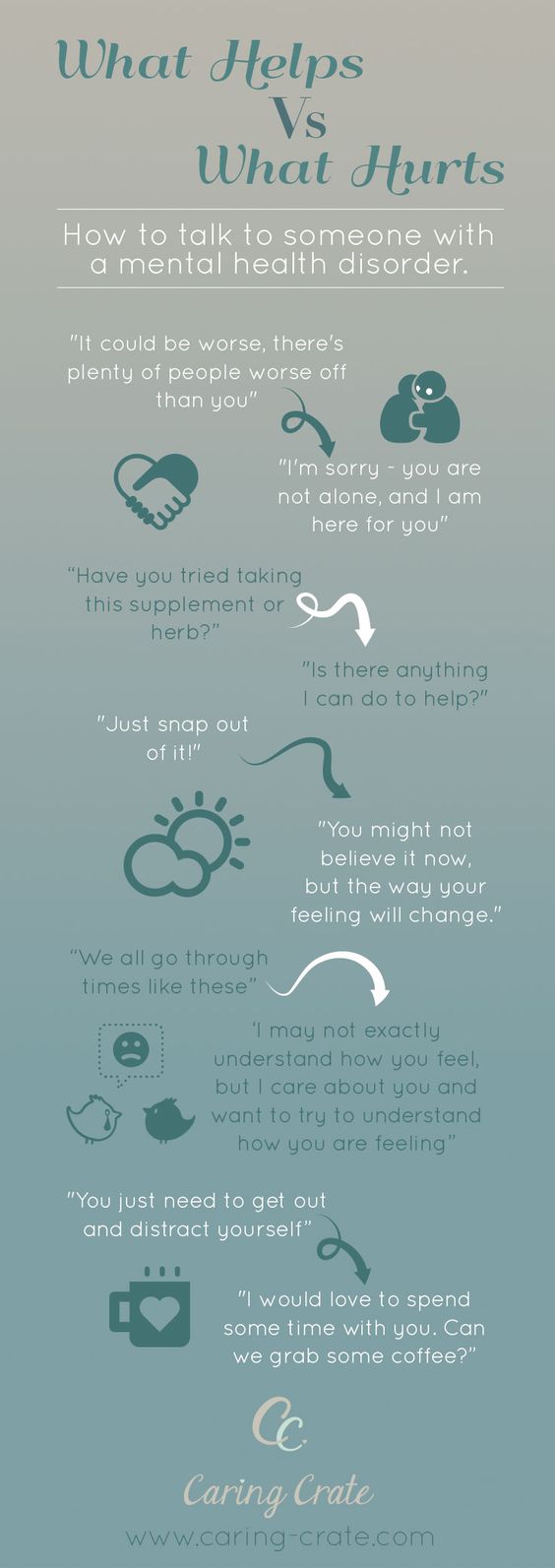
We all live with mental health and mental illness can touch all of us at least once in our lifetime.So how openly do we talk about it and how easily do we feel uncomfortable mentioning our struggles to a co-worker, family member or friend?

I have encountered so many of the below unhelpful phrases from ignorant individuals, so for this reason, I will keep spreading awareness of the importance of validating someone’s struggles with their mental health.

‘Don’t dwell on the past’

‘Aren’t you over it by now?’

‘Can’t you just try and be more happy?’

‘Stop focusing on the negative’

‘Strong people just get on with it’

‘Stop being a hypochondriac’

‘Stop being so self-centered’

‘Just snap out of it!’

‘You are just looking for attention’

IMG_0546

68996263715234a6de2749035a255252

Look after yourselves ♥

Love Athina ♥

© All blog posts and images are owned by me and Courage Coaching. Please don’t use without consent and only re-blog if you would like to use the information on here.

4 tips before going ‘No contact’ with a narcissistic parent

If you are currently considering ‘No contact’ with a narcissistic parent, then this video might be helpful.

Love Athina ♥

© All blog posts and images are owned by me and Courage Coaching. Please don’t use without consent and only re-blog if you would like to use the information on here.

Shame

Shame is caused by negative messages. The shame I am highlighting in this video is caused by dysfunctional parents. Shame is insidious and can have detrimental effects on the way we view ourselves and others.

This is something I am very familiar with as a survivor of narcissistic abuse and I want to highlight the cause of shame, so people can maybe identify with what might have been said to them as children and so they can find a way to move forward and heal.

Love ♥ Athina

© All blog posts and images are owned by me and Courage Coaching. Please don’t use without consent and only re-blog if you would like to use the information on here.


Intolerance to vulnerability is NOT OK!

Intolerance to vulnerability is everywhere.

Dysfunctional homes have this at their core.Children don’t feel safe to express emotions of sadness or pain..Children are taught that it is not ok to have sad or angry emotions..that they will be a burden if they dare to express these emotions..

This is not acceptable..This is emotional abuse..

Physical vulnerability is different to emotional vulnerability..When someone is physically disabled or physically ill, he/she seems to have more understanding from others..because you can see his/her illness physically..When a disability is emotional or mental however, people are quicker to dismiss it..This is where the stigma of mental illness comes in..Every single person out there with a mental disorder, is vulnerable..If they suffer with anxiety or depression, this makes them vulnerable..Just as much as someone who has a heart condition, or cancer or any other condition..

A vulnerable person is someone who struggles with day to day life.

Vulnerability refers to the inability to withstand the effects of a hostile environment (https://en.wikipedia.org/wiki/Vulnerability).

People with mental illness frequently become vulnerable and easy targets of physical and mental abuse.

People with mental illness can have poor boundaries, emotional dysregulation and many other extremely debilitating symptoms. They deserve the same compassion as those with obvious physical disabilities. They deserve the right to be able to talk about their struggles.

Love ♥ Athina

© All blog posts and images are owned by me and Courage Coaching. Please don’t use without consent and only re-blog if you would like to use the information on here.

Recovery from abuse- 3 basic stages & how to identify whether you have reached the acceptance stage of recovery

Happy Monday fellow bloggers. This is quite a late post, so I hope it reaches some of you.

I have just done another video on YouTube, where I talk about the 3 main stages of recovery that someone goes through, in particular concerning the recovery from childhood narcissistic abuse. I also talk a little bit about the acceptance stage of recovery, which I personally found the toughest in my own recovery.

Acceptance that you parents weren’t able to love you unconditionally, is a painful, rejecting reality. It is easier to spend most of your adult life being in denial of this, as it is such an incomprehensible reality to accept.

Once you are able to reach this stage of acceptance however, you feel like a huge burden has been lifted off you.

I wish all of you who struggle with this sort of realisation, to be able to finally reach this stage one day.

Love Athina ♥

© All blog posts and images are owned by me and Courage Coaching. Please don’t use without consent and only re-blog if you would like to use the information on here.