Sexual abuse Youtube Video-Part 2

Hello dear followers,

I have just completed the 2nd part of my sexual abuse video series.I know this topic isn’t relevant to a lot of you but for those it is relevant to, I hope it helps.If you have only just started coming to terms with any past sexual abuse, then this video series will be useful.

As I did at the end of the first video, which you can find here : https://www.youtube.com/watch?v=EKlfQMVeyBA , in this 2nd video I list a more comprehensive set of questions that you can ask yourself. The more of these you can relate to, the more support you will need in your recovery of sexual abuse.

Much love to you

Athina ♥♥

© All blog posts and images are owned by me and Courage Coaching. Please don’t use without consent and only re-blog if you would like to use the information on here.

How does codependency start?

Hello to all of you 🙂

I hope you are all well or at least trying to be.

Thank you to those of you who have recently followed my blog and youtube channel.I am very grateful. Tomorrow I have the morning off my German class so will be catching up as much as possible on all your posts and comments.Despite my busy schedule at the moment, I have still been managing to upload videos to Youtube every week and luckily the topics I talk about are still helping a few of you.

The Q & A videos have been a success and I still have quite a few unanswered emails to sort through, so please bear with me.

The Christmas break (although most definetely not my favourite time of year) will give me the opportunity to do more videos in response to your questions.

Today’s YouTube video focuses on the cycle of codependence and how is starts & worsens over time.

tumblr_mrdkpzygce1s43hlxo1_500

Codependency is very real and is a result of living in a home with an alcoholic parent, an abusive parent or a parent with a mental illness. Codependency develops when you put your own needs & feelings aside as a child, to care for & comfort a sick parent. Not everyone agrees with this point of view, however I have been through it and know the challenges associated with it.

Reaching out to all of those who struggle with their mental health means the world to me, especially to those who have suffered trauma and live with the result of this trauma.

I know how it feels to be invalidated.

I know how it feels to be called too sensitive or to just get over it.

Stigma towards mental illness is very much alive.

By sharing your experiences and spreading awareness in any way possible, this helps others understand better what it might be like for those who struggle.

If you can relate to this video, or think it will help someone you care about, then please share it with love ♥

Hugs Athina ♥

© All blog posts and images are owned by me and Courage Coaching. Please don’t use without consent and only re-blog if you would like to use the information on here.

Happy Monday!

Dear readers,

This post today is only a quick one. I thought I would share this week’s Youtube video which will also be shared on my Child Within blog, so it reaches more people. It is a Q & A  video on narcissism and in this case, one of my viewers wanted to know whether narcissists are paranoid.

This is something I have had first hand experience with and I know how detrimental it can be to those that surround the narcissist. My father’s paranoia was incredibly magnetic and my husband and I, as well as his friends and colleagues, all got sucked into his overly paranoid outlook just before and after his suicide attempt.

If you have had to deal with narcissistic family or partners who were overly paranoid, please feel free to share your experience.

Love Athina ♥

© All blog posts and images are owned by me and Courage Coaching. Please don’t use without consent and only re-blog if you would like to use the information on here.


How to survive over-thinking

Over-thinking an issue or event is a very common coping mechanism for dealing with stress. When there are unresolved issues or stressful situations with more than one possible solution, this is usually what leads to never-ending ruminating.

monkey-1757972_1920

Unfortunately, over-thinking is usually linked to depression & anxiety. People that already suffer from a mental illness, are usually big over-thinkers. However, someone can also become mentally ill by starting to think destructively. All it takes is one single stressful life event to trigger unhelpful ruminating.

The best way to cope with your possible over-thinking, is to look at the way you think and to analyse the different thinking errors (otherwise known as cognitive distortions) you may be indulging in.

If you don’t know much about the different types of cognitive distortions, then click below:

Cognitive distortions

Secondly, it is important to challenge any unhelpful thinking patterns by looking honestly at the evidence that supports those thoughts. Sometimes over-thinking can really spiral out of control and what may have started off as a minor problem, might have escalated into a catastrophe. Thinking isn’t always based on actual facts.

Thirdly, it is important to replace any unhelpful or overly dramatic thoughts with more grounded and sensible thoughts. If you are overly critical of yourself or others, then maybe try to tone it down a little. If you are worried that something bad is going to happen, then ask yourself ‘What are the chances of this really happening’? and ‘Is this really as bad as I think?Give yourself more constructive, positive thoughts and even write them down on paper if it helps!

Lastly, try and distract yourself when you are lost in endless over-thinking. Do something you enjoy, which will stop your mind from going into an uncomfortable state of hyperarousal.

Love Athina ♥

© All blog posts and images are owned by me and Courage Coaching. Please don’t use without consent and only re-blog if you would like to use the information on here.


Video on PTSD related Insomnia

This is my 2nd video from my Q & A video series. My followers, viewers & subscribers ask the questions and I answer to the best of my knowledge with a video.

I really hope that this video is useful to those of you who suffer from insomnia in general and I hope it also provides a little more insight for those of you who have specific PTSD related Insomnia.

PTSD related insomnia is a very tough symptom to tackle and is usually managed with a combination of anti-depressants, the short term use of sedatives and talking therapy( all under the watchful eye of a psychotherapist or psychiatrist).

Love Athina ♥

© All blog posts and images are owned by me and Courage Coaching. Please don’t use without consent and only re-blog if you would like to use the information on here.

Question & Answer- YouTube videos

Today I am starting off my series of Q & A videos, where my viewers and subscribers are able to get their questions answered by me, in a video each week. Please feel free to ask me questions on the following topics:

  • Complex PTSD
  • Narcissistic abuse
  • Dysfunctional relatioships
  • Negative thinking
  • Dealing with emotional flashbacks
  • Anxiety
  • Depression
  • Trauma Bonding
  • Toxic shame
  • Codependency

I also am happy to answer questions on how to :

  • Better manage your time
  • Practice self-compassion
  • Develop resilience
  • Stop self-defeating thinking patterns
  • Better manage your workload
  • Build confidence
  • Set boundaries
  • Deal with toxic people

Here is the first video on a question asked by one of my viewers:

Please note: **I will always keep the identity of my viewers confidential**

Thanks for reading and watching

Love Athina ♥

© All blog posts and images are owned by me and Courage Coaching. Please don’t use without consent and only re-blog if you would like to use the information on here.


You are not a failure

Nobody told you when you were a child that life could feel so tough sometimes.

Nobody told you that life could drain the joy right out of you, just when you thought things were getting better.
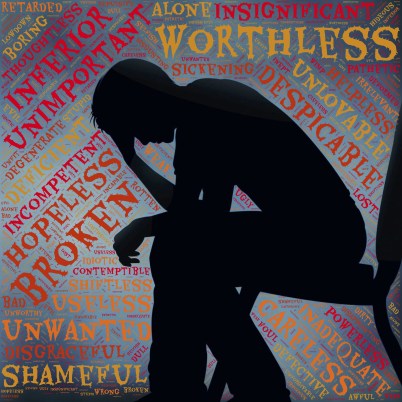
depression-1250870_1920

Life is a crazy rollercoaster and you have to ride it out, no matter what it throws at you.

It might be that your boss criticizes you, no matter how much extra work you put in.

It might be that your partner who once made you smile, now only seems to point out all your flaws.

Your family might be hopeless at supporting you and instead always tells you when you have let them down.

Your looks fall short of what is considered beautiful, your body has piled on the pounds and your health is deteriorating.

Your money problems never seem to end and you are surrounded by angry, hateful and impatient people.

Everywhere you seem to look, there are people pointing out what is wrong with you.

Your career isn’t where it is supposed to be. You still aren’t married and people think there is something wrong with you for not wanting to have kids.

Even people with the best self-esteem, can end up feeling horrible.

Everywhere you look, people are pointing out that you are a failure..

Outer criticism ends up becoming inner criticism. That inner criticism ends up taking hold of your daily life and you can’t seem to silence that nasty little voice inside you that tells you, you have failed.

You might have once been a reasonably confident person and now you are nowhere near that.

Do you find yourself being haunted by this inner voice of failure? Do you find yourself needing to apologise for things that are out of your control?

Are you sorry that you couldn’t do better at work?  Then you failed

Are you sorry that you couldn’t lose weight? Then you failed

Are you sorry that your partner left you? Then you failed

Are you sorry that you are too sick to support your family? Then you failed

Are you sorry that you are struggling with the housework? Then you failed

Are you sorry that everything is too stressful? Then you failed

These negative thoughts are very harmful, even though you may not think so. When you internalise self-doubt your body absorbs it. Your muscles tense and you can actually become physically ill from it. If you allow others negativity to affect how you see yourself, then this might become a vicious cycle.

Have you ever noticed that when an abusive spouse, parent or boss criticizes you, you get nervous and are more likely to make more mistakes? The more difficult the people around you, the more on edge you feel and the more clumsy you may become. This was definetely the case with me for many years…

It is crucial to be aware of how destructive it can be to give your control away to others. If you constantly accept that you are a failure, because you judge yourself through others’ eyes, then you will eventually freeze. You will stop trying, you will stop living..

So how do you change this? How do you manage to keep the negativity that surrounds you away?

First of all, remember this! You are NOT A FAILURE!

You are not a failure because you failed your driving test.

You are not a failure because your relationship ended.

You are not a failure because you lost your job.

You are not a failure because you don’t want kids.

You are not a failure because others think you are.

Making mistakes in life is NORMAL. Making mistakes in life doesn’t mean that you are a failure. A mistake is just a mistake! This doesn’t make you anything less than wonderful.

Mistakes help you learn and at least you were brave enough to take on new opportunities.

Every time you catch yourself telling yourself that you are a failure, then say the word ‘STOP’. You are not a failure..

Remind yourself of all the good things you have done and that you are proud of. Even the tiniest things can mean so much! Don’t let others define you. Nothing matters more than the opinion YOU HAVE of yourself.img_1844

Never apologise for not being good enough because you are a valuable and worthy person. No matter how much others judge you, don’t let their voice drown out your own.

YOU ARE NOT A FAILURE!

Love Athina ♥

© All blog posts and images are owned by me and Courage Coaching. Please don’t use without consent and only re-blog if you would like to use the information on here.

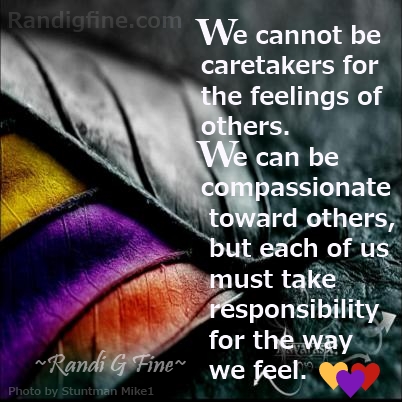
 

Acknowledging our weaknesses

fontcandy-12

How many of you find it easy to admit to your weaknesses? How often do you struggle with admitting a weakness to a friend or partner or even to yourself?

Do you ever feel a sting when a close person in your life points out a weakness that you weren’t aware you had? Or maybe it is just that person’s opinion but not your own? It’s tough knowing sometimes, whether we actually have that weakness that this person is pointing out to us..Is the sting we feel trying to tell us that maybe it is actually true?!

What one person considers a weakness doesn’t mean that the other person thinks so too..

For example, I may think that it is a weakness for someone to expect me to be perfect, when I am actually completely comfortable being less than perfect. It is not my problem this other person needs perfection from those around him, including me. I personally find the need to be perfect exhausting, therefore I am more happy to give everything my best shot and even if it doesn’t turn out amazingly, at least I tried.

Another point worth mentioning, is the difficulty some of us may have when it comes to admitting fault or weakness, because we actually fear what others think of us. If we are actually perfectionists by nature and set ourselves high standards all the time, then to admit that we have actually failed at something is out of the question. It is in this very case, I believe, that we need to work more on ourselves. Our own thoughts and the way we see the world, can either make our life more fulfilling or severely limiting. Some of us also may find criticism excruciatinly painful, because deep down we know we are flawed, wrong or not good enough. This may be because of negative programming in our childhood or from pressure to always show our best and most socially acceptable side.

Accepting and embracing our weaknesses, increases our awareness of where we might be limiting ourselves.

If someone has harmed us and this has impacted us in a destructive way, then this is slightly different. We have a right to be angry and put the blame where it belongs (in the case of murder,domestic abuse, child abuse etc). Working through grief about the unfotunate things that happen to us in life, is necessary for healing. Despite this though, we are still in charge of how we deal with whatever life has dealt us. It is always up to us to work hard at making changes in the areas we suffer with the most.We can either be a victim and sit back and point fingers at everyone else or we can take responsibility and take small steps to creating opportunities from our challenges.

Love Athina ♥

© All blog posts and images are owned by me and Courage Coaching. Please don’t use without consent and only re-blog if you would like to use the information on here.

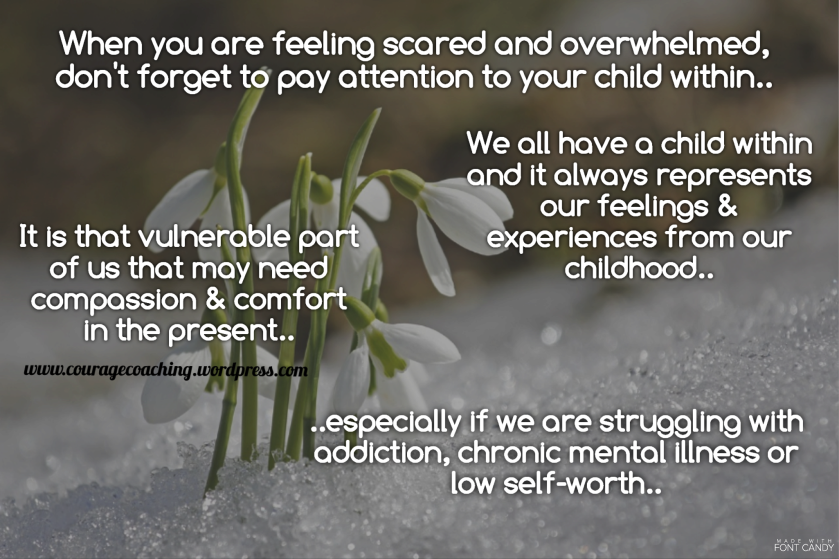
Our child within

fontcandy-11

Love Athina ♥

© All blog posts and images are owned by me and Courage Coaching. Please don’t use without consent and only re-blog if you would like to use the information on here.
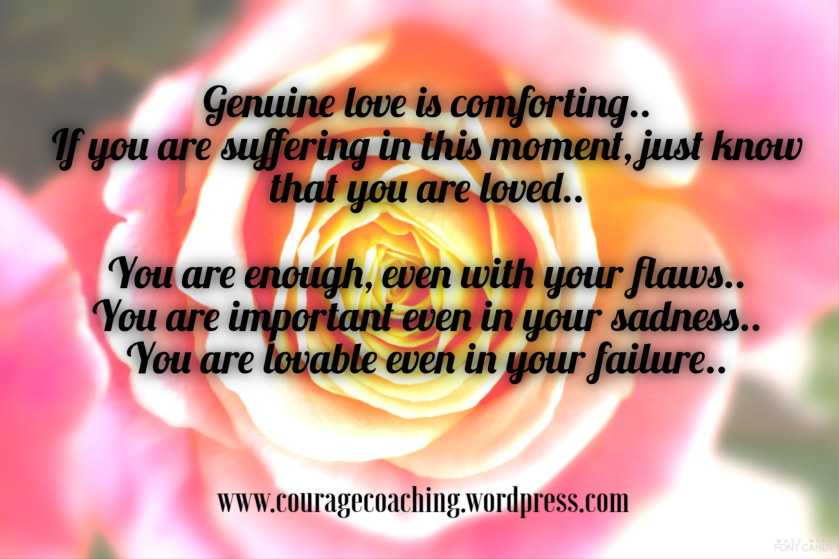
You are loved, you are enough

fontcandy-8

I know there are so many of you battling your demons every day..It takes guts..It takes courage to fight the war inside your head..

This post is for all of you who are struggling..One breath at a time is so important when the world is feeling especially cruel..

This blogging community supports so many people with mental illness…

So Reblog this post and support each other..

Love Athina ♥